
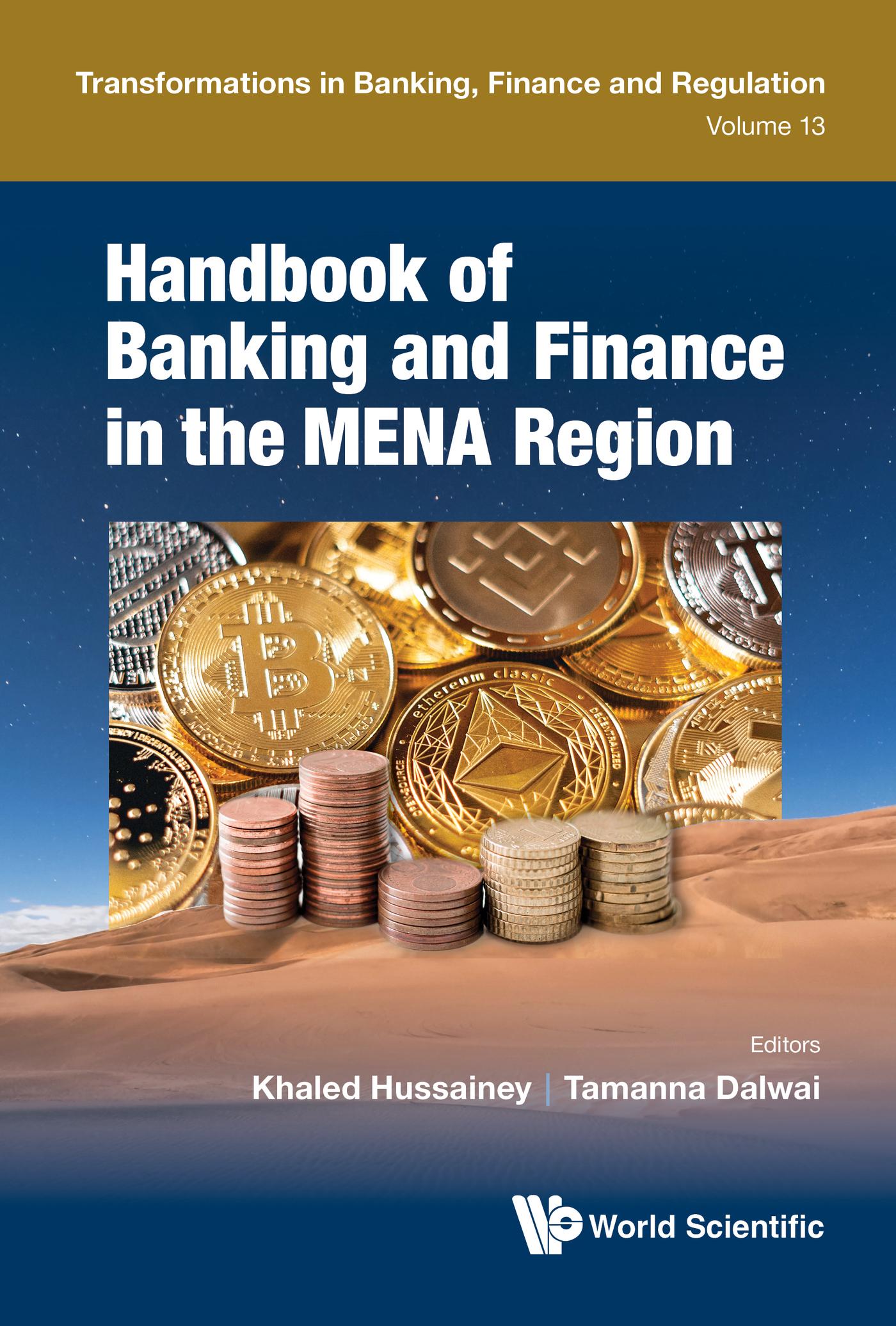
According to World Bank (2021), the economic recovery post-COVID-19 in the Middle East and North Africa (MENA) has been uneven and tumultuous. Reasons for this include exposure to oil-price fluctuations, the impact of pandemic, public demonstrations, and political instability. Although the MENA region encompasses a variety of countries — wealthy, stable and oil-rich countries such as Saudi Arabia and Qatar as well as less secure countries such as Iraq and Syria — it plays an important role in the global economy.
Handbook of Banking and Finance in the MENA Region explores the trends in finance and banking of the MENA region, including theoretical and empirical perspectives from researchers around the globe. The first part of the book explores numerous reforms in the region's banking and finance, including digital technology, financial technology (fintech) and green finance. While financial inclusion in the Gulf Cooperation Council is much higher, the other countries in the MENA region have yet to overcome this trend, and the second part of the book provides specific case studies of ways in which banks have contributed to the region. The final section of the book considers macroeconomic factors and financial development. Together these perspectives enrich the discussion of facts and development challenges in the finance and banking of the MENA region as a whole.
Contents:
- New Advancements in Finance and Banking:
- Adoption and Proliferation of Digital Technology in the Banking Sector of the Middle East (Sweetline Sujee and Rima Solanki)
- Green Finance in MENA Region: A Systematic Literature Review (Krishna Murthy Meesaala, Syeeda Shafiya Mohammadi and S Varalakshmi)
- Introduction of Fintech in the Financial Systems of the MENA Region: The Case of Morocco (Najib Mrabet)
- Banking Sector Contribution to the MENA Region:
- Determinants of Banks' Profitability in a War-Torn Banking Sector: Evidence from Syria (Mazen Diwani)
- The Impact of COVID-19 News on Financial Market Volatility in MENA Countries (Oumayma Elbach, Abdelkader Mohamed Sghaier Derbali and Moufida Ben Saada)
- Financial Development and Corporate Governance Efficiency: An Overview of MENA (Ahmed Mohamed Habib)
- Banking System in Oman (Husam Basiddiq and Seemab Rana)
- Proposed Framework for Measuring a Bank's Progress in Implementing Financial Inclusion: An Exploratory Study in Egypt (Hamada Elsaid Elmaasrawy Elsayed Ghazi and Omar Ikbal Tawfik)
- Independence of Central Bank of Egypt and Exchange Rate Regimes (Mustafa Kasim and Khaled Hussainey)
- The Impact of Capital Adequacy and Non-Performing Loans on Loan Loss Provisions for Gulf Cooperation Council (GCC) Banks: Econometric Study Using Panel Data (Hala Fadheel Elfergani, Asma S Abdelhamid Alzwi and Ali Zagoub)
- Should We Trust the New Basel III Liquidity Ratio? Evidence from the MENA Banking Systems (Wassim Ben Ayed and Amira Houaneb)
- Macroeconomic Factors and Financial Development:
- Financial Accounting Disclosures and Investors' Sentiments: Perspective from UAE (Amer Alaya and Shatha Hussain)
- IPO Valuation, Price-Setting, and Stabilization Mechanisms in the Egyptian Capital Market (Mahmoud Otaify)
- Exploring the Financial Development and Economic Complexity Nexus in MENA Countries: Does Corruption Matter? (Mondjeli Mwa Ndjokou Itchoko Motande, Valentine Soumtang Bime and Koumis Ngagni Agathe Cassandra)
- Determinants of Financial Inclusion: Evidence from the MENA Region (Rachida El Yamani)
Readership: Primary market for the book includes: Academic libraries; Students (undergraduates, graduates and postgraduates); Professional bodies (AFAANZ, BAFA, AAA); Practitioners (includes decision makers from finance and banking sector); Policy makers (governments, ministries, rating agencies, regulators, central banks, financial institutions, financial analysts). Additionally, the book can be important reference material for courses or modules used for teaching finance and banking in colleges and universities.
Key Features:
- Includes chapters on banking and finance in the MENA region, which is dynamic and offers potential for growth despite economic and political transformations
- Offers readers diversity, developments and progress in the banking and finance industry, while taking into account COVID-19, political instability, oil-price fluctuations, the fourth industrial revolution, FinTech advancements, and SDGs