
Western culture has endlessly represented the ways in which love miraculously erupts in people’s lives, the mythical moment in which one knows someone is destined for us, the feverish waiting for a phone call or an email, the thrill that runs down our spine at the mere thought of him or her. Yet, a culture that has so much to say about love is virtually silent on the no less mysterious moments when we avoid falling in love, where we fall out of love, when the one who kept us awake at night now leaves us indifferent, or when we hurry away from those who excited us a few months or even a few hours before.
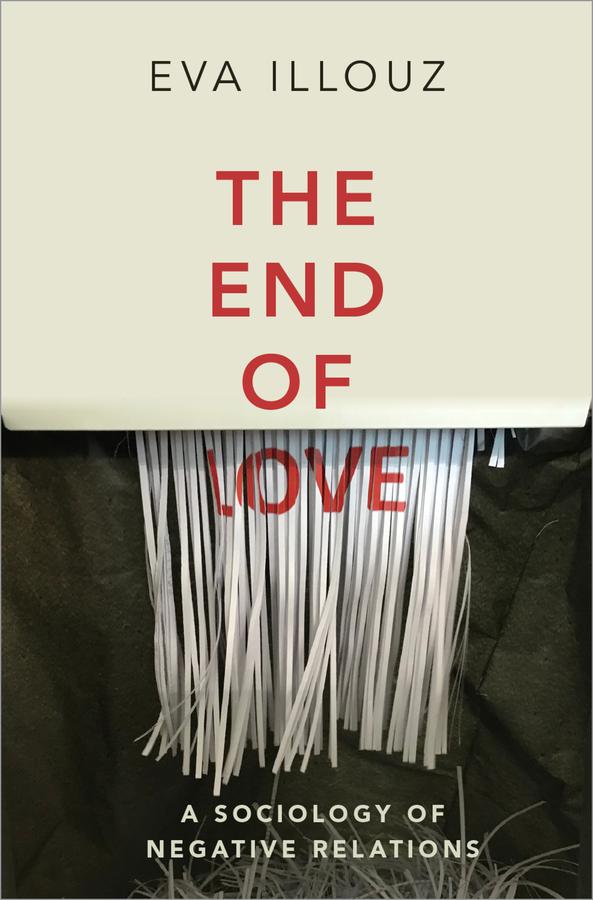
In The End of Love, Eva Illouz documents the multifarious ways in which relationships end. She argues that if modern love was once marked by the freedom to enter sexual and emotional bonds according to one’s will and choice, contemporary love has now become characterized by practices of non-choice, the freedom to withdraw from relationships. Illouz dubs this process by which relationships fade, evaporate, dissolve, and break down “unloving.” While sociology has classically focused on the formation of social bonds, The End of Love makes a powerful case for studying why and how social bonds collapse and dissolve.
Particularly striking is the role that capitalism plays in practices of non-choice and “unloving.” The unmaking of social bonds, she argues, is connected to contemporary capitalism which is characterized by practices of non-commitment and non-choice, practices that enable the quick withdrawal from a transaction and the quick realignment of prices and the breaking of loyalties. Unloving and non-choice have in turn a profound impact on society and economics as they explain why people may be having fewer children, increasingly living alone, and having less sex.
The End of Love presents a profound and original analysis of the effects of capitalism and consumer culture on personal relationships and of what the dissolution of personal relationships means for capitalism.
Pay easily by card, Klarna, Apple Pay or Google Pay. Not happy? You always have a 14-day money-back guarantee. Read more in our terms. If you have any questions, email us at hello@memmo.org.
Memmo makes studying easier – wherever you are in the world. We bring your course books and smart study tools together in one place: summaries, quizzes, podcasts and flashcards. Plus Ted, your study buddy who answers anything you wonder. Over 50,000 students already study here – built to help you learn faster and stress less.