
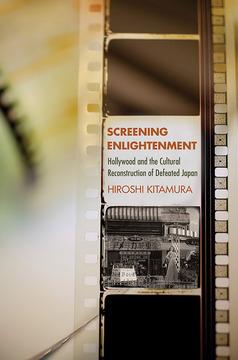
During the six-and-a-half-year occupation of Japan (1945–1952), U.S. film studios—in close coordination with Douglas MacArthur's Supreme Command for the Allied Powers—launched an ambitious campaign to extend their power and influence in a historically rich but challenging film market. In this far-reaching "enlightenment campaign," Hollywood studios disseminated more than six hundred films to theaters, earned significant profits, and showcased the American way of life as a political, social, and cultural model for the war-shattered Japanese population. In Screening Enlightenment, Hiroshi Kitamura shows how this expansive attempt at cultural globalization helped transform Japan into one of Hollywood's key markets. He also demonstrates the prominent role American cinema played in the "reeducation" and "reorientation" of the Japanese on behalf of the U.S. government.
According to Kitamura, Hollywood achieved widespread results by turning to the support of U.S. government and military authorities, which offered privileged deals to American movies while rigorously controlling Japanese and other cinematic products. The presentation of American ideas and values as an emblem of culture, democracy, and sophistication also allowed the U.S. film industry to expand. However, the studios' efforts would not have been nearly as extensive without the Japanese intermediaries and consumers who interestingly served as the program's best publicists. Drawing on a wide range of sources, from studio memos and official documents of the occupation to publicity materials and Japanese fan magazines, Kitamura shows how many Japanese supported Hollywood and became active agents of Americanization. A truly interdisciplinary book that combines U.S. diplomatic and cultural history, film and media studies, and modern Japanese history, Screening Enlightenment offers new insights into the origins of this unique political and cultural transpacific relationship.
Pay easily by card, Klarna, Apple Pay or Google Pay. Not happy? You always have a 14-day money-back guarantee. Read more in our terms. If you have any questions, email us at hello@memmo.org.
Memmo makes studying easier – wherever you are in the world. We bring your course books and smart study tools together in one place: summaries, quizzes, podcasts and flashcards. Plus Ted, your study buddy who answers anything you wonder. Over 50,000 students already study here – built to help you learn faster and stress less.