
Honorable Mention, 2026 Outstanding Scholarly Contribution: Book Award, given by the American Sociological Association, Section on Children and Youth
Provides a child’s-eye perspective on how the culture wars are playing out in our nation’s schools
Kids are at the center of today’s “culture wars”—pundits, politicians, and parents alike are debating which books they should be allowed to read, which version of history they should learn in school, and what decisions they can make about their own bodies. And yet, no one asks kids what they think about these issues.
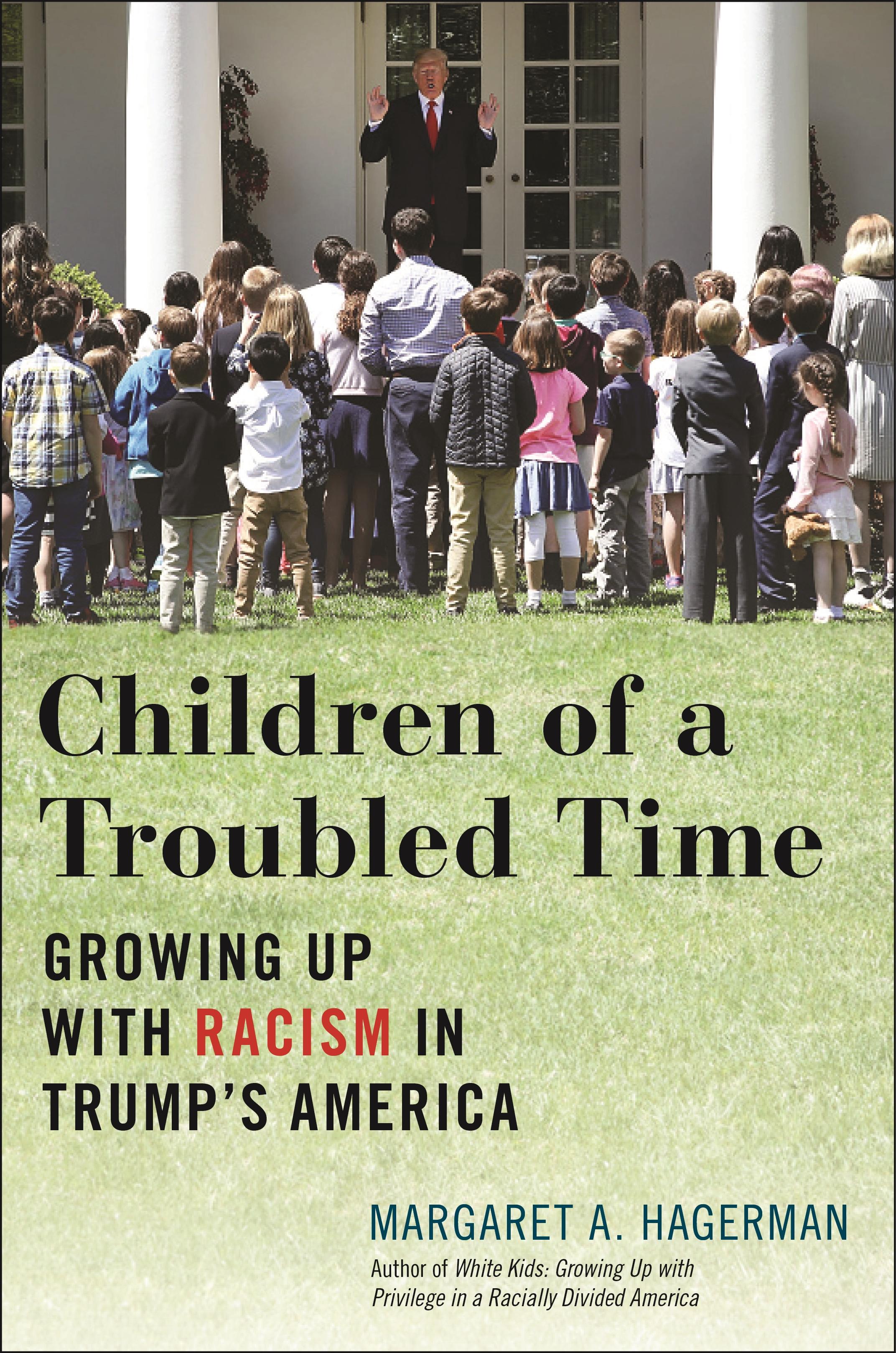
In Children of a Troubled Time, award-winning sociologist Margaret A. Hagerman amplifies the voices of children who grew up during Trump’s presidency and explores how they learn about race in America today. Hagerman interviewed nearly fifty children between the ages of ten to thirteen in two dramatically different political landscapes: Mississippi and Massachusetts. Hagerman interviewed kids who identified as conservative and liberal in both places as well as kids from different racial groups. She discovered remarkably similar patterns in the ideas expressed by these children. Racism, she asserts, is not just a local or regional phenomenon: it is a broad American project affecting childhoods across the country.
In Hagerman’s emotionally compelling interviews, children describe what it is like to come of age during years of deep political and racial divide, and how being a kid during the Trump era shaped their views on racism, democracy, and America as a whole. Children’s racialized emotions are also central to this book: disgust and discomfort, fear and solidarity, dominance and apathy.
As administrators, teachers, and parents struggle to help children make sense of our racially and politically polarized nation, Hagerman offers concrete examples of the kinds of interventions necessary to help kids learn how to become members of a multi-racial democracy and to avoid the development of far-right thinking in the white youth of today. Children of a Troubled Time expands our understanding of how the rising generation grapples with the complexities of racism and raises critical questions about the future of American society.