
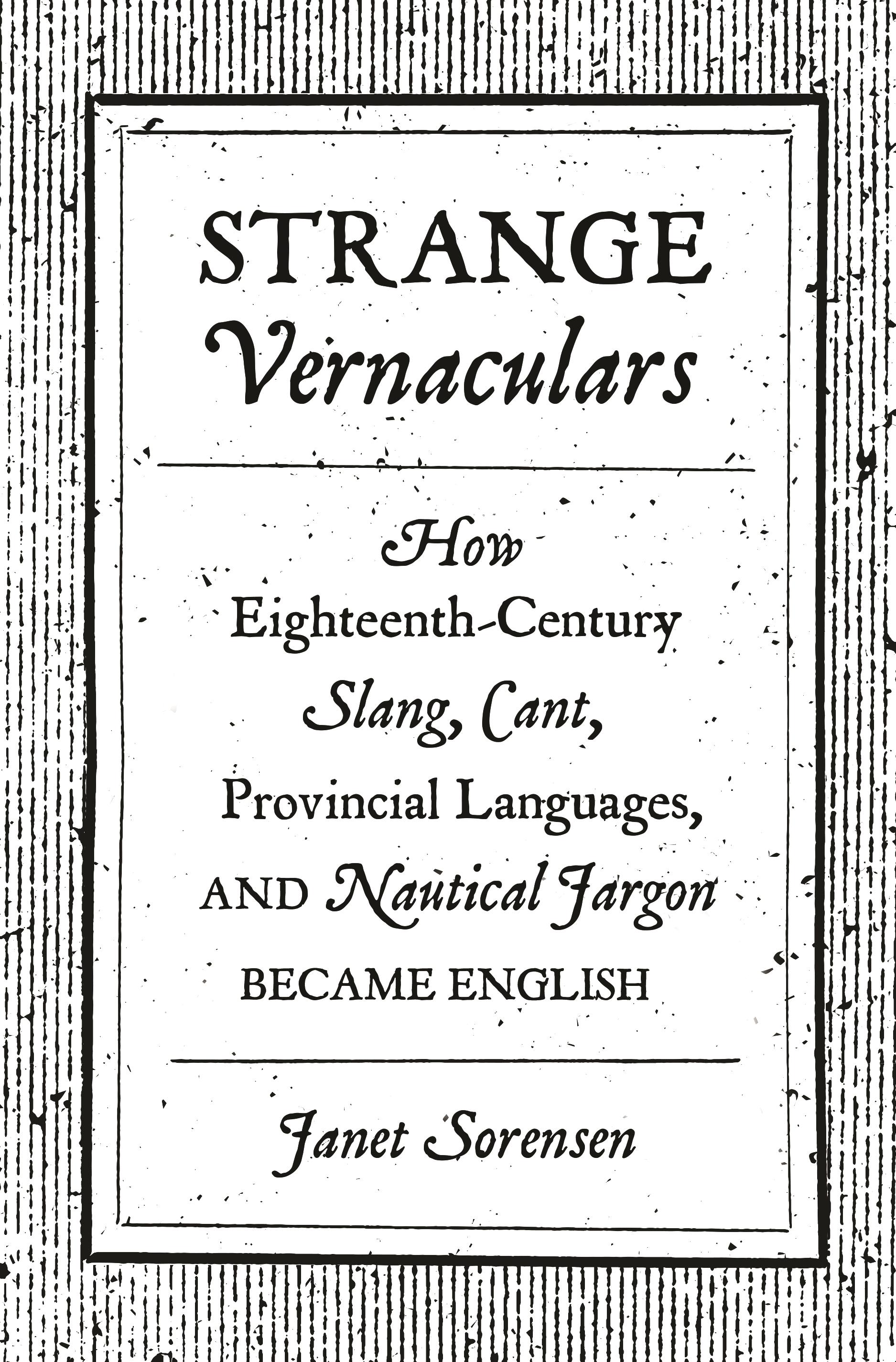
How vocabularies once associated with outsiders became objects of fascination in eighteenth-century Britain
While eighteenth-century efforts to standardize the English language have long been studied—from Samuel Johnson's Dictionary to grammar and elocution books of the period—less well-known are the era's popular collections of odd slang, criminal argots, provincial dialects, and nautical jargon. Strange Vernaculars delves into how these published works presented the supposed lexicons of the "common people" and traces the ways that these languages, once shunned and associated with outsiders, became objects of fascination in printed glossaries—from The New Canting Dictionary to Francis Grose's Classical Dictionary of the Vulgar Tongue—and in novels, poems, and songs, including works by Daniel Defoe, John Gay, Samuel Richardson, Robert Burns, and others.
Janet Sorensen argues that the recognition and recovery of outsider languages was part of a transition in the eighteenth century from an aristocratic, exclusive body politic to a British national community based on the rhetoric of inclusion and liberty, as well as the revaluing of a common British past. These representations of the vernacular made room for the "common people" within national culture, but only after representing their language as "strange." Such strange and estranged languages, even or especially in their obscurity, came to be claimed as British, making for complex imaginings of the nation and those who composed it. Odd cant languages, witty slang phrases, provincial terms newly valued for their connection to British history, or nautical jargon repurposed for sentimental connections all toggle, in eighteenth-century jest books, novels, and poems, between the alluringly alien and familiarly British.
Shedding new light on the history of the English language, Strange Vernaculars explores how eighteenth-century British literature transformed the patois attributed to those on the margins into living symbols of the nation.
Examples of slang from Strange Vernaculars
- bum-boat woman: one who sells bread, cheese, greens, and liquor to sailors from a small boat alongside a ship
- collar day: execution day
- crewnting: groaning, like a grunting horse
- gentleman's companion: lice
- gingerbread-work: gilded carvings of a ship's bow and stern
- luggs: ears
- mort: a large amount
- thraw: to argue hotly and loudly