
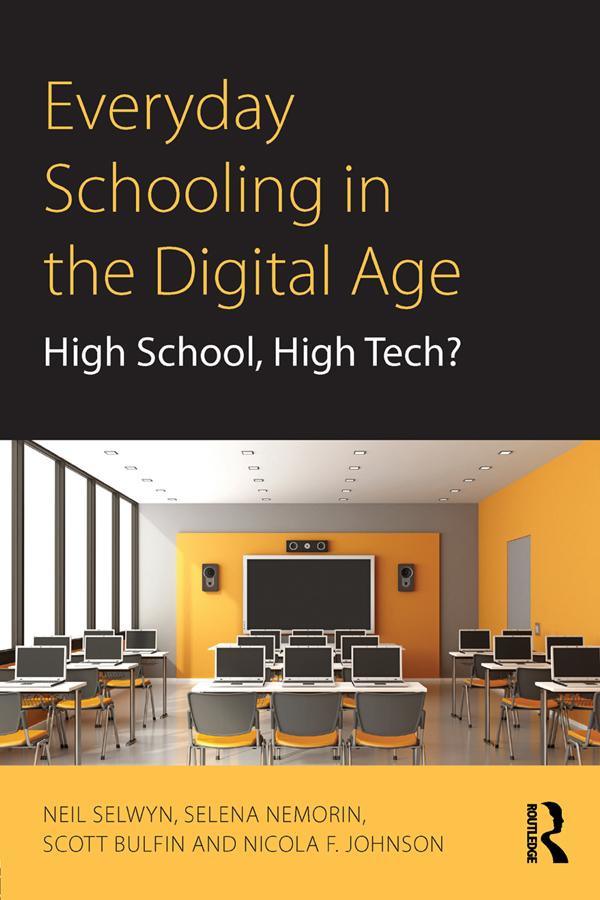
Today’s high schools are increasingly based around the use of digital technologies. Students and teachers are encouraged to ‘Bring Your Own Device’, teaching takes place through ‘learning management systems’ and educators are rushing to implement innovations such as flipped classrooms, personalized learning, analytics and ‘maker’ technologies. Yet despite these developments, the core processes of school appear to have altered little over the past 50 years. As the twenty-first century progresses, concerns are growing that the basic model of ‘school’ is ‘broken’ and no longer ‘fit for purpose’.
This book moves beyond the hype and examines the everyday realities of digital technology use in today’s high schools. Based on a major ethnographic study of three contrasting Australian schools, the authors lay bare the reasons underlying the inconsistent impact of digital technologies on day-to-day schooling. The book examines leadership and management of technology in schools, the changing nature of teachers’ work in the digital age, as well as student (mis)uses of technologies in and out of classrooms. In-depth case studies are presented of the adoption of personalized learning apps, social media and 3D printers. These investigations all lead to a detailed understanding of why schools make use of digital technologies in the ways that they do.
Everyday Schooling in the Digital Age: High School, High Tech? offers a revealing analysis of the realities of contemporary schools and schooling – drawing on arguments and debates from various academic literatures such as policy studies, sociology of education, social studies of technology, media and communication studies. Over the course of ten wide-ranging chapters, a range of suggestions are developed as to how the full potential of digital technology might be realized within schools. Written in a detailed but accessible manner, this book offers an ambitious critique that is essential reading for anyone interested in the fast-changing nature of contemporary education.