
"The authors’ research is well known and among the most important American works being done on how children learn history. It is thus a great idea to gather this pivotal research in one place. The volume offers a new perspective through the authors’ reflections on the research process. It is profound without pomposity, ideal for the intended audience; the tone is just right. There really isn’t another book that does what this one does."
Stephen J. Thornton, University of South Florida
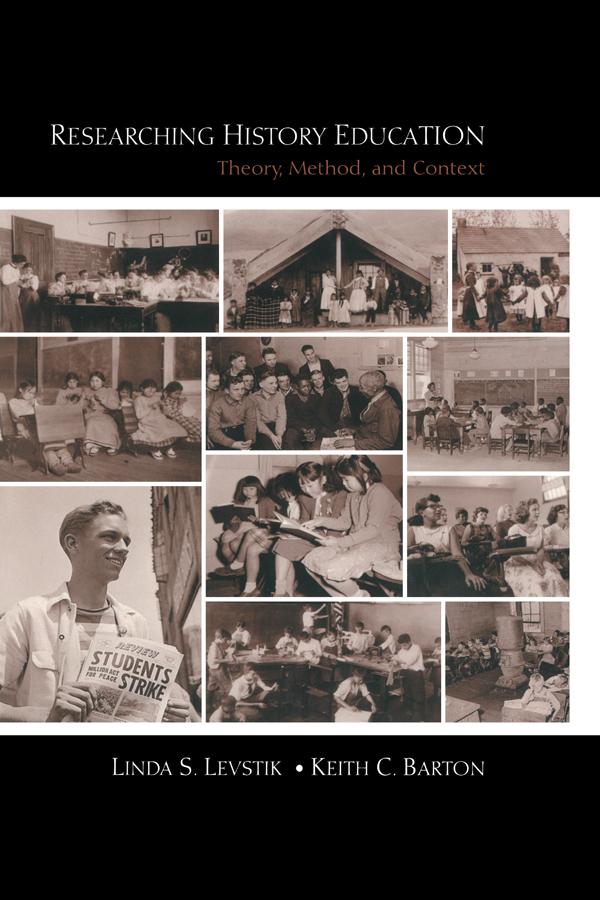
Researching History Education combines a selection of Linda Levstik’s and Keith Barton’s previous work on teaching and learning history with their reflections on the process of research. These studies address students’ ideas about time, evidence, significance, and agency, as well as classroom contexts of history education and broader social influences on students’ and teacher’s thinking. These pieces—widely cited in history and social studies education and typically required reading for students in the area—were chosen to illustrate major themes in the authors’ own work and trends in recent research on history education. In a series of new chapters written especially for this volume, the authors introduce and reflect on their empirical studies and address three issues suggested in the title of the volume: theory, method, and context.
Although research on children’s and adolescents’ historical understanding has been the most active area of scholarship in social studies in recent years, as yet there is little in-depth attention to research methodologies or to the perspectives on children, history, and historical thinking that these methodologies represent. This book fills that need. The authors’ hope is that it will help scholars draw from the existing body of literature in order to participate in more meaningful conversations about the teaching and learning of history.
Researching History Education provides a needed resource for novice and experienced researchers and will be especially useful in research methodology courses, both in social studies and more generally, because of its emphasis on techniques for interviewing children, the impact of theory on research, and the importance of cross-cultural comparisons.