
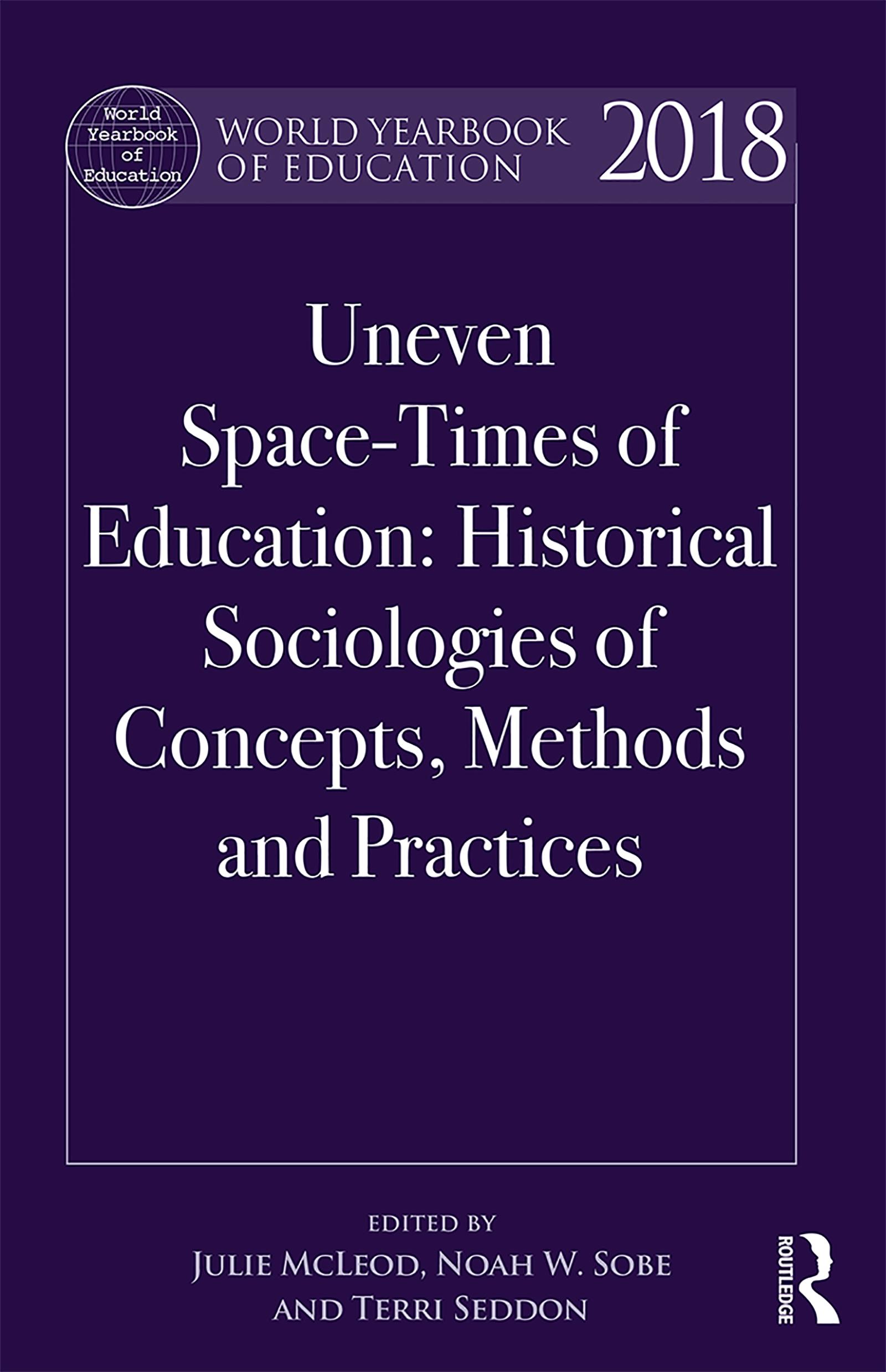
This latest volume in the World Yearbook of Education Series considers changing space-times of education by asking how they become unevenly textured as our worlds globalise, horizons shift and familiar points of reference melt and are remade. Acknowledging the reach of economic and cultural change, digital communication, geopolitics and persistent inequalities, the chapters trace processes that are re-making education and societies. Examining the depth of their impact on practices, methods and concepts reveals the significance of knowledge-building and socially embedded forms of reasoning in emerging patterns of educational governance, pedagogic and policy reforms as well as in lived understandings of self and social worlds.
The organisation of the collection into three sections – Making Spaces, Troubling Temporalities, and Mobility and Contexts – begins to map out an ambitious project. It calls on education researchers and professionals to write the present as history by grasping the socio-spatial, historical and political dimensions and effects that frame, form and filter the educational present. This research calls for a revitalised historical sociology and novel forms of comparative education that can provide productive insights, inform creative problem solving and suggest practical directions for education. This agenda recognises:
- the unevenness of educational space-times
- the making of education as a social institution
- the persistence and effects of social embeddedness, eventful space, situated knowledge, and geosocial thinking
- the present as history and multiple temporalities in education
- different registers of transformation that become visible through lenses such as identity, work, citizenship and mobility.
The World Yearbook of Education 2018 continues the project of compiling worldwide research on globalising education. These volumes offer a powerful commentary on how and why space-times of education are changing and emphasise the importance of forms of knowledge that materialise categories of professionals, policies and practices. This volume will be of interest to academics, professionals and policymakers in education and social policy, and also to scholars who engage in historical studies of education and debates about the socio-material formations that contribute to educational inequalities and dynamics of difference.