
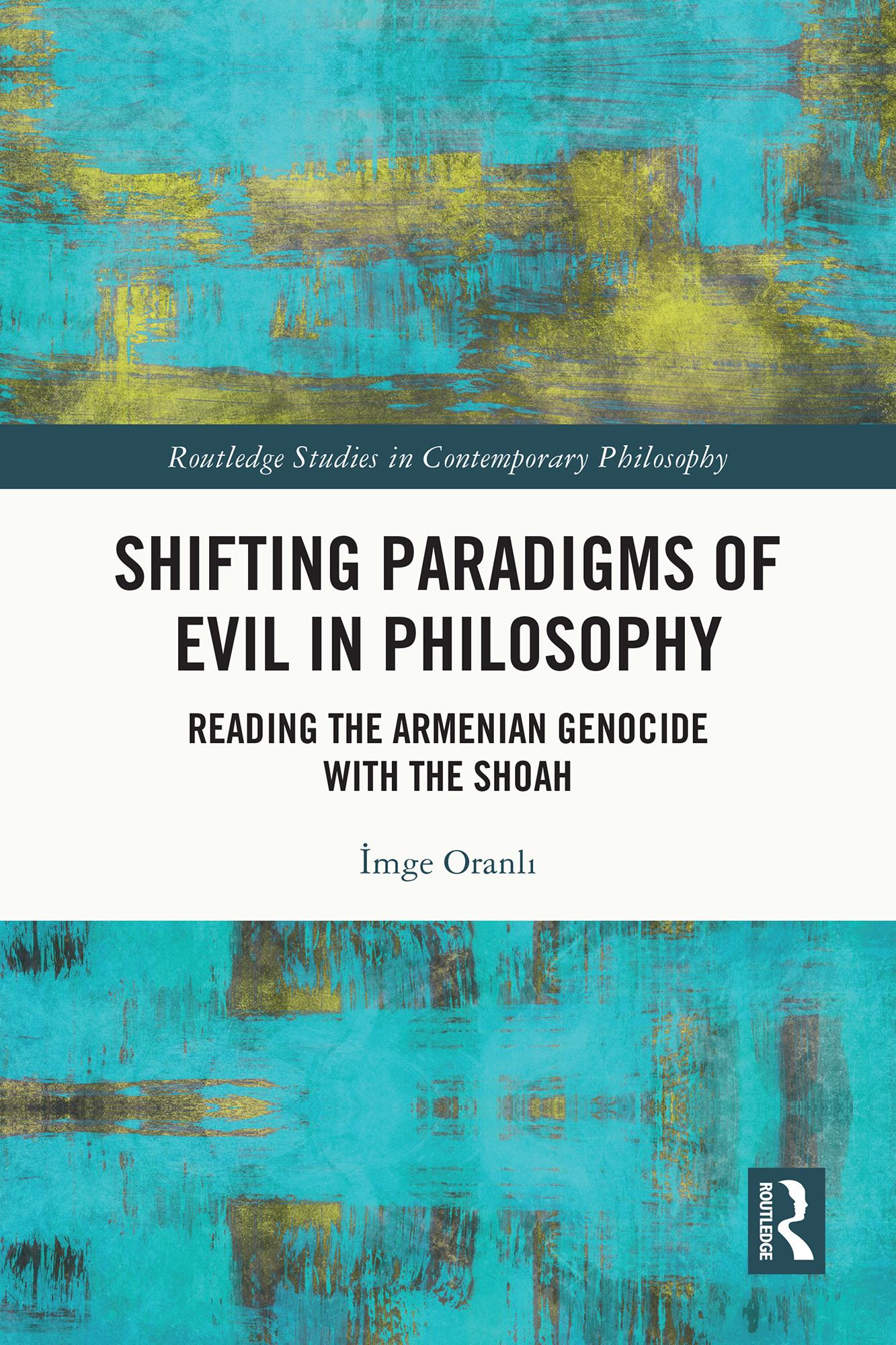
This book develops an interdisciplinary framework rooted in philosophy for addressing the political evils experienced around the world. Drawing on resources mainly from philosophy and historical studies, it argues for the relationality and continuity between political evils, using the Armenian Genocide and the Shoah as main examples.
The book begins by unpacking a series of limiting assumptions that define the philosophical study of evil. These assumptions crystallize in the idea that evil is an inscrutable phenomenon, what the author calls the paradigm of evil’s inscrutability. Tracing this paradigm through the legacies of five key philosophers—Plato, Augustine, Kant, Arendt, and Levinas—the author shows that by the time we arrive at 20th century, the framing of political evils like the Shoah as inscrutable and exceptional is profoundly constraining; it erases Shaoh's continuity and connection with other atrocities, including the 1915 Armenian Genocide. The book next turns to practices and ideologies that connect the Armenian Genocide to the Shoah to propose an alternative paradigm for thinking about evil: a paradigm of the continuity of evils. Offering this paradigm to readers in philosophy and adjacent disciplines, the author explores the relationality between the Armenian Genocide and the Shoah, but also between Turkish genocide denialism and a contemporary case of racist evildoing against Armenians in Turkey, shifting the discussion of political evil in a direction that aims to turn overlooked evils around the world into objects of philosophical thinking.
Shifting Paradigms of Evil in Philosophy will appeal to researchers and graduate students working in Continental philosophy, social and political philosophy, history of philosophy, ethics, political theory, genocide studies, and Holocaust studies.
Pay easily by card, Klarna, Apple Pay or Google Pay. Not happy? You always have a 14-day money-back guarantee. Read more in our terms. If you have any questions, email us at hello@memmo.org.
Memmo makes studying easier – wherever you are in the world. We bring your course books and smart study tools together in one place: summaries, quizzes, podcasts and flashcards. Plus Ted, your study buddy who answers anything you wonder. Over 50,000 students already study here – built to help you learn faster and stress less.