
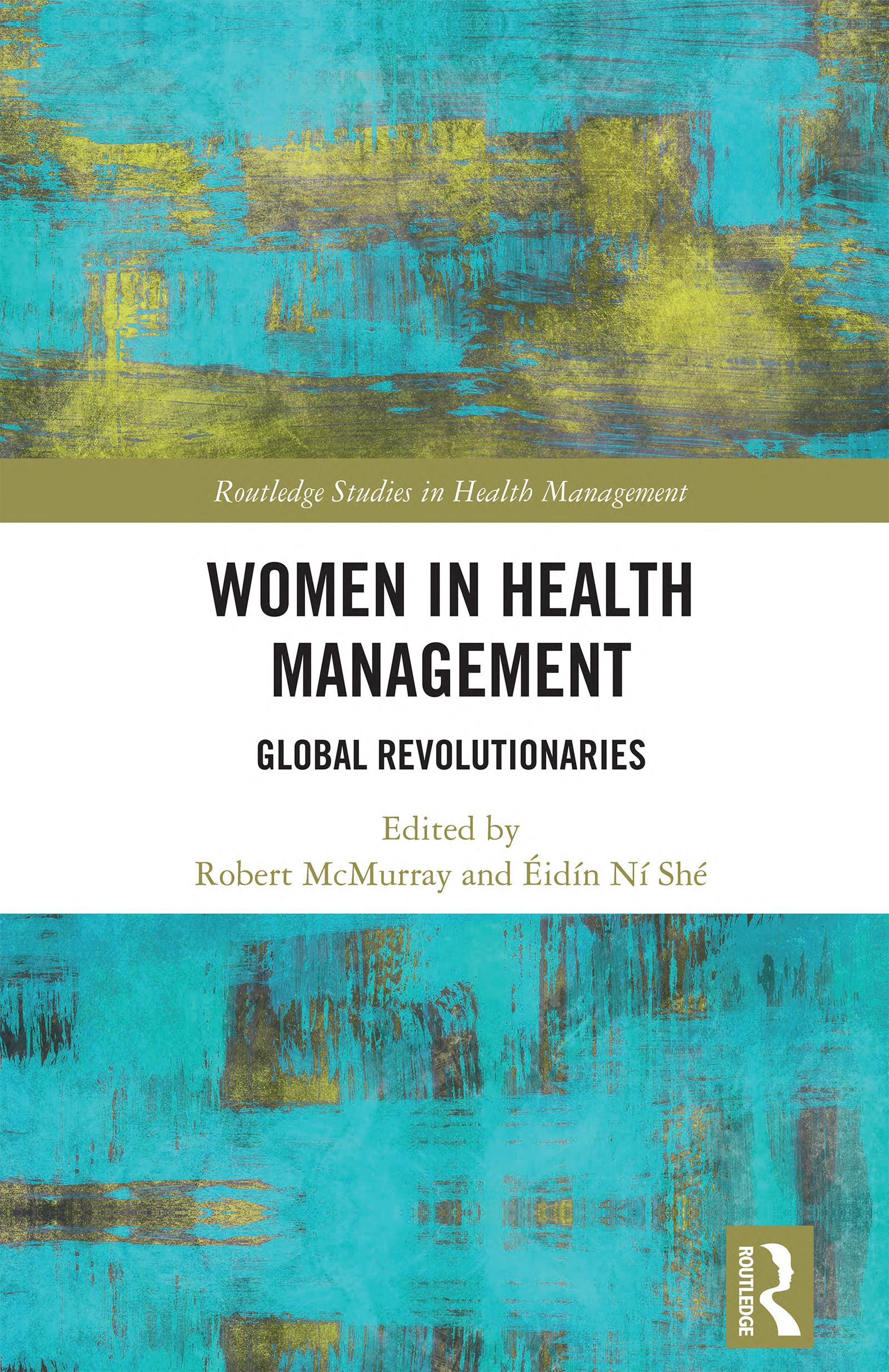
Writings on health and health management have long been concerned with the great figures that have preserved, protected or extended life. From Hippocrates and Galen to Vesalius, Lister, Mengele, Pasteur, Jenner and Fleming, these writings have celebrated individuals whose knowledge and practice has treated our ills and sought to better manage our care. For the most part, this has been a history of ‘great men’ [sic]. There are honourable mentions for a small number of women such as Elizabeth Blackwell or Florence Nightingale but, by and large, one would be forgiven for assuming that the management of health has nearly always been the preserve of men. The contribution of women is largely absent – written out.
This book contributes to the process of writing women back into our shared history and understanding of health and its management. Its chapters detail how women have been the main healers for communities across the globe for over four millennia. It considers the manner in which ‘wise women’ who used their knowledge of herbs, ritual and healing were excluded from emerging medical professions, while their good works were written over and written out of local histories through their marginalisation and repositioning. More positively, it brings to our attention inspiring women who have shaped the ways in which we develop and deliver health in its broadest sense. Drawing on the work of women from Kenya, Nigeria, Hawaii, Türkiye, USA, Ireland and the UK, and from disciplines that span medicine, social work, mental health, health promotion, occupational therapy, midwifery, pharmacology and traditional healing, the women considered in this volume advance our understanding of alternative ways of developing, delivering and managing health. This includes organising services for areas of neglected health (e.g. women’s health, health prevention, rural populations), tackling contentious health issues (e.g. female genital mutilation, management of mental disorders) and the care of health providers themselves (e.g. providing space for women to practice, managing the mental well-being of healthcare workers). This book also shows how the work of these women went beyond health management to influence political and societal change.
Pay easily by card, Klarna, Apple Pay or Google Pay. Not happy? You always have a 14-day money-back guarantee. Read more in our terms. If you have any questions, email us at hello@memmo.org.
Memmo makes studying easier – wherever you are in the world. We bring your course books and smart study tools together in one place: summaries, quizzes, podcasts and flashcards. Plus Ted, your study buddy who answers anything you wonder. Over 50,000 students already study here – built to help you learn faster and stress less.