
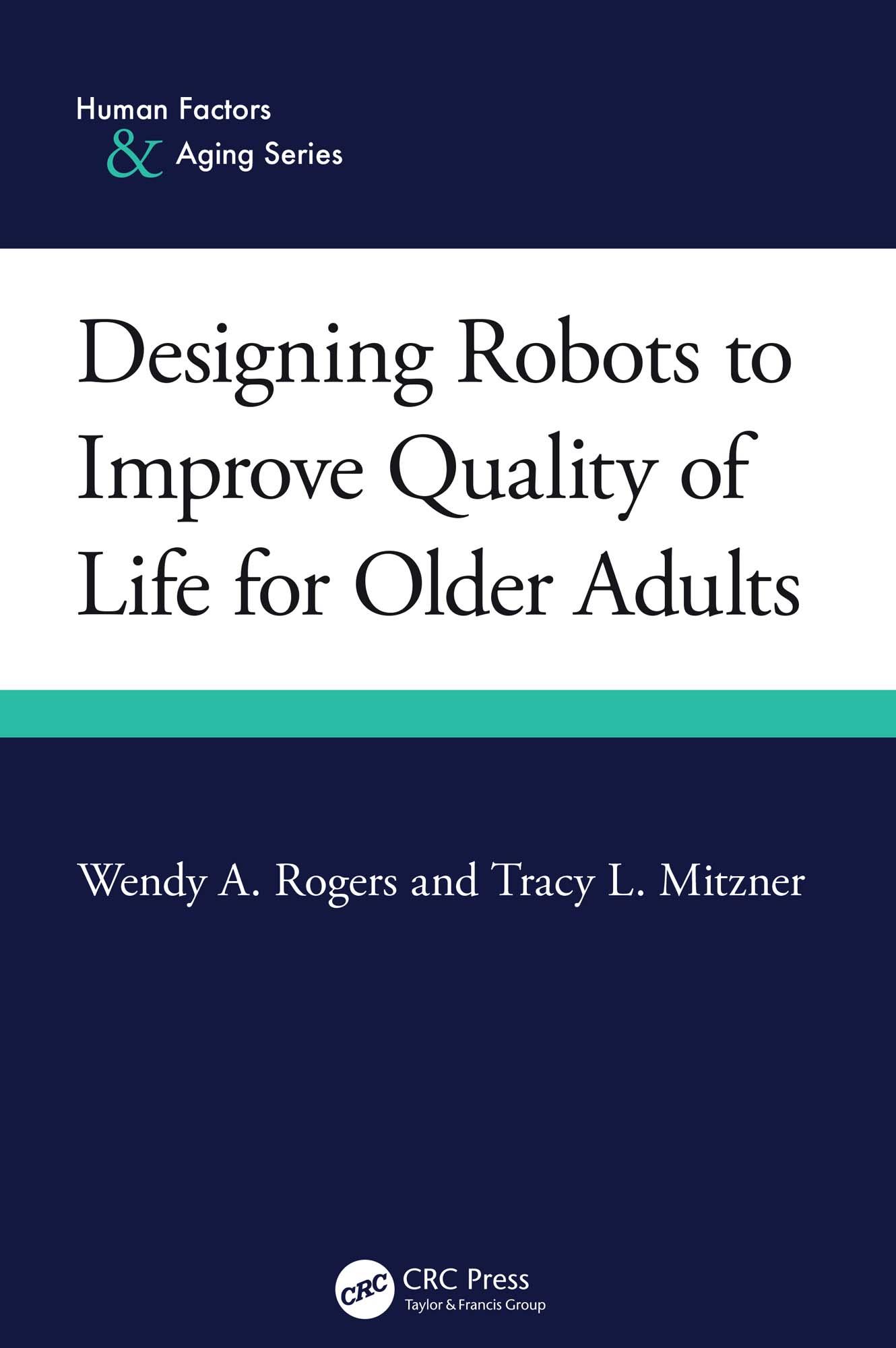
With adults over sixty becoming an ever-increasing proportion of the global population, the challenge of accommodating the needs, preferences, and abilities, of this heterogeneous population has increased. One such method is with robots, which can be used to support everyday activities for older adults and enhance their quality of life. Older adults have been found to be quite open to the idea of interacting with robots, albeit with preferences for the nature of the task they want the robots to do. This book provides a comprehensive state-of-the-art review of the topic of designing robots for older adults.
This book translates research on aging, human factors, and human-robot interaction (HRI) into guidance that will be usable for practitioners who design robots for a range of applications. It offers a framework for HRI with a focus on personal characteristics, robot functionality, task demands, and interaction context. The application of this HRI framework for older adults provides the basis for the book. It covers the fundamentals of aging, a review of the different types of robots available now and in the future, the known facilitators and barriers for adoption and the potential of robots for different everyday activities including social engagement, health and wellness, home maintenance and security. Throughout, the authors emphasize the need to follow fundamental human factors processes and participatory design approaches that engage older adults in the design process, thus allowing the reader a thorough and contemporary understanding of robots as an essential future for assisting an aging population.
Designing Robots to Improve Quality of Life for Older Adults is intended for a broad professional audience, especially the design community, gerontologists, and human factors/ergonomics practitioners. It will also be suitable for students at the undergraduate and graduate level as a supplementary textbook for courses in human factors, design for aging, and HRI.
Pay easily by card, Klarna, Apple Pay or Google Pay. Not happy? You always have a 14-day money-back guarantee. Read more in our terms. If you have any questions, email us at hello@memmo.org.
Memmo makes studying easier – wherever you are in the world. We bring your course books and smart study tools together in one place: summaries, quizzes, podcasts and flashcards. Plus Ted, your study buddy who answers anything you wonder. Over 50,000 students already study here – built to help you learn faster and stress less.