
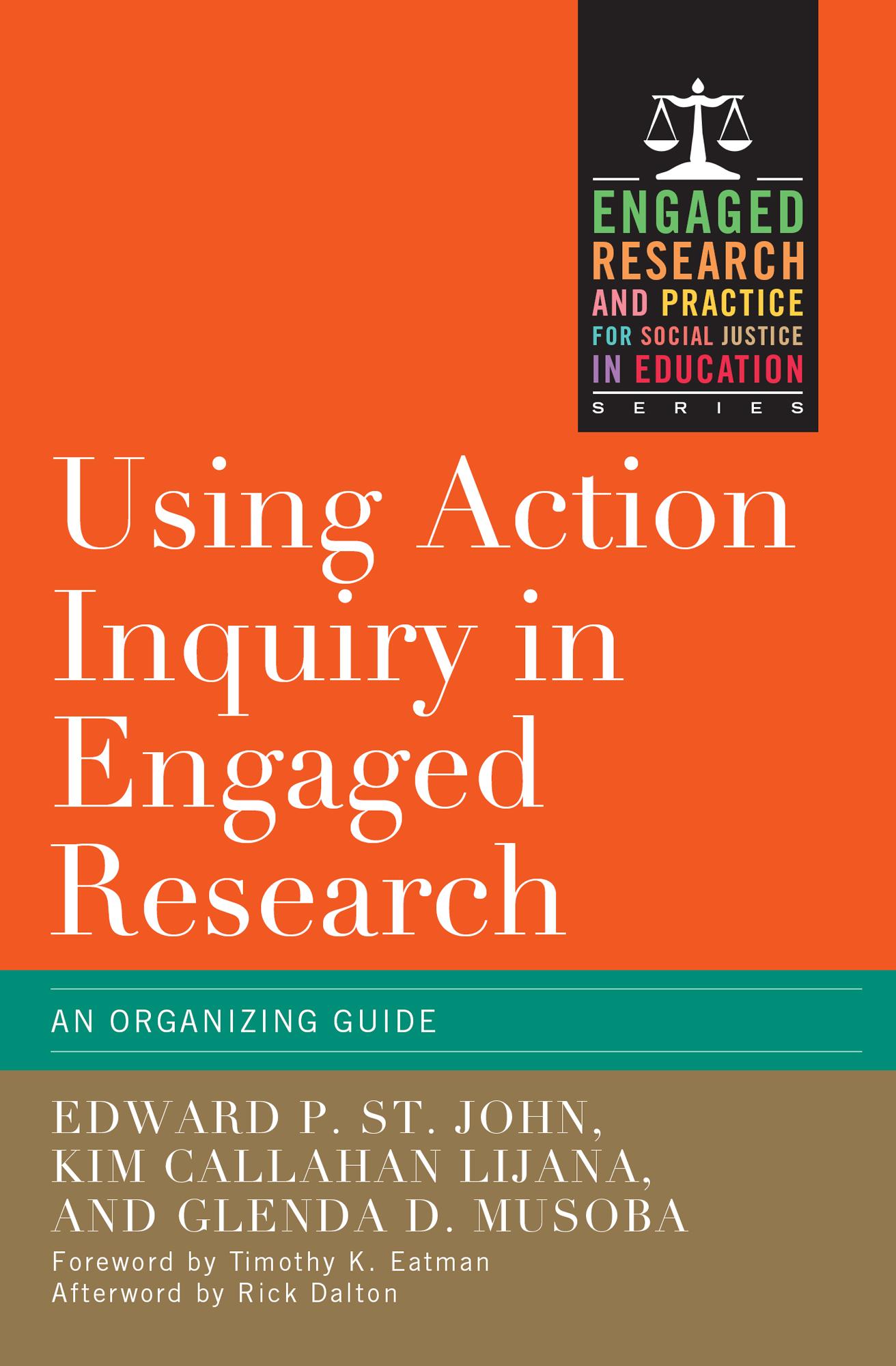
Using Action Inquiry in Engaged Research: An Organizing Guide offers higher education and school professionals practical guidance and methods for using the Action Inquiry Model (AIM) in engaged research initiatives and community partnerships. Replete with group exercises and case studies, this guide was originally developed to supplement workshops for faculty, administrators and students working on action initiatives that focused on critical educational issues facing local communities. It provides a useful framework and straightforward techniques for building empowering partnerships. The Action Inquiry Model (AIM) includes four stages: • Assessment: Using research and experience to identify critical challenges facing the university with respect to the improvement of educational opportunities• Organization: Developing workgroups to collaborate on initiatives that address critical challenges; providing financial support for new initiatives; and providing release time and professional development opportunities for faculty and staff who engage in reform initiatives• Action Initiatives: Treating reforms as pilot tests for new strategies, as a means of promoting organizational learning, professional development, and student success• Evaluation: Integrating the evaluation of current programs and incorporating new initiatives into the reform process.This guide provides two methods for learning the inquiry process: a step-by-step process for defining tasks for teams of researchers and practitioners working together to use research to inform the educational improvement; and sets of case studies on assessment and action inquiry to inform groups in collectively discussing problems and strategies, an approach that supports the classroom use of the Guide.The key tasks in action inquiry initiatives include: 1. Build an understanding of the challenge 2 Identify the causes of the challenge using data to test hypotheses2. Look internally and externally for solutions3. Assess possible solutions4. Develop action plans5. Implement pilot test, and evaluateThis guide is appropriate for professional development programs and as a text for higher education Masters and Ph.D. programs.