
Before Memmo my notes were scattered across PDFs. Now a workspace pulls everything into one place — I see exactly what's still left to study.
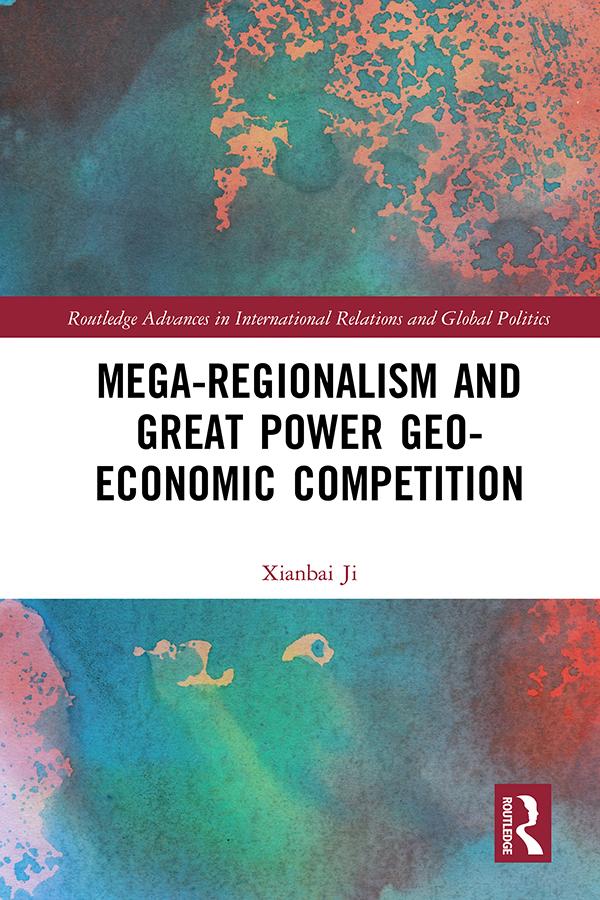
The regional trade governance architecture is in flux. The latest wave of regionalism in the form of mega-regional trade partnerships between countries with major shares of the world economy occurred in the aftermath of the Global Financial Crisis of 2008-09. The most systematically important mega-FTAs included the Trans-Pacific Partnership led by the United States (US), the China-backed Regional Comprehensive Economic Partnership, and the Transatlantic Trade and Investment Partnership between the European Union (EU) and the US.
Drawing on policy diffusion and competitive regionalism literatures, Xianbai Ji develops an innovative model of competitive spill-over to uncover the historical and contemporary sources of mega-regionalism resulting from a temporal clustering of mega-FTA initiatives from great powers. In the book, mega-FTA is conceptualised as an instrument of geo-economic competition between the US, China, and the EU. Each aspired to leverage its mega-FTA to gain an edge over its rivals in economic, geopolitical, and legal terms. Through a mix-method research strategy involving computable general equilibrium modelling, game theory, desk research, and perception survey, Ji generates an impressive chorus of quantitative, qualitative, and perceptual data demonstrating that the rise of mega-regionalism was driven by the multidimensional competition between the US, China, and the EU over international economic benefits, geopolitical influence, and the authority to write rules governing emerging trade issues.
This book will attract academics, think tankers, practitioners, and postgraduate students interested in regionalism, international trade, international political economy, applied trade policy analysis, great power competition, geo-economics, and international relations.
Before Memmo my notes were scattered across PDFs. Now a workspace pulls everything into one place — I see exactly what's still left to study.
Memmo's summaries are gold before exams. I don't have to re-read 800 pages two weeks before — just the important parts.
The AI chat has saved me the night before an exam more than once. I just keep asking until I get it — no waiting on a study group to reply.
The quizzes hit exactly what I need to know. Memmo tracks what I get stuck on — so I only practice what's worth it.
Flashcards with spaced repetition are magic. Memmo knows when I'm about to forget something and brings it back.
The AI podcasts are my favorite. I listen on my way to school and get a recap without sitting at a computer.