
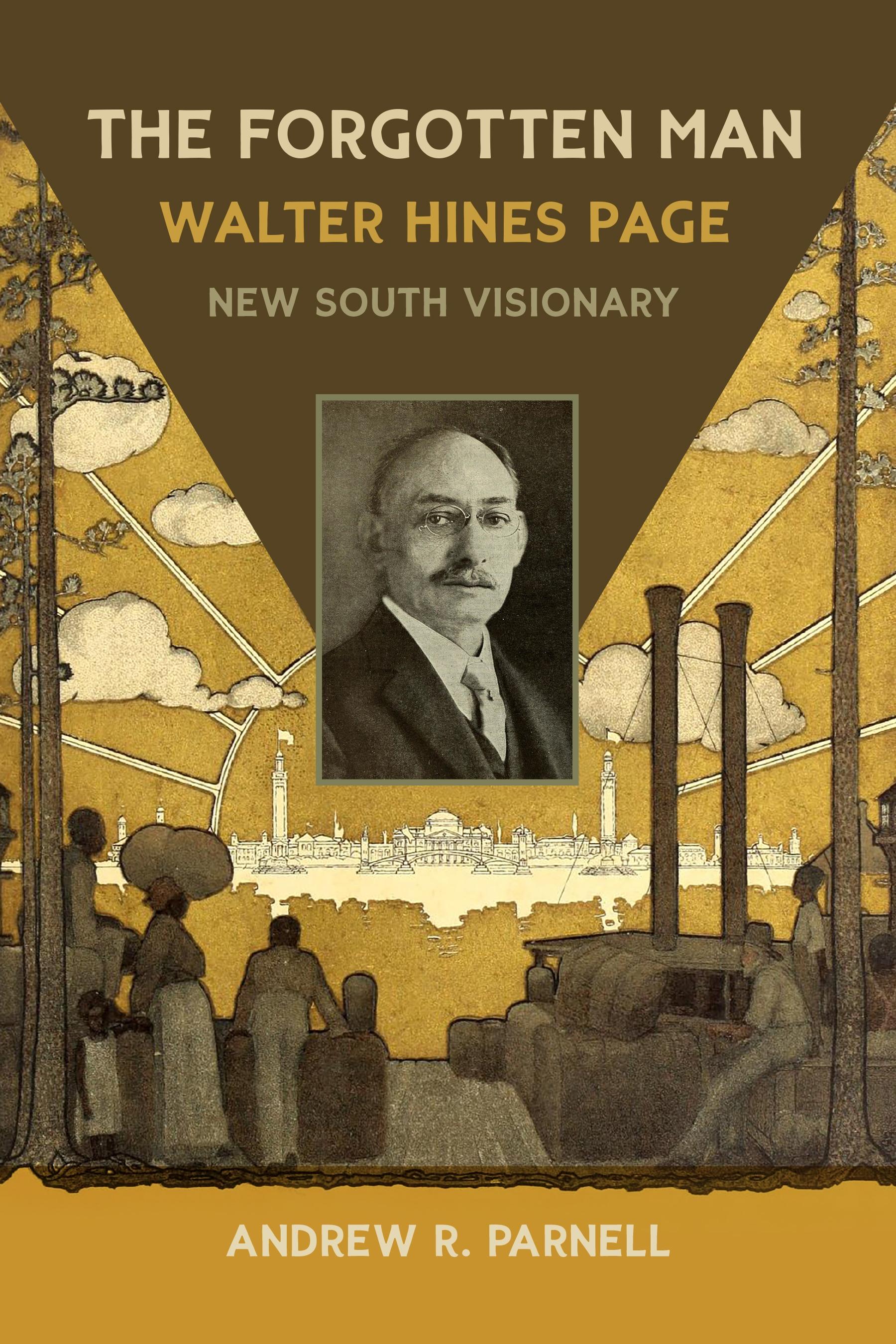
The Forgotten Man is a biography of Walter Hines Page (1855–1918), a turn of the nineteenth-century North Carolinian writer, newspaper and magazine editor, political and educational reformer, and U.S. ambassador to Britain during the first World War. Page stood up to self-serving Southern politicians, helped defeat the antebellum myth entrenched in the legacy of slavery, was one of America's preeminent magazine editors, and campaigned for public school systems in the South. Andrew R. Parnell’s biography sheds new light on Page’s quest to improve the lives of fellow Americans, particularly those living in the South.
For many, improvement and opportunity were impeded by the question of race in the South. Parnell contends that Page’s position on race was not as “complex” as is often implied; it was very simple: He believed in people as people regardless of race. Page was relentless in advocating for practical, proven solutions, often in the face of great resistance and criticism. In 1897he delivered his seminal Forgotten Man speech which emphasized that nothing (class, economic means, race, nor religion) should be a barrier to education; this speech was a catalyst for the transformation of education in the South.
Page championed equality, universal education, and industrialization across the South, and his legacy includes laying the foundation for North Carolina State University. Page also profoundly influenced American culture in the early-twentieth century during his tenure at several national periodicals, most notably the Forum and the Atlantic, and then his own magazine, the World’s Work. Having established a national reputation as a defender of democracy, Page was asked by President Woodrow Wilson to serve as ambassador to Britain. Page’s actions during the War have wrongly attracted significant criticism, but Parnell shows how Page was looking out for America’s interests. Throughout his life, Page showed that democracy was not based on the idea that some people were born for labor and others were born to live luxuriously—but that all were free to strive for self-improvement.
Pay easily by card, Klarna, Apple Pay or Google Pay. Not happy? You always have a 14-day money-back guarantee. Read more in our terms. If you have any questions, email us at hello@memmo.org.
Memmo makes studying easier – wherever you are in the world. We bring your course books and smart study tools together in one place: summaries, quizzes, podcasts and flashcards. Plus Ted, your study buddy who answers anything you wonder. Over 50,000 students already study here – built to help you learn faster and stress less.