
Before Memmo my notes were scattered across PDFs. Now a workspace pulls everything into one place — I see exactly what's still left to study.
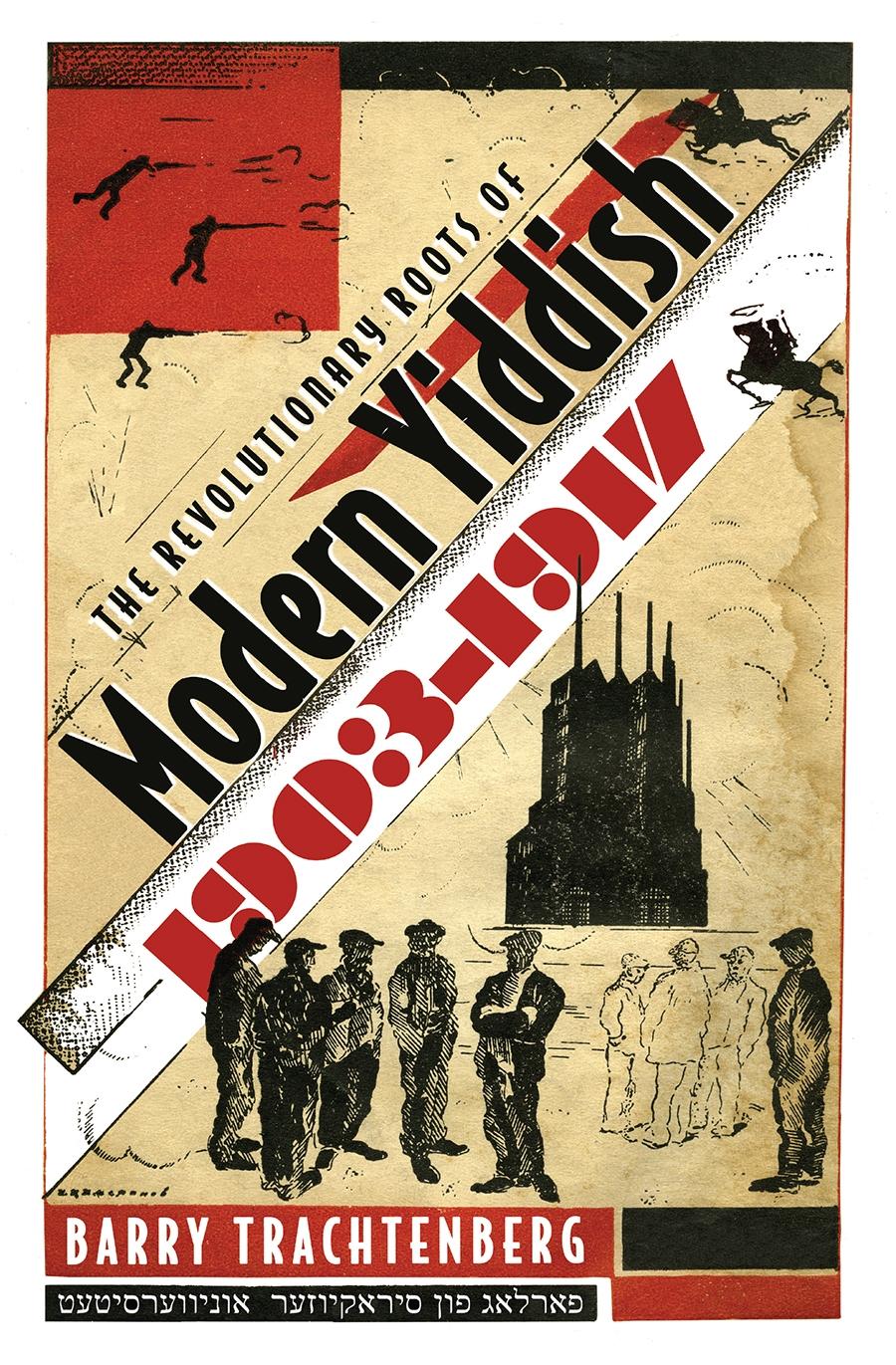
At the beginning of the twentieth century, Yiddish was widely viewed, even by many of its speakers, as a corrupt form of German that Jews had to abandon if they hoped to engage in serious intellectual, cultural, or political work. Yet, by 1917, it was the dominant language of the Russian Jewish press, a medium for modern literary criticism, a vehicle for science and learning, and the foundation of an ideology of Jewish liberation. Challenging many longstanding historical conceptions about the founding of modern Yiddish, The Revolutionary Roots of Yiddish Scholarship, 1903-1917 investigates the origins of contemporary Yiddish scholarship.
Trachtenberg reveals how, following the model set by other nationalist movements that were developing in the Russian empire, one-time revolutionaries such as the literary critic Shmuel Niger, the Marxist Zionist leader Ber Borochov, and the linguist Nokhem Shtif, dedicated themselves to the creation of a new branch of Jewish scholarship dedicated to their native language. The new "Yiddish science" was concerned with the tasks of standardizing Yiddish grammar, orthography, and word corpus, establishing a Yiddish literary tradition, exploring Jewish folk traditions, and creating an institutional structure to support their language's development. In doing so, the author argues, they hoped to reimagine Russian Jewry as a modern nation with a mature language and culture, and which deserved the same collective rights and autonomy that were being demanded by other nations in the empire.
Before Memmo my notes were scattered across PDFs. Now a workspace pulls everything into one place — I see exactly what's still left to study.
Memmo's summaries are gold before exams. I don't have to re-read 800 pages two weeks before — just the important parts.
The AI chat has saved me the night before an exam more than once. I just keep asking until I get it — no waiting on a study group to reply.
The quizzes hit exactly what I need to know. Memmo tracks what I get stuck on — so I only practice what's worth it.
Flashcards with spaced repetition are magic. Memmo knows when I'm about to forget something and brings it back.
The AI podcasts are my favorite. I listen on my way to school and get a recap without sitting at a computer.
Handbok i kvalitativa metoder
281 kr
Hållbar utveckling: en introduktion för ingenjörer och andra problemlösare
334 kr
Brymans Samhällsvetenskapliga metoder
390 kr
Projektledning
491 kr
Den orättvisa hälsan: om socioekonomiska skillnader i hälsa och livslängd
326 kr
Vetenskapsteori för nybörjare
196 kr
Organizational Leadership
429 kr
På väg mot läraryrket
172 kr
Det sociala livet i skolan: Socialpsykologiska perspektiv
253 kr
Betygsättningens didaktik
151 kr
Personality
402 kr
Studying Leadership
404 kr
Managing Innovation
477 kr
Introduktion till samhällsvetenskaplig metod
347 kr
The Psychology of Sex and Gender
698 kr
Evidens och kunskap för socialt arbete
207 kr
Introduction to Leadership
605 kr