
Before Memmo my notes were scattered across PDFs. Now a workspace pulls everything into one place — I see exactly what's still left to study.
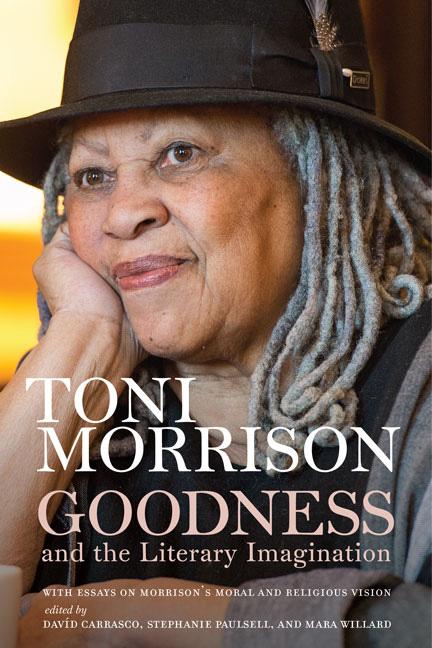
What exactly is goodness? Where is it found in the literary imagination? Toni Morrison, one of American letters’ greatest voices, pondered these perplexing questions in her celebrated Ingersoll Lecture, delivered at Harvard University in 2012 and published now for the first time in book form.
Perhaps because it is overshadowed by the more easily defined evil, goodness often escapes our attention. Recalling many literary examples, from Ahab to Coetzee’s Michael K, Morrison seeks the essence of goodness and ponders its significant place in her writing. She considers the concept in relation to unforgettable characters from her own works of fiction and arrives at conclusions that are both eloquent and edifying. In a lively interview conducted for this book, Morrison further elaborates on her lecture’s ideas, discussing goodness not only in literature but in society and history—particularly black history, which has responded to centuries of brutality with profound creativity.
Morrison’s essay is followed by a series of responses by scholars in the fields of religion, ethics, history, and literature to her thoughts on goodness and evil, mercy and love, racism and self-destruction, language and liberation, together with close examination of literary and theoretical expressions from her works. Each of these contributions, written by a scholar of religion, considers the legacy of slavery and how it continues to shape our memories, our complicities, our outcries, our lives, our communities, our literature, and our faith. In addition, the contributors engage the religious orientation in Morrison’s novels so that readers who encounter her many memorable characters such as Sula, Beloved, or Frank Money will learn and appreciate how Morrison’s notions of goodness and mercy also reflect her understanding of the sacred and the human spirit.
Before Memmo my notes were scattered across PDFs. Now a workspace pulls everything into one place — I see exactly what's still left to study.
Memmo's summaries are gold before exams. I don't have to re-read 800 pages two weeks before — just the important parts.
The AI chat has saved me the night before an exam more than once. I just keep asking until I get it — no waiting on a study group to reply.
The quizzes hit exactly what I need to know. Memmo tracks what I get stuck on — so I only practice what's worth it.
Flashcards with spaced repetition are magic. Memmo knows when I'm about to forget something and brings it back.
The AI podcasts are my favorite. I listen on my way to school and get a recap without sitting at a computer.