
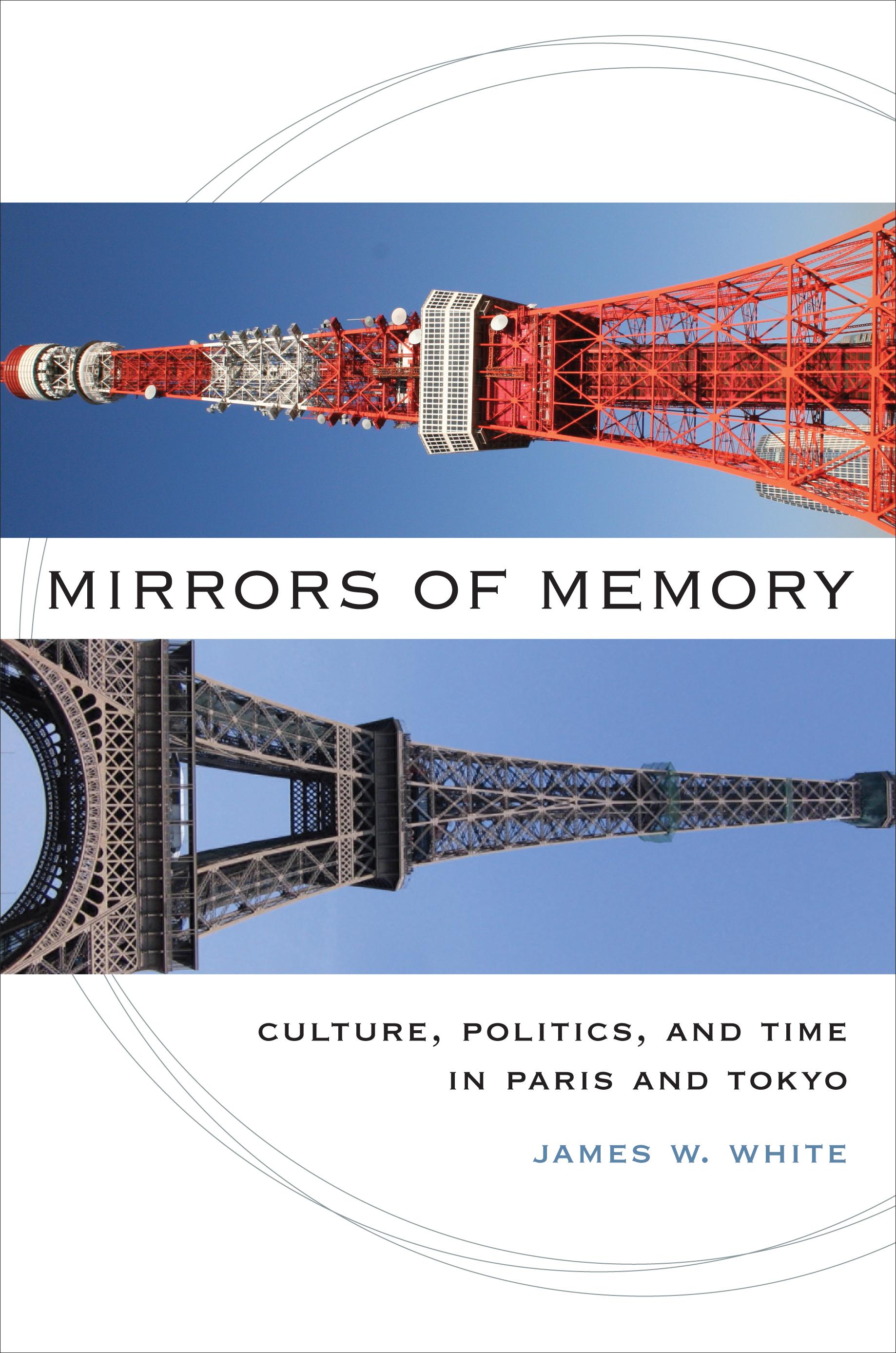
As society becomes more global, many see the world’s great cities as becoming increasingly similar. But while contemporary cultures do depend on and resemble each other in previously unimagined ways, homogenization is sometimes overestimated. In his compelling new book, James W. White considers how two of the world’s great cities, Paris and Tokyo, may appear to be growing more alike--both are vast, modern, dominating, capitalist cities--but in fact remain profoundly different places.
Tokyo’s growth appears particularly organic, with a pronounced austerity and boundaries far less clear than those of Paris, which has been planned and manipulated constantly. Paris has a thriving center and a noticeably more contentious relationship with its nation, and its own suburbs, than Tokyo does. White explores how the roles of cities and urbanism in each society, and the balance between nature and artifice, account for some of these differences. He also examines the role of authority in each location and considers the way catastrophes, such as war, alter a city--as well as the role fear plays in a city’s construction.
While the author acknowledges that Tokyo is more physically fluid and superficially chaotic than Paris, he also demonstrates that it has an invisible order of its own (including a center that, contrary to most assumptions, is not empty at all). White depicts a Tokyo that relies less on the monumental, and is less influenced by government, than most cities in the West. Where the culture of Paris emphasizes clarity, exclusion, and marginality, the public spaces of Tokyo express ambiguity, inclusiveness, and impermanence.
In the end, White makes us reconsider which city better deserves the name "City of Light." Nonetheless, he warns, several factors may combine to discourage Tokyo’s international ascendance and even to threaten the future of provincial Japan. Thus it may be Paris, paradoxically, that is better poised to improve both its own position and its country’s in the years ahead.
Pay easily by card, Klarna, Apple Pay or Google Pay. Not happy? You always have a 14-day money-back guarantee. Read more in our terms. If you have any questions, email us at hello@memmo.org.
Memmo makes studying easier – wherever you are in the world. We bring your course books and smart study tools together in one place: summaries, quizzes, podcasts and flashcards. Plus Ted, your study buddy who answers anything you wonder. Over 75,000 students already study here – built to help you learn faster and stress less.