
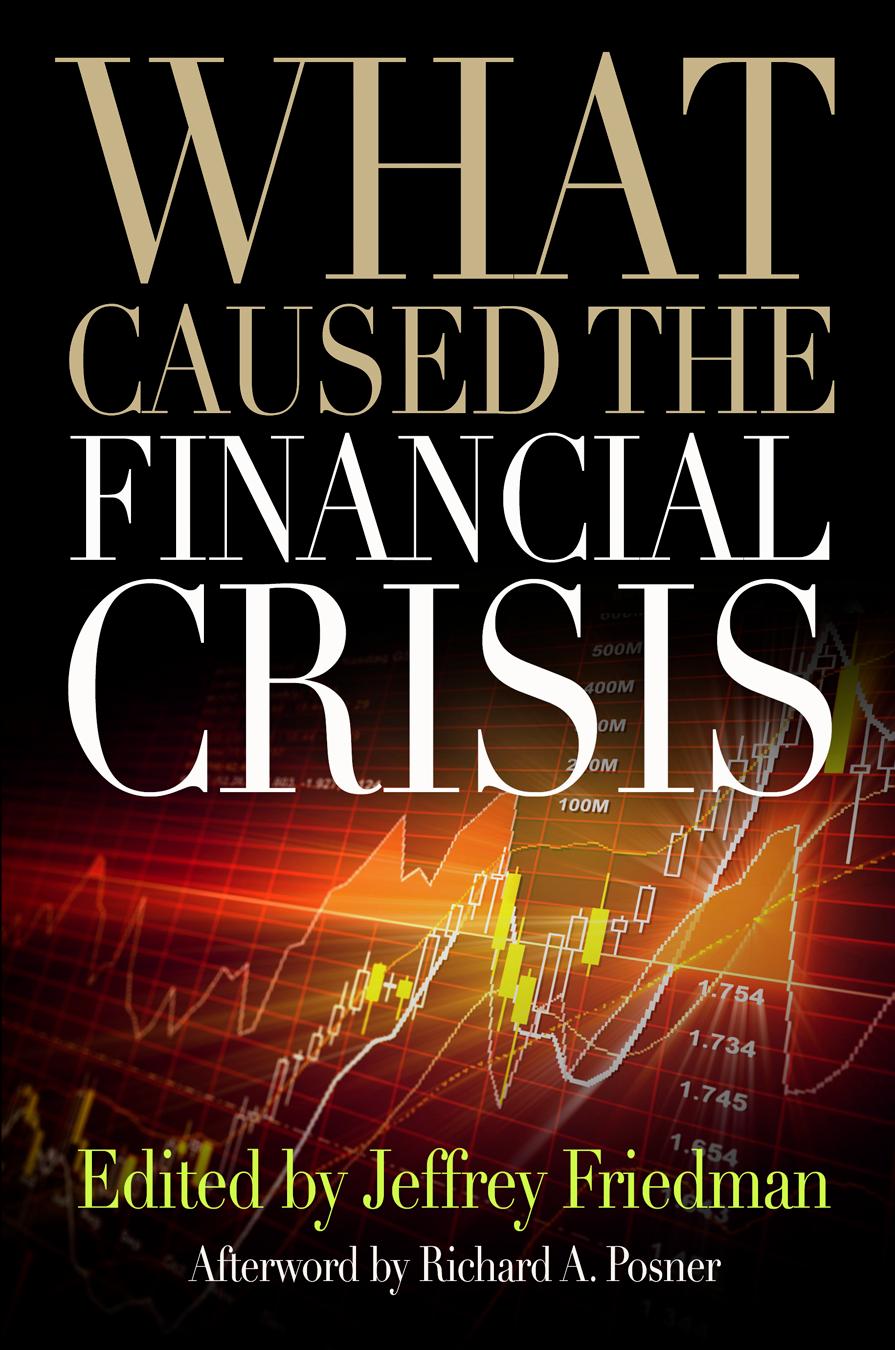
The deflation of the subprime mortgage bubble in 2006-7 is widely agreed to have been the immediate cause of the collapse of the financial sector in 2008. Consequently, one might think that uncovering the origins of subprime lending would make the root causes of the crisis obvious. That is essentially where public debate about the causes of the crisis began—and ended—in the month following the bankruptcy of Lehman Brothers and the 502-point fall in the Dow Jones Industrial Average in mid-September 2008. However, the subprime housing bubble is just one piece of the puzzle. Asset bubbles inflate and burst frequently, but severe worldwide recessions are rare. What was different this time?
In What Caused the Financial Crisis leading economists and scholars delve into the major causes of the worst financial collapse since the Great Depression and, together, present a comprehensive picture of the factors that led to it. One essay examines the role of government regulation in expanding home ownership through mortgage subsidies for impoverished borrowers, encouraging the subprime housing bubble. Another explores how banks were able to securitize mortgages by manipulating criteria used for bond ratings. How this led to inaccurate risk assessments that could not be covered by sufficient capital reserves mandated under the Basel accords is made clear in a third essay. Other essays identify monetary policy in the United States and Europe, corporate pay structures, credit-default swaps, banks' leverage, and financial deregulation as possible causes of the crisis.
With contributions from Richard A. Posner, Vernon L. Smith, Joseph E. Stiglitz, and John B. Taylor, among others, What Caused the Financial Crisis provides a cogent, comprehensive, and credible explanation of why the crisis happened. It will be an essential resource for scholars and students of finance, economics, history, law, political science, and sociology, as well as others interested in the financial crisis and the nature of modern capitalism and regulation.