
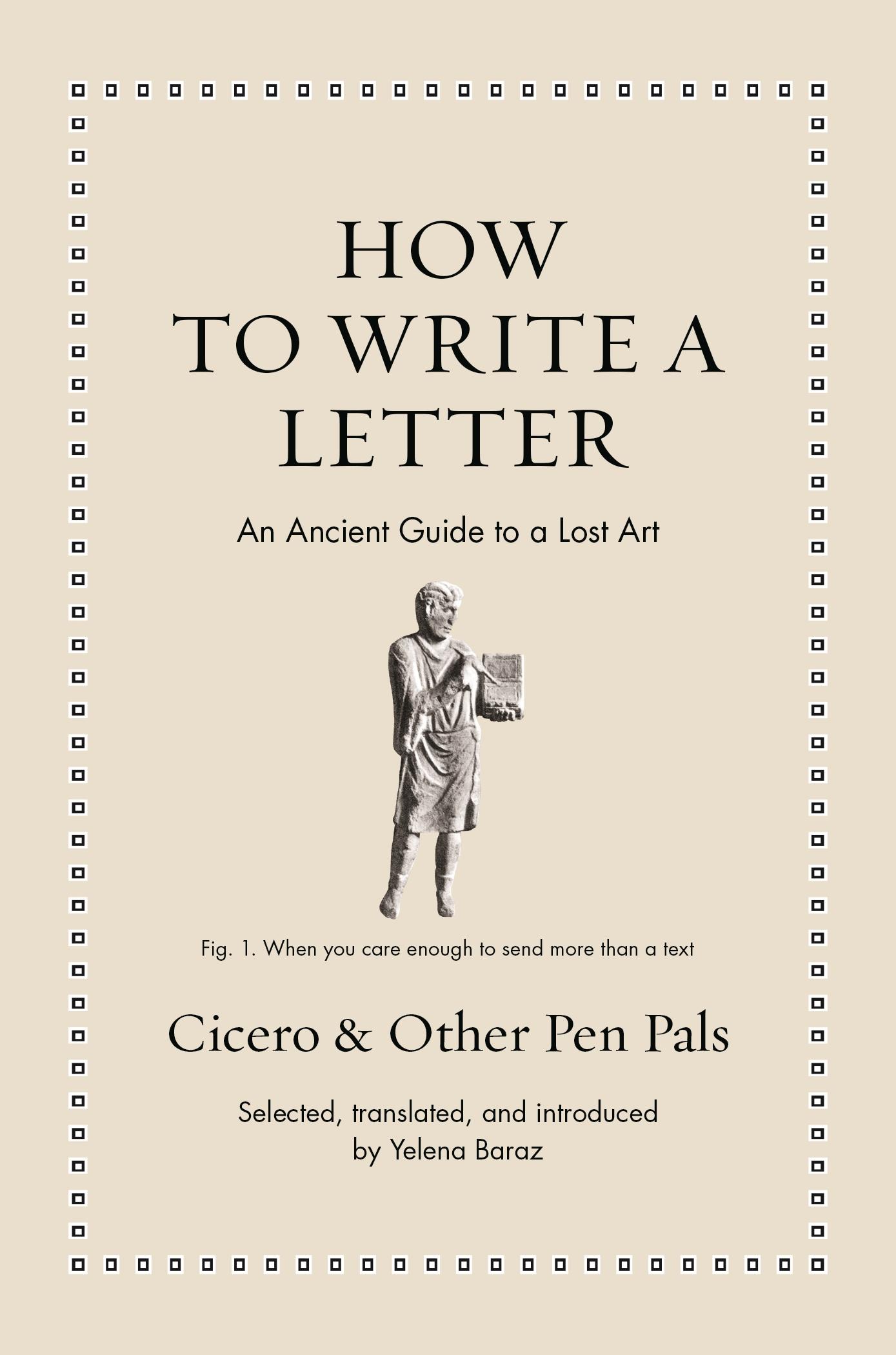
An inviting collection of Greek and Roman advice on letter writing—plus a gathering of illuminating and intimate letters from Cicero, Seneca, and Pliny
Email, texting, and AI appear to be sending the ancient art of letter writing to the verge of extinction. But this valuable skill doesn’t have to become a dead letter. In a world drowning in generic and impersonal communication, now is a perfect time to rediscover the beauty of the personal letter—thoughtful, deliberate, and capable of building and strengthening friendships, romantic relationships, and family, social, and business ties. For inspiration and instruction on how to write a great letter, there are few better guides than the ancient Greeks and Romans, for whom letters were an essential, distinctive, and flexible form. In How to Write a Letter, Yelena Baraz presents lively new translations of selections from Greek and Roman letter-writing manuals and rhetorical treatises, plus a gathering of letters by three great Roman letter writers—Marcus Tullius Cicero, Seneca the Younger, and Pliny the Younger—and the original Greek and Latin on facing pages.
The letter-writing manuals sampled here provide convenient classifications and formulas to their users while the rhetorical treatises offer instructions on tone, register, and length. The featured letters by Cicero, Seneca, and Pliny are tailored to different kinds of recipients, situations, and purposes—including consolation, invitation, recommendation, and to make or strengthen a connection—illustrating how to make every letter fit its occasion and addressee.
Filled with timeless insights about the epistolary art, How to Write a Letter is an instructive and enlightening reminder of why letters still offer us a uniquely personal means of engaging with each other.
Pay easily by card, Klarna, Apple Pay or Google Pay. Not happy? You always have a 14-day money-back guarantee. Read more in our terms. If you have any questions, email us at hello@memmo.org.
Memmo makes studying easier – wherever you are in the world. We bring your course books and smart study tools together in one place: summaries, quizzes, podcasts and flashcards. Plus Ted, your study buddy who answers anything you wonder. Over 75,000 students already study here – built to help you learn faster and stress less.