
Before Memmo my notes were scattered across PDFs. Now a workspace pulls everything into one place — I see exactly what's still left to study.
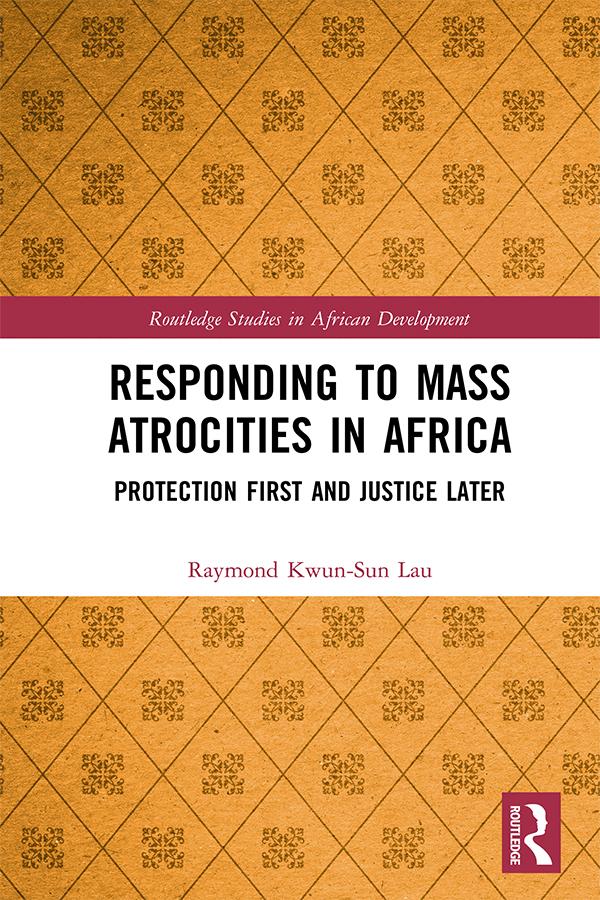
This book explores the relationship between the Responsibility to Protect (R2P) and the International Criminal Court (ICC), challenging the assumption that they are always mutually reinforcing or complementary, and examining instead the many tensions which arise between the immediate imperative of saving lives, and the more long-term prospect of punishing perpetrators and preventing future conflicts through deterrence.
Around the world, audiences in the mid-1990s watched the mass atrocities unfolding in Rwanda and Srebrenica in horror and disbelief. Emerging from these disasters came an international commitment to safeguard and protect vulnerable communities, as laid out in the R2P principle, and an international responsibility to punish perpetrators, with the establishment of the ICC. The book provides context-independent proposals for resolving contradictions between the two principles, suggesting that focusing on timing and sequencing in invoking international R2P and ICC actions could facilitate the easing of tensions. Drawing on examples from Uganda, Kenya, and Darfur, the book applies International Relations concepts and theories in order to deepen our understanding of international responses to mass atrocities. Ultimately the book concludes that a 'Protection First, Justice Later' sequence approach is necessary for managing the tension and facilitating more effective and consistent international responses.
This book makes an important contribution to discussions and debates surrounding international responses to genocide and mass atrocities. It will be of special interest to scholars, students and policymakers in International Relations, Global Governance, African Studies, International Development, Human Rights and International Criminal Law.
Before Memmo my notes were scattered across PDFs. Now a workspace pulls everything into one place — I see exactly what's still left to study.
Memmo's summaries are gold before exams. I don't have to re-read 800 pages two weeks before — just the important parts.
The AI chat has saved me the night before an exam more than once. I just keep asking until I get it — no waiting on a study group to reply.
The quizzes hit exactly what I need to know. Memmo tracks what I get stuck on — so I only practice what's worth it.
Flashcards with spaced repetition are magic. Memmo knows when I'm about to forget something and brings it back.
The AI podcasts are my favorite. I listen on my way to school and get a recap without sitting at a computer.