
Winner, 2025 Katherine Singer Kovács Book Award, Society for Cinema and Media Studies
Winner, 2024 Moving Image Book Award, Kraszna-Krausz Foundation
Winner, 2024 Choice Outstanding Academic Title
Honorable Mention, 2025 Joseph Levenson Prize (post-1900), Association for Asian Studies
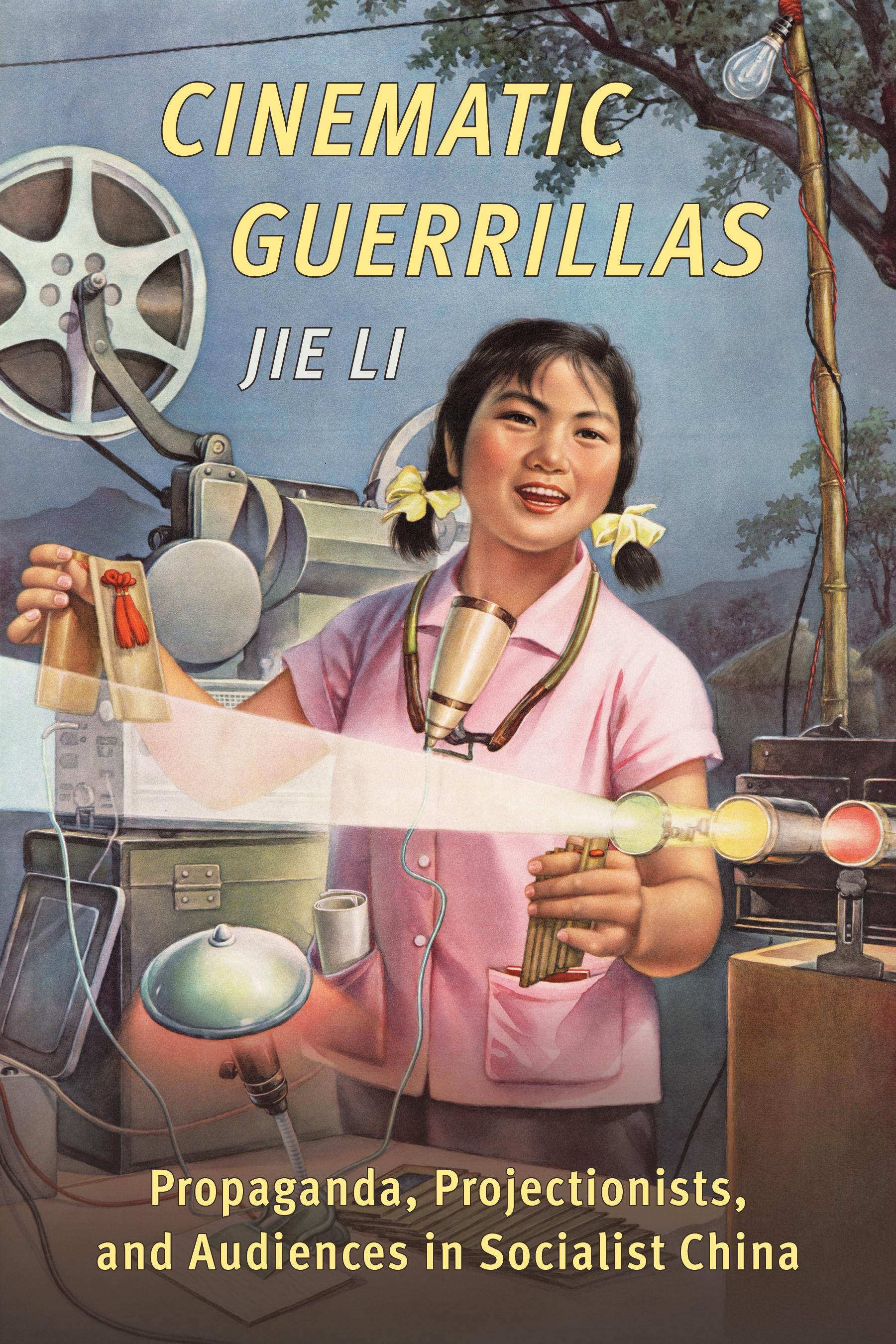
How might cinema make revolution and mobilize the masses? In socialist China, the film exhibition network expanded from fewer than six hundred movie theaters to more than a hundred thousand mobile film projectionist teams. Holding screenings in improvised open-air spaces in rural areas lacking electricity, these roving projectionists brought not only films but also power generators, loudspeakers, slideshows, posters, live performances, and mass ritual participation, amplifying the era’s utopian dreams and violent upheavals.
Cinematic Guerrillas is a media history of Chinese film exhibition and reception that offers fresh insights into the powers and limits of propaganda. Drawing on a wealth of archives, memoirs, interviews, and ethnographic fieldwork, Jie Li examines the media networks and environments, discourses and practices, experiences and memories of film projectionists and their grassroots audiences from the 1940s to the 1980s. She considers the ideology and practice of “cinematic guerrillas”—at once denoting onscreen militants, off-the-grid movie teams, and unruly moviegoers—bridging Maoist iconography, the experiences of projectionists, and popular participation and resistance. Li reconceptualizes socialist media practices as “revolutionary spirit mediumship” that aimed to turn audiences into congregations, contribute to the Mao cult, convert skeptics of revolutionary miracles, and exorcize class enemies.
Cinematic Guerrillas considers cinema’s meanings for revolution and nation building; successive generations of projectionists; workers, peasants, and soldiers; women and ethnic minorities; and national leaders, local cadres, and cultural censors. By reading diverse, vivid, and often surprising accounts of moviegoing, Li excavates Chinese media theories that provide a critical new perspective on world cinema.
Pay easily by card, Klarna, Apple Pay or Google Pay. Not happy? You always have a 14-day money-back guarantee. Read more in our terms. If you have any questions, email us at hello@memmo.org.
Memmo makes studying easier – wherever you are in the world. We bring your course books and smart study tools together in one place: summaries, quizzes, podcasts and flashcards. Plus Ted, your study buddy who answers anything you wonder. Over 50,000 students already study here – built to help you learn faster and stress less.