
Before Memmo my notes were scattered across PDFs. Now a workspace pulls everything into one place — I see exactly what's still left to study.
Winner, 2023 Morris D. Forkosch Prize, Journal of the History of Ideas
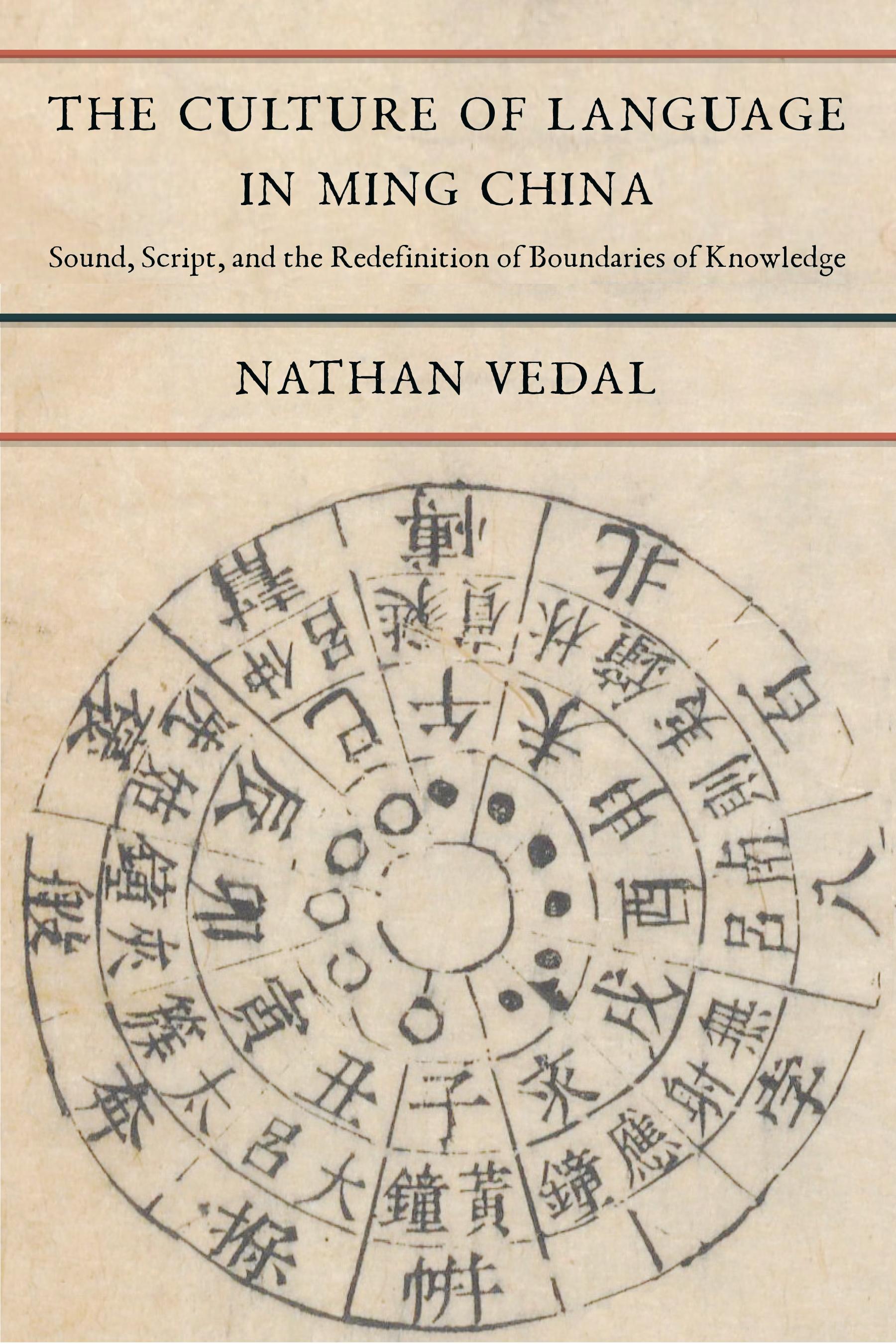
The scholarly culture of Ming dynasty China (1368–1644) is often seen as prioritizing philosophy over concrete textual study. Nathan Vedal uncovers the preoccupation among Ming thinkers with specialized linguistic learning, a field typically associated with the intellectual revolution of the eighteenth century. He explores the collaboration of Confucian classicists and Buddhist monks, opera librettists and cosmological theorists, who joined forces in the pursuit of a universal theory of language.
Drawing on a wide range of overlooked scholarly texts, literary commentaries, and pedagogical materials, Vedal examines how Ming scholars positioned the study of language within an interconnected nexus of learning. He argues that for sixteenth- and seventeenth-century thinkers, the boundaries among the worlds of classicism, literature, music, cosmology, and religion were far more fluid and porous than they became later. In the eighteenth century, Qing thinkers pared away these other fields from linguistic learning, creating a discipline focused on corroborating the linguistic features of ancient texts.
Documenting a major transformation in knowledge production, this book provides a framework for rethinking global early modern intellectual developments. It offers a powerful alternative to the conventional understanding of late imperial Chinese intellectual history by focusing on the methods of scholarly practice and the boundaries by which contemporary thinkers defined their field of study.
Before Memmo my notes were scattered across PDFs. Now a workspace pulls everything into one place — I see exactly what's still left to study.
Memmo's summaries are gold before exams. I don't have to re-read 800 pages two weeks before — just the important parts.
The AI chat has saved me the night before an exam more than once. I just keep asking until I get it — no waiting on a study group to reply.
The quizzes hit exactly what I need to know. Memmo tracks what I get stuck on — so I only practice what's worth it.
Flashcards with spaced repetition are magic. Memmo knows when I'm about to forget something and brings it back.
The AI podcasts are my favorite. I listen on my way to school and get a recap without sitting at a computer.
Handbok i kvalitativa metoder
281 kr
Hållbar utveckling: en introduktion för ingenjörer och andra problemlösare
334 kr
Brymans Samhällsvetenskapliga metoder
390 kr
Projektledning
491 kr
Den orättvisa hälsan: om socioekonomiska skillnader i hälsa och livslängd
326 kr
Vetenskapsteori för nybörjare
196 kr
Organizational Leadership
429 kr
På väg mot läraryrket
172 kr
Det sociala livet i skolan: Socialpsykologiska perspektiv
253 kr
Betygsättningens didaktik
151 kr
Personality
402 kr
Studying Leadership
404 kr
Managing Innovation
477 kr
Introduktion till samhällsvetenskaplig metod
347 kr
The Psychology of Sex and Gender
698 kr
Evidens och kunskap för socialt arbete
207 kr
Introduction to Leadership
605 kr