
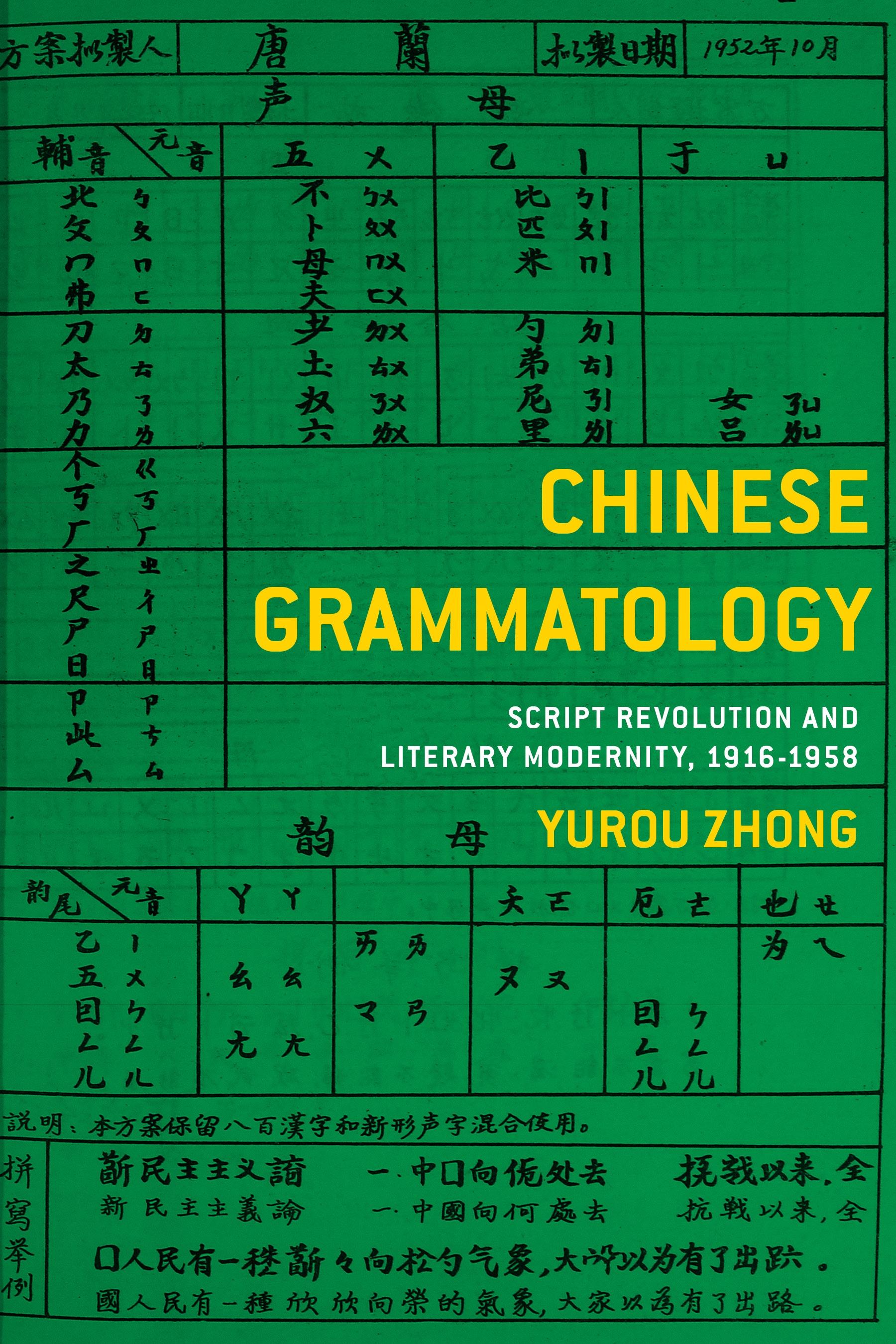
Today, Chinese characters are described as a national treasure, the core of the nation’s civilizational identity. Yet for nearly half of the twentieth century, reformers waged war on the Chinese script. They declared it an archaic hindrance to modernization, portraying the ancient system of writing as a roadblock to literacy and therefore science and democracy. Movements spanning the political spectrum proposed abandonment of characters and alphabetization of Chinese writing, although in the end the Communist Party opted for character simplification.
Chinese Grammatology traces the origins, transmutations, and containment of this script revolution to provide a groundbreaking account of its formative effects on Chinese literature and culture, and lasting implications for the encounter between the alphabetic and nonalphabet worlds. Yurou Zhong explores the growth of competing Romanization and Latinization movements aligned with the clashing Nationalists and Communists. She finds surprising affinities between alphabetic reform and modern Chinese literary movements and examines the politics of literacy programs and mass education against the backdrop of war and revolution. Zhong places the Chinese script revolution in the global context of a phonocentric dominance that privileges phonetic writing, contending that the eventual retention of characters constituted an anti-ethnocentric, anti-imperial critique that coincided with postwar decolonization movements and predated the emergence of Deconstructionism. By revealing the consequences of one of the biggest linguistic experiments in history, Chinese Grammatology provides an ambitious rethinking of the origins of Chinese literary modernity and the politics of the science of writing.