
Vor Memmo waren meine Notizen überall in PDFs verstreut. Jetzt sammelt ein Arbeitsbereich alles an einem Ort – ich sehe genau, was noch zu lernen ist.
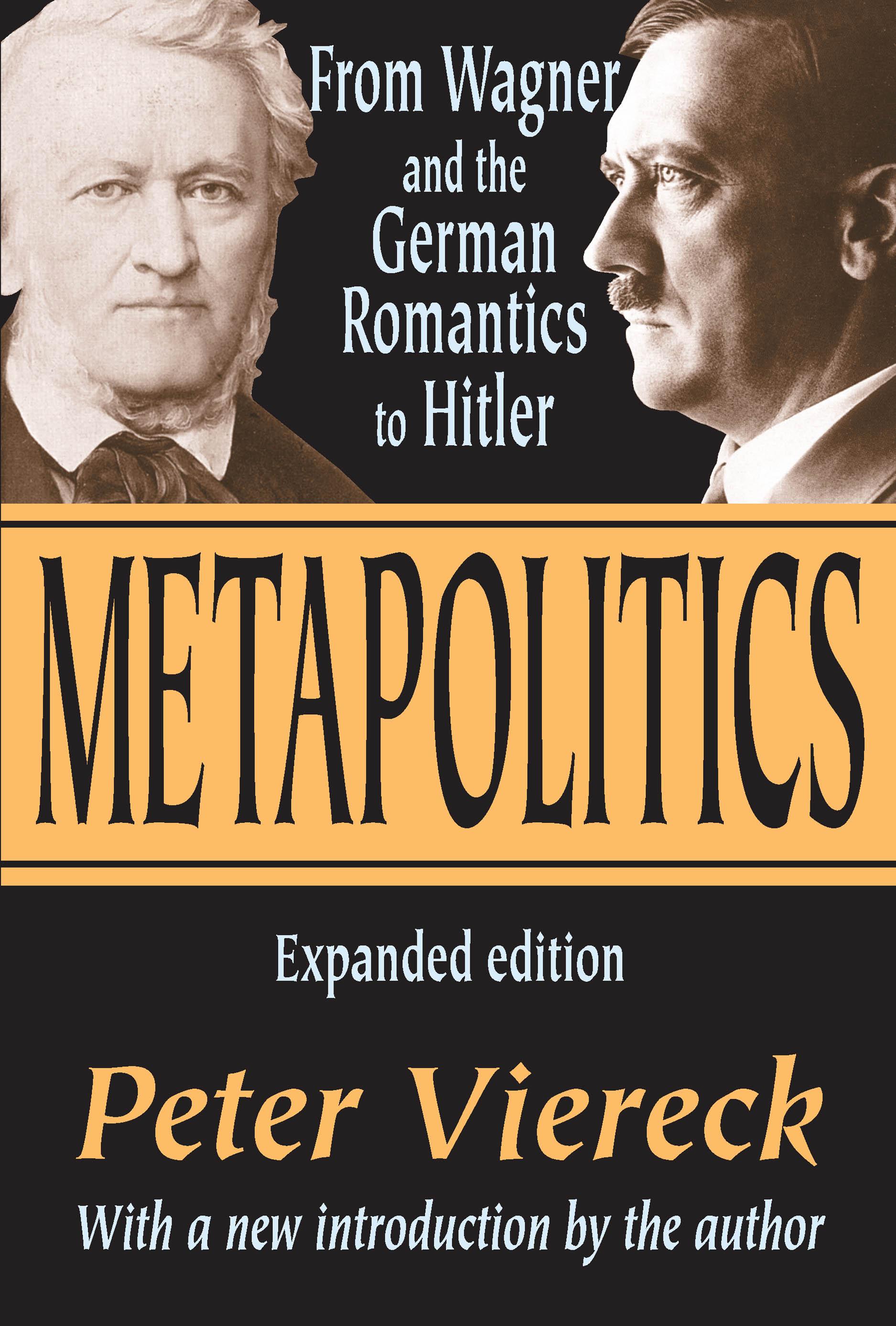
More than half a century after the fall of the Third Reich, Nazism, its roots and its essential nature, remain a central and unresolved enigma of the twentieth century. During the period of Hitler's ascendancy, most attempts at explaining this unprecedented phenomenon were framed in "economic," often Marxist, sociological terms and concepts. Peter Viereck's Metapolitics, initially published in 1941, broke with this convention by indicting Hitler in terms of the Judaic-Christian ethical tradition and locating certain elements of the Nazi worldview in German romantic poetry, music, and social thought. Newly expanded, Metapolitics remains a key work in the cultural interpretation of Nazism and totalitarianism and in the psychological interpretation of Hitler as a Wagnerite and failed artist.
The term "metapolitics," a coinage from Richard Wagner's nationalist circle, signifies an ideology resulting from five distinct strands: romanticism (embodied chiefly in the Wagnerian ethos), the pseudo-science of race, Fuehrer worship, vague economic socialism, and the alleged supernatural and unconscious force of the Volk collectivity. Together, those elements engendered an emphasis on irrationalism and hysteria and belief in a special German mission to direct the course of the world's history.
Viereck analyzes nineteenth-century German thought's conflicting attitudes toward political procedures and social arrangements rooted in classical, rational, legalistic, and Christian traditions. This edition includes an appreciation by Thomas Mann and an exchange with Jacques Barzun debating Viereck's criticism of German romanticism. Viereck's essays on the case of Albert Speer, on Claus von Stauffenberg (the German officer who led the army conspiracy to assassinate Hitler), and on the poets Stefan George and Georg Heym appear here for the first time in book form.
Vor Memmo waren meine Notizen überall in PDFs verstreut. Jetzt sammelt ein Arbeitsbereich alles an einem Ort – ich sehe genau, was noch zu lernen ist.
Memmos Zusammenfassungen sind Gold wert vor Prüfungen. Ich muss nicht zwei Wochen vorher 800 Seiten neu lesen – nur die wichtigsten Teile.
Der KI-Chat hat mich schon mehr als einmal am Abend vor einer Prüfung gerettet. Ich frage einfach so lange, bis ich es kapiere – ohne auf eine Antwort in einer Lerngruppe warten zu müssen.
Die Quizzes treffen genau das, was ich wissen muss. Memmo merkt sich, wo ich Schwierigkeiten habe – so übe ich nur das, was sich lohnt.
Lernkarten mit Spaced Repetition sind Magie. Memmo weiß, wann ich etwas vergessen könnte und zeigt es mir wieder.
Die KI-Podcasts sind mein Favorit. Ich höre sie auf dem Weg zur Uni und bekomme eine Wiederholung, ohne am Computer sitzen zu müssen.

Handbok i kvalitativa metoder
281 kr

Hållbar utveckling: en introduktion för ingenjörer och andra problemlösare
334 kr

Brymans Samhällsvetenskapliga metoder
390 kr

Projektledning
491 kr

Den orättvisa hälsan: om socioekonomiska skillnader i hälsa och livslängd
326 kr

Organizational Leadership
429 kr

Vetenskapsteori för nybörjare
196 kr

På väg mot läraryrket
172 kr

Det sociala livet i skolan: Socialpsykologiska perspektiv
253 kr

Betygsättningens didaktik
151 kr

Personality
402 kr

Studying Leadership
404 kr

Managing Innovation
477 kr

Introduktion till samhällsvetenskaplig metod
347 kr

The Psychology of Sex and Gender
698 kr

Introduction to Leadership
605 kr

Evidens och kunskap för socialt arbete
207 kr