
Vor Memmo waren meine Notizen überall in PDFs verstreut. Jetzt sammelt ein Arbeitsbereich alles an einem Ort – ich sehe genau, was noch zu lernen ist.
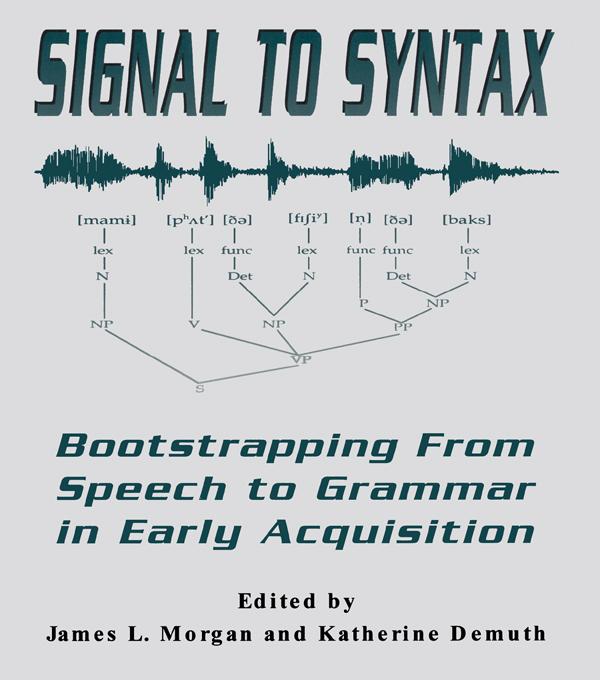
In the beginning, before there are words, or syntax, or discourse, there is speech. Speech is an infant's gateway to language. Without exposure to speech, no language--or at most only a feeble facsimile of language--develops, regardless of how rich a child's biological endowment for language learning may be. But little is given directly in speech--not words, for example, as anyone who has ever listened to fluent conversation in an unfamiliar language can attest. Rather, words and phrases, or rudimentary categories--or whatever other information is required for syntactic and semantic analyses to begin operating--must be pulled from speech through an infant's developing perceptual capacities. By the end of the first year, an infant can segment at least some words from fluent speech. Beyond this, how impoverished or rich an infant's representations of input may be remains largely unknown. Clearly, in the debate over determinants of early language acquisition, the input speech stream has too often been offhandedly dismissed as a potential source of information.
This volume brings together internationally-known scholars from a range of disciplines--linguistics, psychology, cognitive and computer science, and acoustics --who share common interests in how speech, in its phonological, prosodic, distributional, and statistical properties, may encode information useful for early language learning, and how such information may be deciphered by very young children. These scholars offer a spectrum of viewpoints on the possibility that aspects of speech may provide bootstraps for language learning; contribute important, state-of-the-art findings across a variety of relevant domains; and illuminate critical directions for future inquiry. The publication of this volume represents a significant step in renewing the bonds between two fields that have long been sundered--speech perception and language acquisition.
Vor Memmo waren meine Notizen überall in PDFs verstreut. Jetzt sammelt ein Arbeitsbereich alles an einem Ort – ich sehe genau, was noch zu lernen ist.
Memmos Zusammenfassungen sind Gold wert vor Prüfungen. Ich muss nicht zwei Wochen vorher 800 Seiten neu lesen – nur die wichtigsten Teile.
Der KI-Chat hat mich schon mehr als einmal am Abend vor einer Prüfung gerettet. Ich frage einfach so lange, bis ich es kapiere – ohne auf eine Antwort in einer Lerngruppe warten zu müssen.
Die Quizzes treffen genau das, was ich wissen muss. Memmo merkt sich, wo ich Schwierigkeiten habe – so übe ich nur das, was sich lohnt.
Lernkarten mit Spaced Repetition sind Magie. Memmo weiß, wann ich etwas vergessen könnte und zeigt es mir wieder.
Die KI-Podcasts sind mein Favorit. Ich höre sie auf dem Weg zur Uni und bekomme eine Wiederholung, ohne am Computer sitzen zu müssen.

Handbok i kvalitativa metoder
281 kr

Hållbar utveckling: en introduktion för ingenjörer och andra problemlösare
334 kr

Brymans Samhällsvetenskapliga metoder
390 kr

Projektledning
491 kr

Den orättvisa hälsan: om socioekonomiska skillnader i hälsa och livslängd
326 kr

Vetenskapsteori för nybörjare
196 kr

Organizational Leadership
429 kr

På väg mot läraryrket
172 kr

Det sociala livet i skolan: Socialpsykologiska perspektiv
253 kr

Betygsättningens didaktik
151 kr

Personality
402 kr

Studying Leadership
404 kr

Managing Innovation
449 kr

Introduktion till samhällsvetenskaplig metod
347 kr

The Psychology of Sex and Gender
698 kr

Evidens och kunskap för socialt arbete
207 kr

Introduction to Leadership
605 kr