
Vor Memmo waren meine Notizen überall in PDFs verstreut. Jetzt sammelt ein Arbeitsbereich alles an einem Ort – ich sehe genau, was noch zu lernen ist.
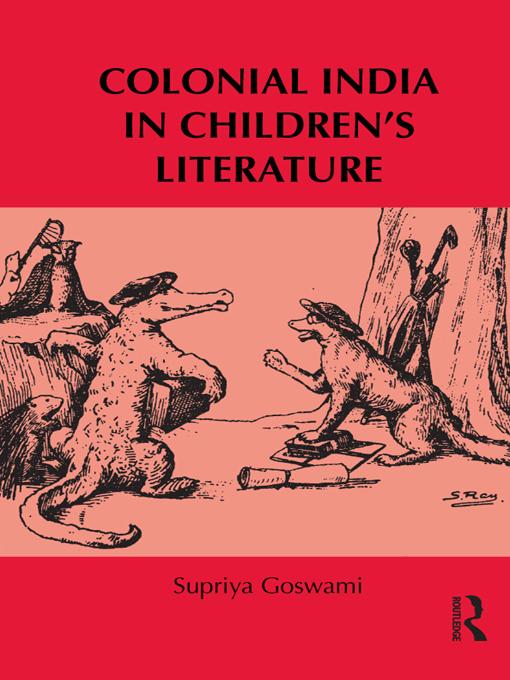
Colonial India in Children’s Literature is the first book-length study to explore the intersections of children’s literature and defining historical moments in colonial India. Engaging with important theoretical and critical literature that deals with colonialism, hegemony, and marginalization in children's literature, Goswami proposes that British, Anglo-Indian, and Bengali children’s literature respond to five key historical events: the missionary debates preceding the Charter Act of 1813, the defeat of Tipu Sultan, the Mutiny of 1857, the birth of Indian nationalism, and the Swadeshi movement resulting from the Partition of Bengal in 1905. Through a study of works by Mary Sherwood (1775-1851), Barbara Hofland (1770-1844), Sara Jeanette Duncan (1861-1922), Rudyard Kipling (1865-1936), Upendrakishore Ray (1863-1915), and Sukumar Ray (1887-1923), Goswami examines how children’s literature negotiates and represents these momentous historical forces that unsettled Britain’s imperial ambitions in India.
Goswami argues that nineteenth-century British and Anglo-Indian children’s texts reflect two distinct moods in Britain’s colonial enterprise in India. Sherwood and Hofland (writing before 1857) use the tropes of conversion and captivity as a means of awakening children to the dangers of India, whereas Duncan and Kipling shift the emphasis to martial prowess, adaptability, and empirical knowledge as defining qualities in British and Anglo-Indian children. Furthermore, Goswami’s analysis of early nineteenth-century children’s texts written by women authors redresses the preoccupation with male authors and boys’ adventure stories that have largely informed discussions of juvenility in the context of colonial India.
This groundbreaking book also seeks to open up the canon by examining early twentieth-century Bengali children’s texts that not only draw literary inspiration from nineteenth-century British children’s literature, but whose themes are equally shaped by empire.
Vor Memmo waren meine Notizen überall in PDFs verstreut. Jetzt sammelt ein Arbeitsbereich alles an einem Ort – ich sehe genau, was noch zu lernen ist.
Memmos Zusammenfassungen sind Gold wert vor Prüfungen. Ich muss nicht zwei Wochen vorher 800 Seiten neu lesen – nur die wichtigsten Teile.
Der KI-Chat hat mich schon mehr als einmal am Abend vor einer Prüfung gerettet. Ich frage einfach so lange, bis ich es kapiere – ohne auf eine Antwort in einer Lerngruppe warten zu müssen.
Die Quizzes treffen genau das, was ich wissen muss. Memmo merkt sich, wo ich Schwierigkeiten habe – so übe ich nur das, was sich lohnt.
Lernkarten mit Spaced Repetition sind Magie. Memmo weiß, wann ich etwas vergessen könnte und zeigt es mir wieder.
Die KI-Podcasts sind mein Favorit. Ich höre sie auf dem Weg zur Uni und bekomme eine Wiederholung, ohne am Computer sitzen zu müssen.

Handbok i kvalitativa metoder
281 kr

Hållbar utveckling: en introduktion för ingenjörer och andra problemlösare
334 kr

Brymans Samhällsvetenskapliga metoder
390 kr

Projektledning
491 kr

Den orättvisa hälsan: om socioekonomiska skillnader i hälsa och livslängd
326 kr

Organizational Leadership
429 kr

Vetenskapsteori för nybörjare
196 kr

På väg mot läraryrket
172 kr

Det sociala livet i skolan: Socialpsykologiska perspektiv
253 kr

Betygsättningens didaktik
151 kr

Personality
402 kr

Studying Leadership
404 kr

Managing Innovation
477 kr

Introduktion till samhällsvetenskaplig metod
347 kr

The Psychology of Sex and Gender
698 kr

Introduction to Leadership
605 kr

Evidens och kunskap för socialt arbete
207 kr