
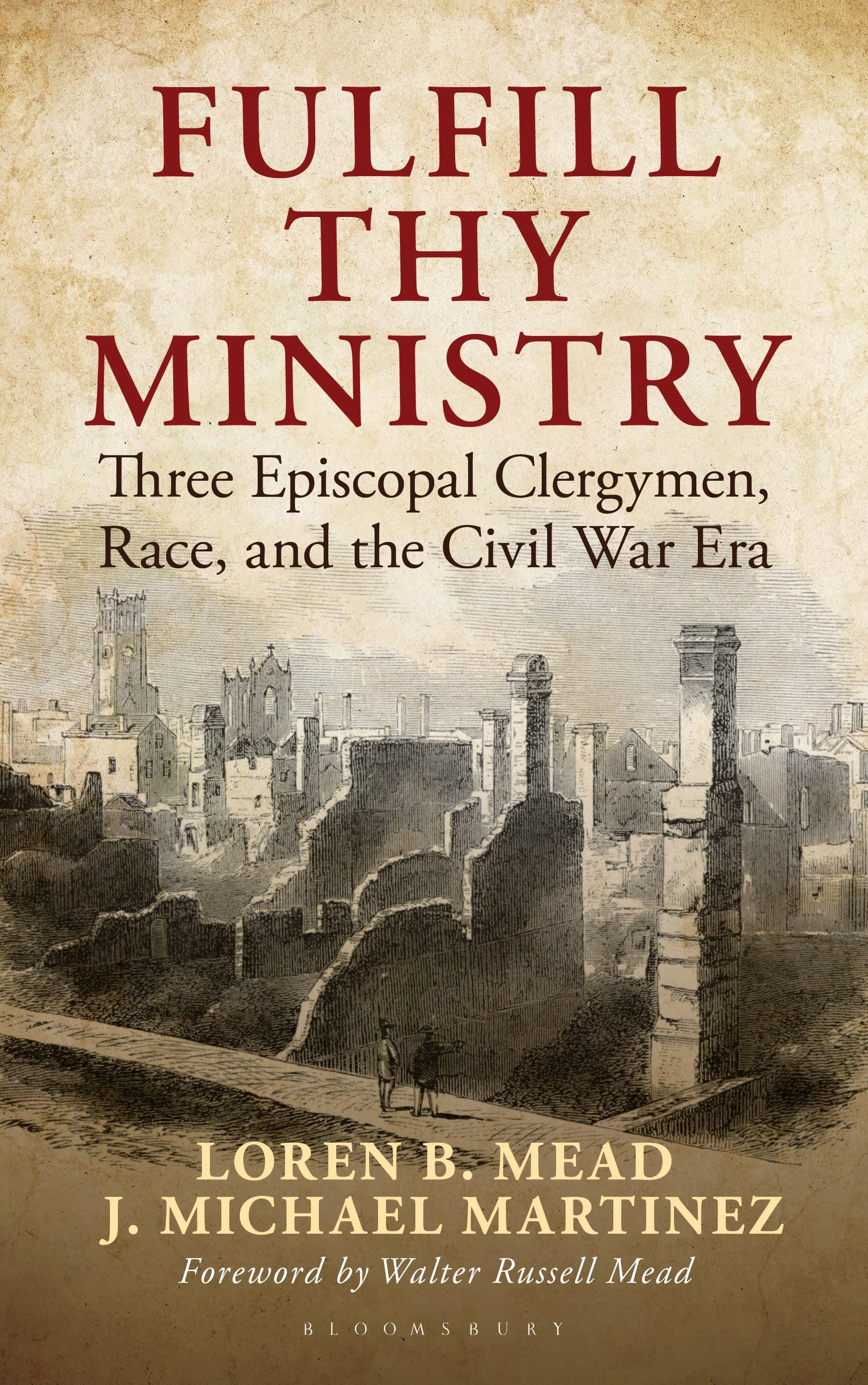
Race and enslavement were the major issues confronting the Christian Church in the United States throughout the nineteenth century. During the antebellum era, churches debated whether their scriptures condoned race-based slavery.
To understand better how these Southern churches evaluated and made their choices in postwar nineteenth-century America, this book examines the lives and careers of three white Episcopal clergy from South Carolina: Peter Fayssoux Stevens (1830-1910), A. Toomer Porter (1828-1902), and William Porcher DuBose (1836-1918). These men present illuminating case studies because they were contemporaries and their early lives were remarkably similar, yet their responses to how the Southern church welcomed or rejected freed Blacks significantly diverged following the Civil War.
Each of these representative figures was born in antebellum South Carolina, reared in the Protestant Episcopal Church (PEC), and called to ministry. Porter and DuBose hailed from families made wealthy by the labor of enslaved persons. When war erupted in 1861, each man served the Confederate States of America (CSA). After the war, however, their attitudes toward race sharply differed.
Their responses to the end of the Civil War, Reconstruction, and Jim Crow can be understood within the context of the men's lives and careers. That three white South Carolina Episcopalians born within a decade of each other would pursue divergent paths in subsequent years highlights the contradictions, complexities, and hypocrisies of faith and racial attitudes in the nineteenth-century Protestant church.
The book contributes to Southern religious history, church history, and American religious history. Studying these figures tells a larger story about how the Christian church, and the South, understood faith commitments in the context of social and religious racism-racism that, sadly, remains in evidence in the church today.
To understand better how these Southern churches evaluated and made their choices in postwar nineteenth-century America, this book examines the lives and careers of three white Episcopal clergy from South Carolina: Peter Fayssoux Stevens (1830-1910), A. Toomer Porter (1828-1902), and William Porcher DuBose (1836-1918). These men present illuminating case studies because they were contemporaries and their early lives were remarkably similar, yet their responses to how the Southern church welcomed or rejected freed Blacks significantly diverged following the Civil War.
Each of these representative figures was born in antebellum South Carolina, reared in the Protestant Episcopal Church (PEC), and called to ministry. Porter and DuBose hailed from families made wealthy by the labor of enslaved persons. When war erupted in 1861, each man served the Confederate States of America (CSA). After the war, however, their attitudes toward race sharply differed.
Their responses to the end of the Civil War, Reconstruction, and Jim Crow can be understood within the context of the men's lives and careers. That three white South Carolina Episcopalians born within a decade of each other would pursue divergent paths in subsequent years highlights the contradictions, complexities, and hypocrisies of faith and racial attitudes in the nineteenth-century Protestant church.
The book contributes to Southern religious history, church history, and American religious history. Studying these figures tells a larger story about how the Christian church, and the South, understood faith commitments in the context of social and religious racism-racism that, sadly, remains in evidence in the church today.
Betal nemt med kort, Klarna, Apple Pay eller Google Pay. Ikke tilfreds? Du har altid 14 dages fortrydelsesret. Læs mere i vores vilkår. Har du spørgsmål, så send os en mail på hello@memmo.org.
Memmo gør det nemmere at studere – uanset hvor du er i verden. Hos os samler du dine kursusbøger og smarte studieværktøjer ét sted: resuméer, quizzer, podcasts og flashcards. Og så er der Ted, din studieven, der svarer på alt, du undrer dig over. Over 50 000 studerende studerer allerede her – bygget til at hjælpe dig med at lære hurtigere og stresse mindre.