
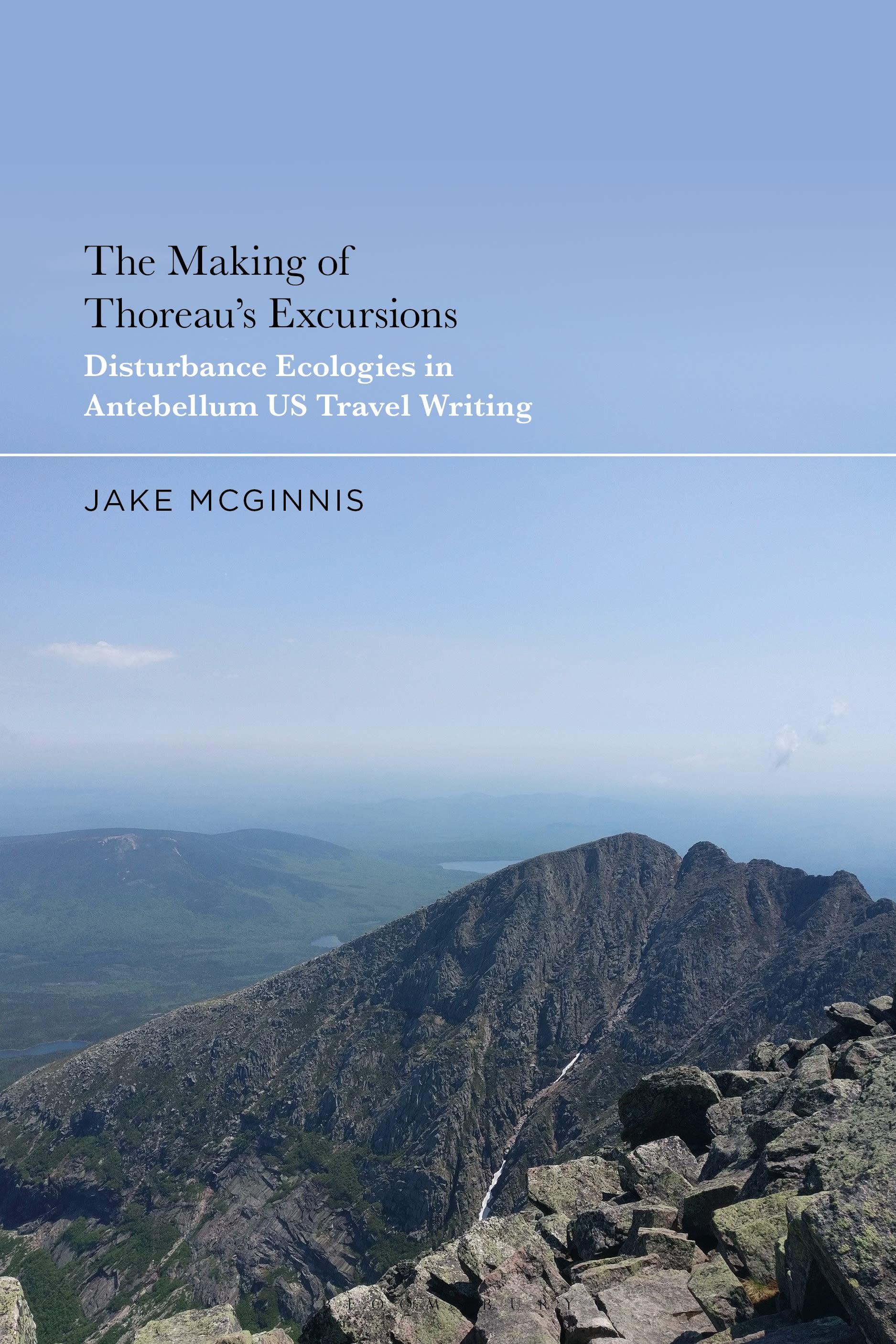
Explores Thoreau's excursions as a method of travel writing, showing a literary process grounded in the emergent instability of the Anthropocene.
In the final years of his life, Henry David Thoreau outlined a unique method of writing about lived experience which touched at the fundamental nature of human life on a changing planet. The Making of Thoreau's Excursions examines the development of this literary method, the excursion, which veers away from more mainstream United States travel writing toward an ecological worldview and ultimately emerges as a primary form in later American environmental writing.
For some 19th-century travelers, experiences beyond home presented a disturbance to more settled ways of understanding the world. Jake McGinnis shows how Thoreau, as well as Margaret Fuller, Ojibwe minister George Copway, and George William Curtis, attended to these disruptions. In the excursion, the actual conditions of complex natural-cultural systems come to directly shape the ways in which a story is told. Nonfiction narrative offered a site of experimentation and adaptation, a place in which literature could respond to ecological ruptures ranging from deforestation and increased agricultural production to the disruption of Indigenous ways of living in the world.
These patterns of disturbance and adaptation, or disturbance ecologies, suggest a new form of resilience in which literary texts engage with and draw from the dynamic earthly conditions in which they are enmeshed.
In the final years of his life, Henry David Thoreau outlined a unique method of writing about lived experience which touched at the fundamental nature of human life on a changing planet. The Making of Thoreau's Excursions examines the development of this literary method, the excursion, which veers away from more mainstream United States travel writing toward an ecological worldview and ultimately emerges as a primary form in later American environmental writing.
For some 19th-century travelers, experiences beyond home presented a disturbance to more settled ways of understanding the world. Jake McGinnis shows how Thoreau, as well as Margaret Fuller, Ojibwe minister George Copway, and George William Curtis, attended to these disruptions. In the excursion, the actual conditions of complex natural-cultural systems come to directly shape the ways in which a story is told. Nonfiction narrative offered a site of experimentation and adaptation, a place in which literature could respond to ecological ruptures ranging from deforestation and increased agricultural production to the disruption of Indigenous ways of living in the world.
These patterns of disturbance and adaptation, or disturbance ecologies, suggest a new form of resilience in which literary texts engage with and draw from the dynamic earthly conditions in which they are enmeshed.
Sider: 216
Kategori: Litteraturvetenskap & Teori
e-ISBN: 9798765163580
Forsendelsesvægt: 1.2 kg
Sendes inden for: 1-2 dage
Betal nemt med kort, Klarna, Apple Pay eller Google Pay. Ikke tilfreds? Du har altid 14 dages fortrydelsesret. Læs mere i vores vilkår. Har du spørgsmål, så send os en mail på hello@memmo.org.
Memmo gør det nemmere at studere – uanset hvor du er i verden. Hos os samler du dine kursusbøger og smarte studieværktøjer ét sted: resuméer, quizzer, podcasts og flashcards. Og så er der Ted, din studieven, der svarer på alt, du undrer dig over. Over 50 000 studerende studerer allerede her – bygget til at hjælpe dig med at lære hurtigere og stresse mindre.