
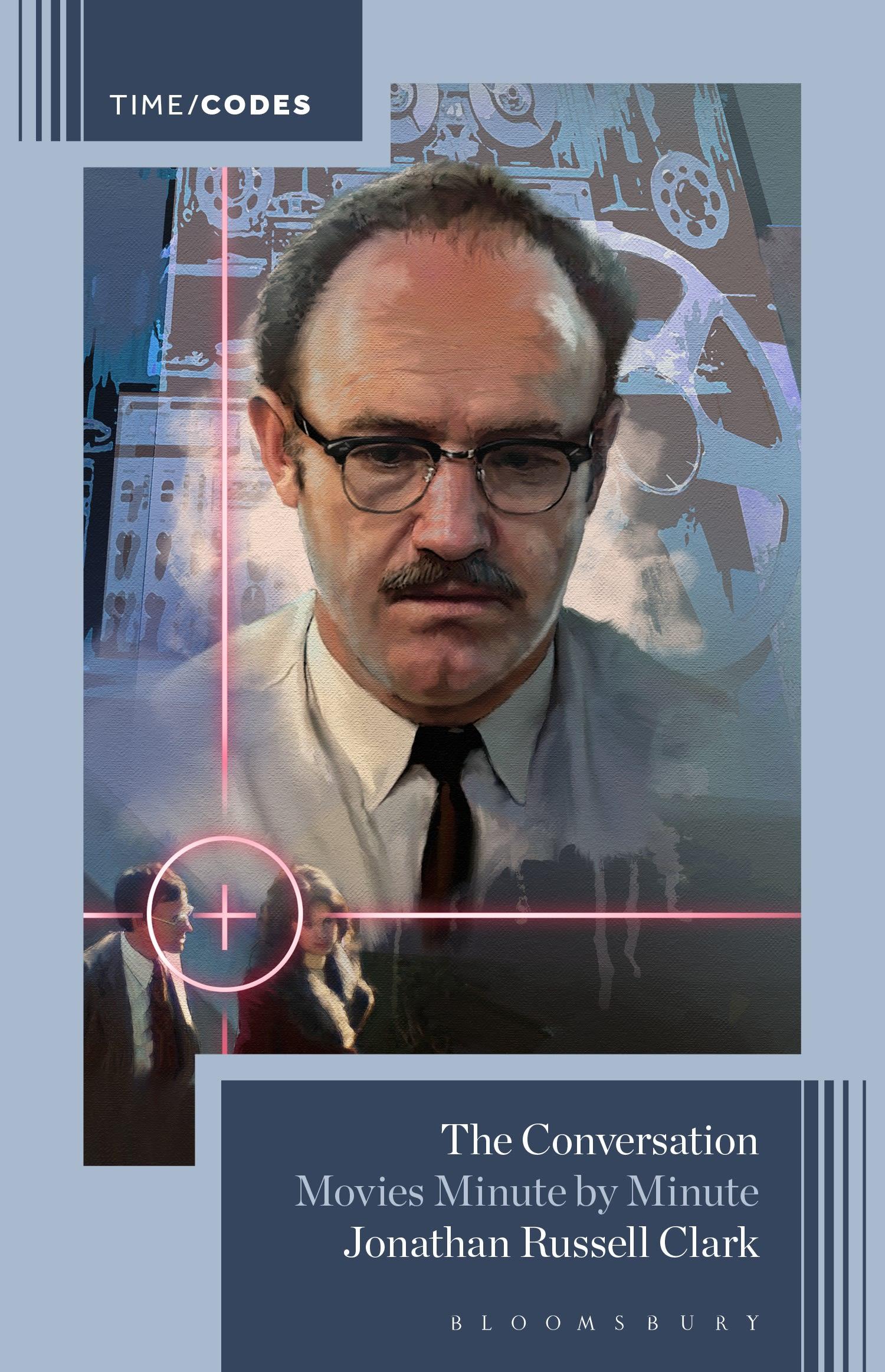
A minute-by-minute analysis of Francis Ford Coppola's paranoid thriller The Conversation (1974).
Blending film criticism with creative nonfiction, each book in the Timecodes series focuses on one film, exploring it minute by minute beginning with minute one, and ending with the final minute before the closing credits.
When it was released, The Conversation depicted the isolation and loneliness caused by a surveillance state we ourselves, unwittingly or not, are agents in. It examined the ways in which technological progress can outpace the culture it ostensibly aids, and how our increased awareness of these increasingly undetectable innovations doesn't necessarily help us avoid their lenses. Harry Caul, in an underrated performance by Gene Hackman, is the best in the bugging business, and yet, by the end, even he can't figure out how he himself has been surveilled. It is a potent parable of Nixon's America.
50 years later, Coppola's masterpiece didn't just record the spirit of the age, he also had an ear toward the future, as The Conversation also managed to prefigure the isolated reactionaries of the internet, with Gene Hackman's Harry Caul as a kind of pre-digital online troll whose self-righteousness and interpersonal failings shape his reactionary interpretation of events in which he's only a peripheral participant. Harry both predicts the behavior of social media bullies and bots but also definitively shows that the internet did not create these characters; it merely amplifies them.
Ultimately, The Conversation: Movies Minute by Minute shows how Coppola's taut narrative of ambiguity, paranoia, and subjectivity is utterly a movie of its moment and yet has reverberated long after its release in a way few films ever do.
Blending film criticism with creative nonfiction, each book in the Timecodes series focuses on one film, exploring it minute by minute beginning with minute one, and ending with the final minute before the closing credits.
When it was released, The Conversation depicted the isolation and loneliness caused by a surveillance state we ourselves, unwittingly or not, are agents in. It examined the ways in which technological progress can outpace the culture it ostensibly aids, and how our increased awareness of these increasingly undetectable innovations doesn't necessarily help us avoid their lenses. Harry Caul, in an underrated performance by Gene Hackman, is the best in the bugging business, and yet, by the end, even he can't figure out how he himself has been surveilled. It is a potent parable of Nixon's America.
50 years later, Coppola's masterpiece didn't just record the spirit of the age, he also had an ear toward the future, as The Conversation also managed to prefigure the isolated reactionaries of the internet, with Gene Hackman's Harry Caul as a kind of pre-digital online troll whose self-righteousness and interpersonal failings shape his reactionary interpretation of events in which he's only a peripheral participant. Harry both predicts the behavior of social media bullies and bots but also definitively shows that the internet did not create these characters; it merely amplifies them.
Ultimately, The Conversation: Movies Minute by Minute shows how Coppola's taut narrative of ambiguity, paranoia, and subjectivity is utterly a movie of its moment and yet has reverberated long after its release in a way few films ever do.
Sider: 144
Kategori: Film- & Medievetenskap
e-ISBN: 9798765149454
Forsendelsesvægt: 1.2 kg
Sendes inden for: 1-2 dage
Betal nemt med kort, Klarna, Apple Pay eller Google Pay. Ikke tilfreds? Du har altid 14 dages fortrydelsesret. Læs mere i vores vilkår. Har du spørgsmål, så send os en mail på hello@memmo.org.
Memmo gør det nemmere at studere – uanset hvor du er i verden. Hos os samler du dine kursusbøger og smarte studieværktøjer ét sted: resuméer, quizzer, podcasts og flashcards. Og så er der Ted, din studieven, der svarer på alt, du undrer dig over. Over 50 000 studerende studerer allerede her – bygget til at hjælpe dig med at lære hurtigere og stresse mindre.