
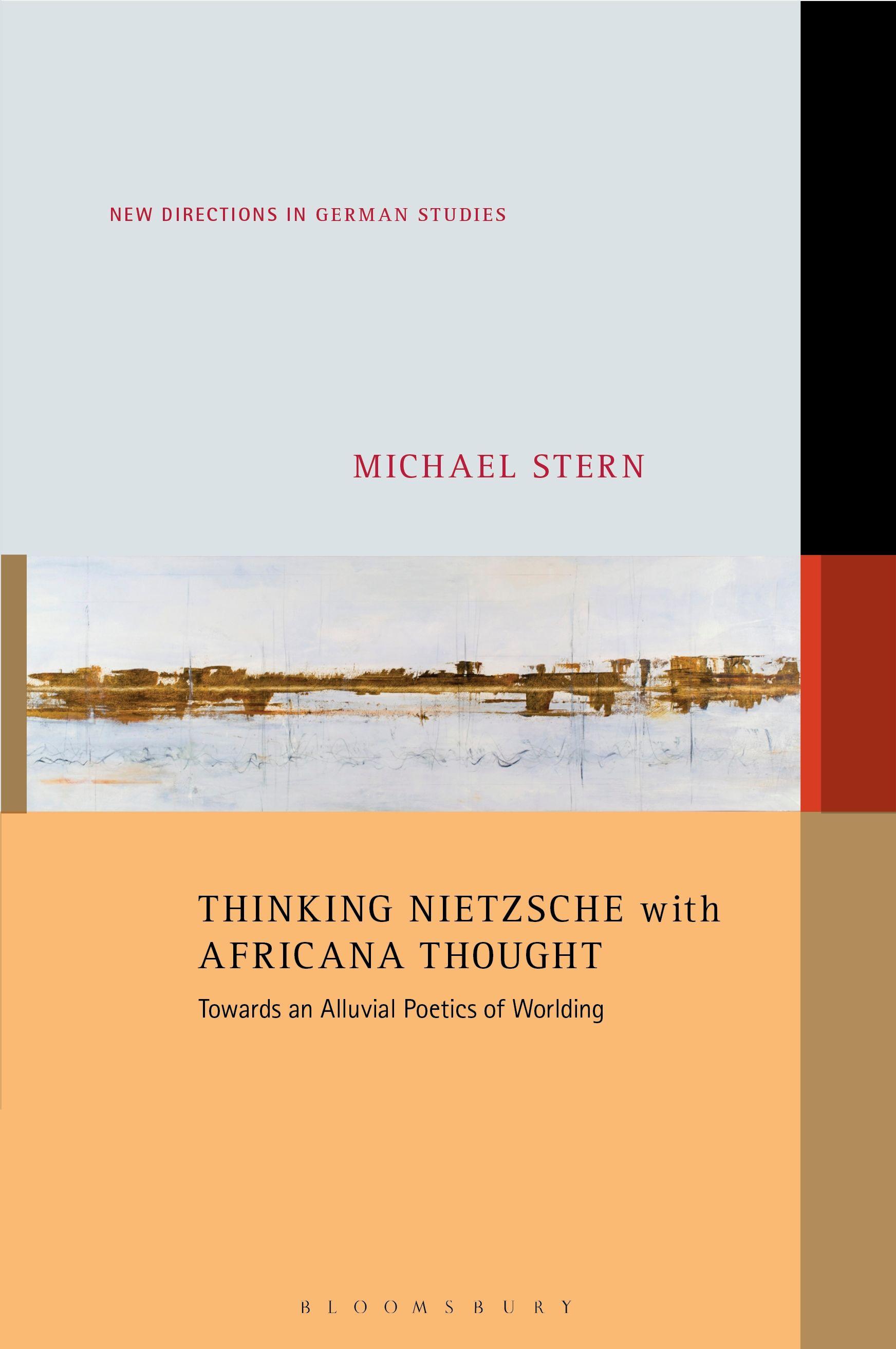
Michael Stern sets Nietzsche in conversation with Africana artists and philosophers to explore the role of aesthetics in decolonial worldmaking.
Nietzsche, a theorist of power, morality, and aesthetics supplies a description of a world making that also destroys. His notion of the will to power explains how particular and local interpretations spread and dominate. Stern situates Nietzsche's thought alongside those of Africana artists and thinkers who, confronted with the effects of the slave trade and colonial violence, speak to new theoretical paradigms addressing erasure and displacement and its relationship to form making.
Thinking Nietzsche with Africana Thought opens with Nietzsche's work on the human imagination and its institutionalized restrictions, written around when the Congress of Berlin divided Africa without the presence of Africans. The book ends with the Ghanian sculptor El Anatsui's understanding of temporality, form, and naming as he creates a slave memorial in a Danish setting.
Eschewing notions of hierarchal authority and keeping in mind how epistemological racism has delimited our philosophical possibilities, Michael Stern employs thought from each lineage to open the space for what Frantz Fanon calls a human with a new sense for rhythm. What emerges is a different sense for history, morality, culture, and political life.
Nietzsche, a theorist of power, morality, and aesthetics supplies a description of a world making that also destroys. His notion of the will to power explains how particular and local interpretations spread and dominate. Stern situates Nietzsche's thought alongside those of Africana artists and thinkers who, confronted with the effects of the slave trade and colonial violence, speak to new theoretical paradigms addressing erasure and displacement and its relationship to form making.
Thinking Nietzsche with Africana Thought opens with Nietzsche's work on the human imagination and its institutionalized restrictions, written around when the Congress of Berlin divided Africa without the presence of Africans. The book ends with the Ghanian sculptor El Anatsui's understanding of temporality, form, and naming as he creates a slave memorial in a Danish setting.
Eschewing notions of hierarchal authority and keeping in mind how epistemological racism has delimited our philosophical possibilities, Michael Stern employs thought from each lineage to open the space for what Frantz Fanon calls a human with a new sense for rhythm. What emerges is a different sense for history, morality, culture, and political life.
Betal nemt med kort, Klarna, Apple Pay eller Google Pay. Ikke tilfreds? Du har altid 14 dages fortrydelsesret. Læs mere i vores vilkår. Har du spørgsmål, så send os en mail på hello@memmo.org.
Memmo gør det nemmere at studere – uanset hvor du er i verden. Hos os samler du dine kursusbøger og smarte studieværktøjer ét sted: resuméer, quizzer, podcasts og flashcards. Og så er der Ted, din studieven, der svarer på alt, du undrer dig over. Over 50 000 studerende studerer allerede her – bygget til at hjælpe dig med at lære hurtigere og stresse mindre.