
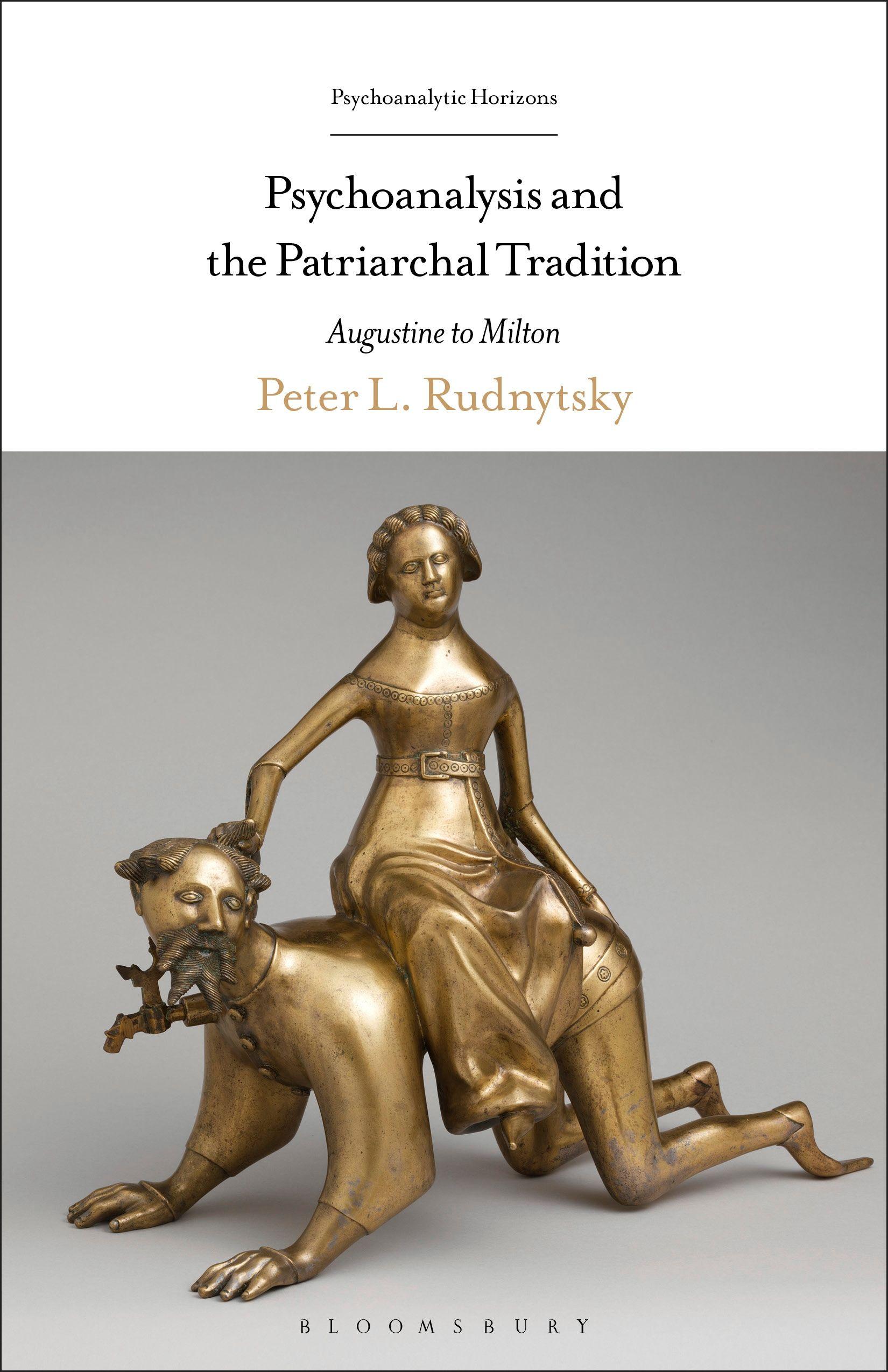
A work of feminist psychoanalytic literary criticism that offers original readings of early canonical works of the Western tradition.
In cogently argued and brilliant readings of texts ranging from St. Augustine's Confessions to Milton's Paradise Lost, Paradise Regained and Samson Agonistes, Psychoanalysis and the Patriarchal Tradition shows the ongoing cultural value of psychoanalytic approaches-flexibly and critically applied-to the interpretation of major literary works. Peter L. Rudnytsky makes a persuasive and striking case for tracing significant connections between the Judeo-Christian story of the Fall and the Greek myth of Oedipus: Proposing that the Oedipus complex can be viewed as the “latent content” of the Fall, Rudnytsky at once respects the explanatory power of these master-myths while he interrogates their claims to universality.
Drawing above all on Freud, Klein, Winnicott, and Lacan, Rudnytsky integrates a range of psychoanalytic perspectives with deconstruction, new historicism, and psychobiography to highlight issues of gender and sexuality not only in Augustine and Milton but also in Gottfried's Tristan, Sir Gawain and the Green Knight, More's History of King Richard III, Shakespeare's Othello and King Lear, as well the poetry of Marvell and other 17th-century writers who exhibit the “dissociation of sensibility” Rudnytsky links to the execution of King Charles I.
Through synthesis of psychoanalysis, feminism, and literary criticism, Psychoanalysis and the Patriarchal Tradition sheds new light on old masterpieces even as it reveals the contours of an entire tradition.
In cogently argued and brilliant readings of texts ranging from St. Augustine's Confessions to Milton's Paradise Lost, Paradise Regained and Samson Agonistes, Psychoanalysis and the Patriarchal Tradition shows the ongoing cultural value of psychoanalytic approaches-flexibly and critically applied-to the interpretation of major literary works. Peter L. Rudnytsky makes a persuasive and striking case for tracing significant connections between the Judeo-Christian story of the Fall and the Greek myth of Oedipus: Proposing that the Oedipus complex can be viewed as the “latent content” of the Fall, Rudnytsky at once respects the explanatory power of these master-myths while he interrogates their claims to universality.
Drawing above all on Freud, Klein, Winnicott, and Lacan, Rudnytsky integrates a range of psychoanalytic perspectives with deconstruction, new historicism, and psychobiography to highlight issues of gender and sexuality not only in Augustine and Milton but also in Gottfried's Tristan, Sir Gawain and the Green Knight, More's History of King Richard III, Shakespeare's Othello and King Lear, as well the poetry of Marvell and other 17th-century writers who exhibit the “dissociation of sensibility” Rudnytsky links to the execution of King Charles I.
Through synthesis of psychoanalysis, feminism, and literary criticism, Psychoanalysis and the Patriarchal Tradition sheds new light on old masterpieces even as it reveals the contours of an entire tradition.
Betal nemt med kort, Klarna, Apple Pay eller Google Pay. Ikke tilfreds? Du har altid 14 dages fortrydelsesret. Læs mere i vores vilkår. Har du spørgsmål, så send os en mail på hello@memmo.org.
Memmo gør det nemmere at studere – uanset hvor du er i verden. Hos os samler du dine kursusbøger og smarte studieværktøjer ét sted: resuméer, quizzer, podcasts og flashcards. Og så er der Ted, din studieven, der svarer på alt, du undrer dig over. Over 50 000 studerende studerer allerede her – bygget til at hjælpe dig med at lære hurtigere og stresse mindre.