
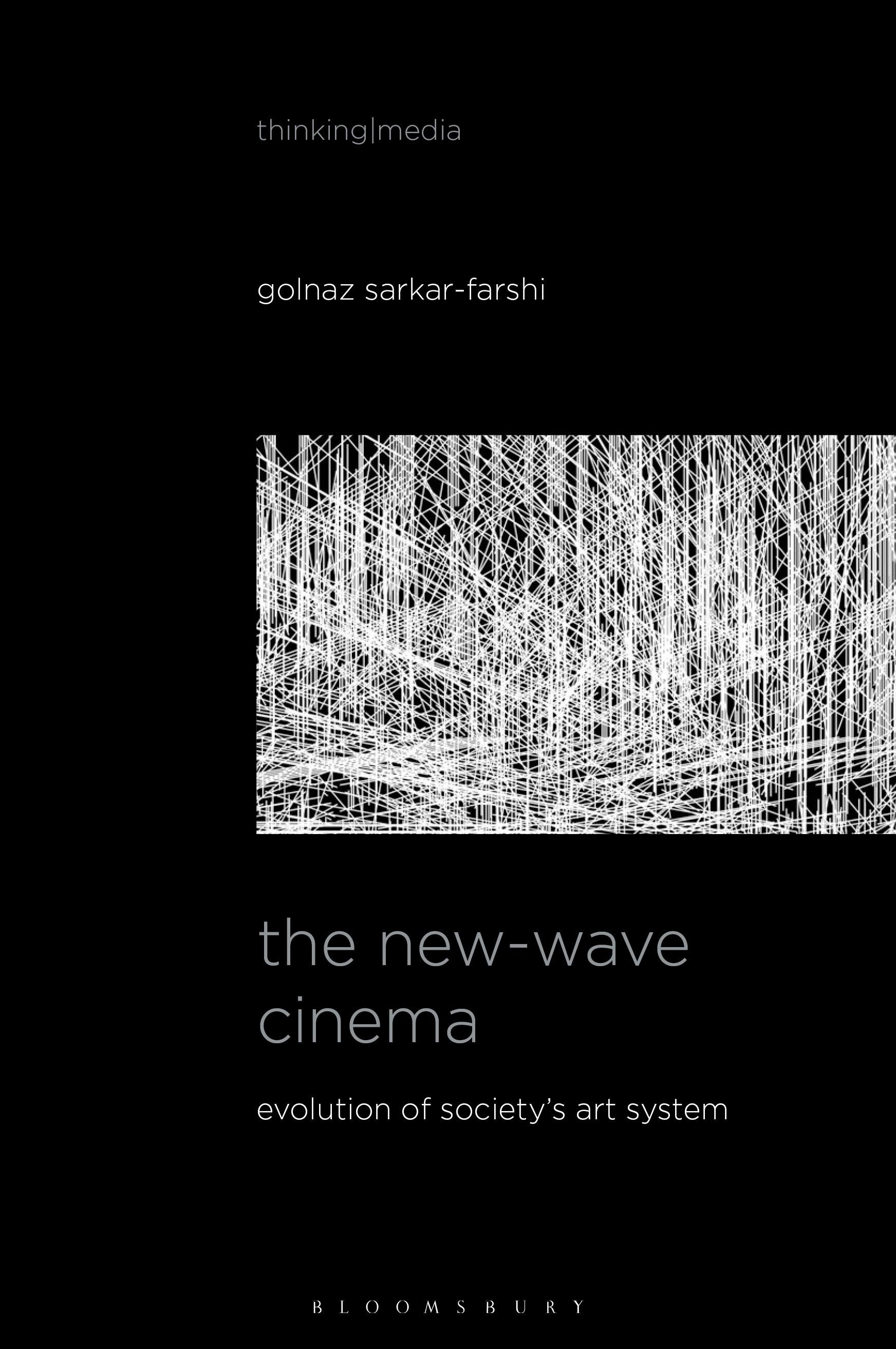
This book introduces a novel conceptualization of “new-wave cinema” as a borderless phenomenon, akin to a “wave” that crashes upon established film aesthetics in a certain society. Using Niklas Luhmann's systems theory, the book explores the correlation between the rise of new-wave cinema and the societal conflicts contemporaneous with its inception.
The term “new-wave cinema,” historically attributed by film critics to specific film collections within different societies, has lacked universal applicability in film scholarship. This book identifies the defining criterion of the new wave not solely within its specific aesthetics but in the transformative “break” that these aesthetic properties effectuate upon the prevailing filmic communication. This “break” extends beyond singular films, manifesting within a substantial cohort, thereby justifying the label “wave.” Notably, this “wave” does not materialize as a result of a collective decision by filmmakers but rather in correlation with the societal “contradictions and conflicts” prevailing during the emergence of new-wave films.
This book delineates how the resonance of societal contradictions and conflicts in films, as a subsystem of art, can catalyze three different reactions to existing aesthetic and narrative traditions, thereby giving birth to new cinematic waves. The analysis concentrates on three paradigmatic new-wave cinemas spanning three continents, namely New German Cinema, New Hollywood, and New Iranian Cinema, illustrating the universality of its thesis despite the aesthetic differences among the cinematic movements commonly labeled as “new wave” in film scholarship.
The term “new-wave cinema,” historically attributed by film critics to specific film collections within different societies, has lacked universal applicability in film scholarship. This book identifies the defining criterion of the new wave not solely within its specific aesthetics but in the transformative “break” that these aesthetic properties effectuate upon the prevailing filmic communication. This “break” extends beyond singular films, manifesting within a substantial cohort, thereby justifying the label “wave.” Notably, this “wave” does not materialize as a result of a collective decision by filmmakers but rather in correlation with the societal “contradictions and conflicts” prevailing during the emergence of new-wave films.
This book delineates how the resonance of societal contradictions and conflicts in films, as a subsystem of art, can catalyze three different reactions to existing aesthetic and narrative traditions, thereby giving birth to new cinematic waves. The analysis concentrates on three paradigmatic new-wave cinemas spanning three continents, namely New German Cinema, New Hollywood, and New Iranian Cinema, illustrating the universality of its thesis despite the aesthetic differences among the cinematic movements commonly labeled as “new wave” in film scholarship.
Sider: 272
Kategori: Film- & Medievetenskap
e-ISBN: 9798765125144
Forsendelsesvægt: 1.2 kg
Sendes inden for: 1-2 dage
Betal nemt med kort, Klarna, Apple Pay eller Google Pay. Ikke tilfreds? Du har altid 14 dages fortrydelsesret. Læs mere i vores vilkår. Har du spørgsmål, så send os en mail på hello@memmo.org.
Memmo gør det nemmere at studere – uanset hvor du er i verden. Hos os samler du dine kursusbøger og smarte studieværktøjer ét sted: resuméer, quizzer, podcasts og flashcards. Og så er der Ted, din studieven, der svarer på alt, du undrer dig over. Over 50 000 studerende studerer allerede her – bygget til at hjælpe dig med at lære hurtigere og stresse mindre.