
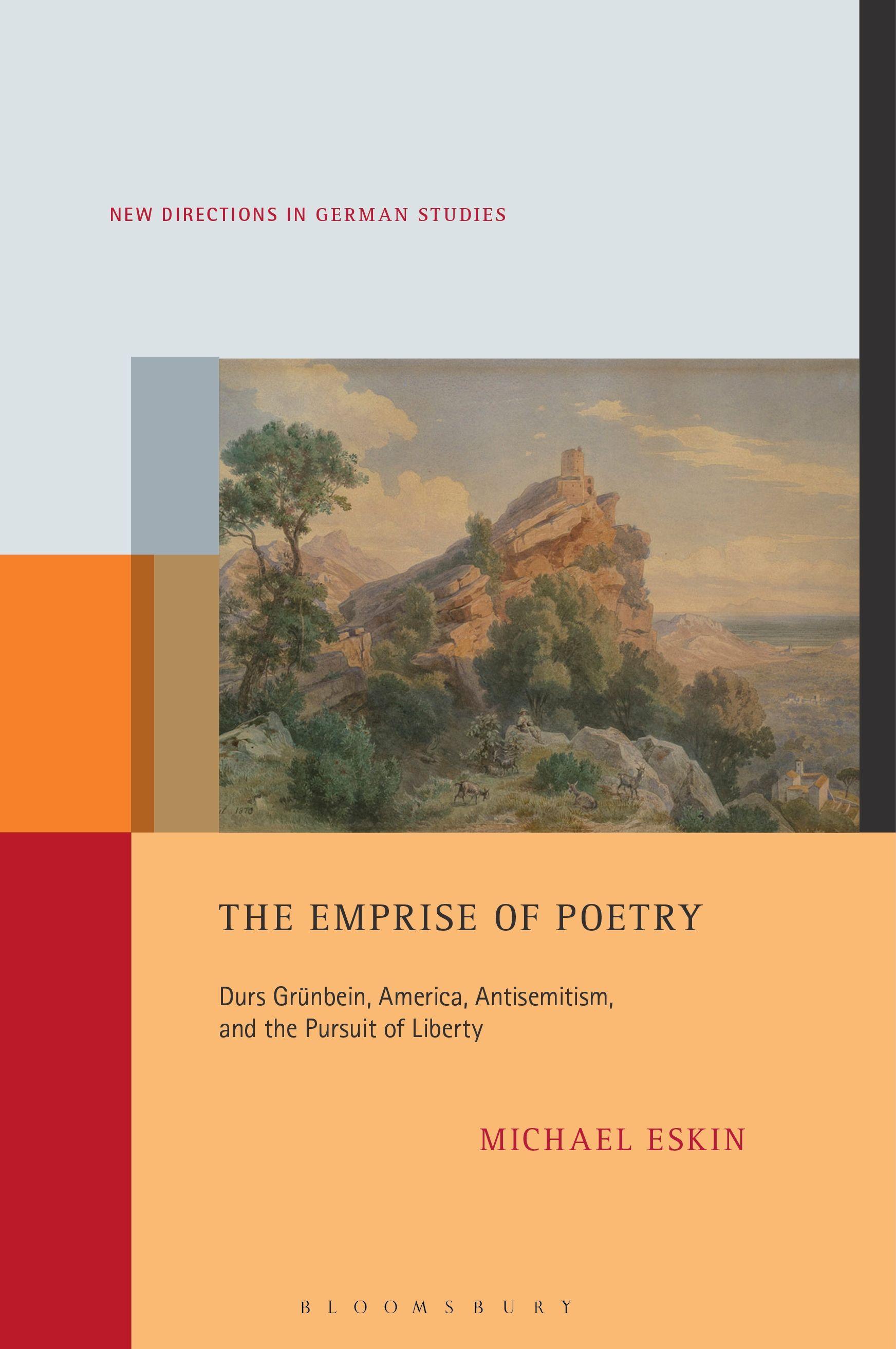
The Emprise of Poetry analyzes the insidious entwinement of anti-Americanism and antisemitism in modern and contemporary German culture through the writings of one of its most acclaimed literary figures: Dresden native Durs Grünbein (1962-).
Michael Eskin offers an unprecedented view of the American-cum-Jewish discontents at the heart of modern and present-day German culture through the exemplary lens of the work of Durs Grünbein, the most widely translated and globally honored living German poet, and the only one to have been hailed as the Berlin Republic's “most qualified contemporary candidate for the office of German national poet.”
Yet as Eskin outlines, Grünbein's work contains a paradoxical and tension-filled twofold self-construction: as an idiosyncratically 'American' poet and Ezra Pound's vociferously philosemitic heir, who merely happens to be writing in German, as it were, conjoined with an avidly anti-American German poet who writes emphatically, and not always savorily, as a German and a self-proclaimed heir to the legacies of Celan and Kafka – most notably, on matters American and Jewish. Against the foil of these tensions, Eskin traces and documents postwar German high culture's persisting inability to purge itself of ideological toxins that leach into the mainstream from centuries-old prejudices and antagonisms revolving around Germany's love-hate bond with America as well as its ostensibly enduring suspicion and antipathy toward Jews.
Eskin's deep dive into the 'American' Grünbein's apparent philosemitism coupled with the German Grünbein's antisemitically-inflected anti-Americanism reveals the fault lines underlying the complex and contradictory legacies and contexts of postwar German culture.
Michael Eskin offers an unprecedented view of the American-cum-Jewish discontents at the heart of modern and present-day German culture through the exemplary lens of the work of Durs Grünbein, the most widely translated and globally honored living German poet, and the only one to have been hailed as the Berlin Republic's “most qualified contemporary candidate for the office of German national poet.”
Yet as Eskin outlines, Grünbein's work contains a paradoxical and tension-filled twofold self-construction: as an idiosyncratically 'American' poet and Ezra Pound's vociferously philosemitic heir, who merely happens to be writing in German, as it were, conjoined with an avidly anti-American German poet who writes emphatically, and not always savorily, as a German and a self-proclaimed heir to the legacies of Celan and Kafka – most notably, on matters American and Jewish. Against the foil of these tensions, Eskin traces and documents postwar German high culture's persisting inability to purge itself of ideological toxins that leach into the mainstream from centuries-old prejudices and antagonisms revolving around Germany's love-hate bond with America as well as its ostensibly enduring suspicion and antipathy toward Jews.
Eskin's deep dive into the 'American' Grünbein's apparent philosemitism coupled with the German Grünbein's antisemitically-inflected anti-Americanism reveals the fault lines underlying the complex and contradictory legacies and contexts of postwar German culture.
Sider: 360
Kategori: Litteraturvetenskap & Teori
e-ISBN: 9798765125038
Forsendelsesvægt: 1.2 kg
Sendes inden for: 1-2 dage
Betal nemt med kort, Klarna, Apple Pay eller Google Pay. Ikke tilfreds? Du har altid 14 dages fortrydelsesret. Læs mere i vores vilkår. Har du spørgsmål, så send os en mail på hello@memmo.org.
Memmo gør det nemmere at studere – uanset hvor du er i verden. Hos os samler du dine kursusbøger og smarte studieværktøjer ét sted: resuméer, quizzer, podcasts og flashcards. Og så er der Ted, din studieven, der svarer på alt, du undrer dig over. Over 50 000 studerende studerer allerede her – bygget til at hjælpe dig med at lære hurtigere og stresse mindre.