
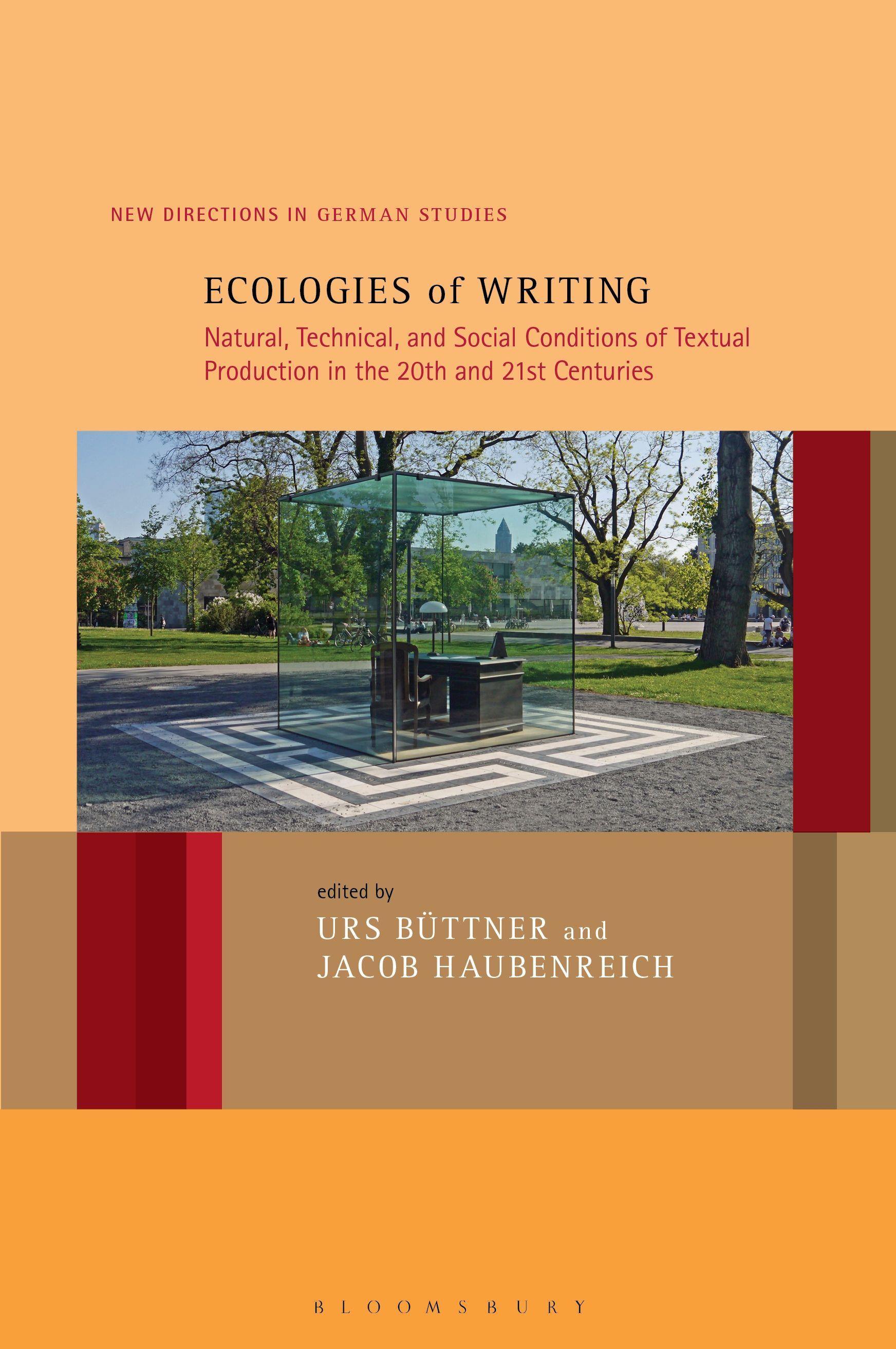
Drawing from case studies in 20th century German literature and theory, the contributors to this volume explore the multiple dimensions behind and alongside authorship that constitutes the "ecology" of writing.
Over the last few decades, a resurgence of interest in historical and contemporary writing processes, fueled in part by the development of digital media, has developed alongside the emergence of new conceptions of material-human agency and the environment. What would it mean to apply these conceptions to the phenomenon of writing? As the essays in this volume explore, writing is never the purely mental activity of a solitary mind; it is inherently socially embedded and always more-than-human.
Examining the early 20th century to the present, a period of dramatic media-technological transition in which writers become increasingly self-reflexive and responsive to the materials and changing environmental circumstances of their craft, Ecologies of Writing expands the frame to encompass the vast array of material, social, environmental, and economic influences that all inform the practice of writing. Case studies draw on German-language literature and theory, including works by Franz Kafka, Thomas Mann, and W. G. Sebald, and recent theories of human-material agency, media theory, and ecocriticism.
Over the last few decades, a resurgence of interest in historical and contemporary writing processes, fueled in part by the development of digital media, has developed alongside the emergence of new conceptions of material-human agency and the environment. What would it mean to apply these conceptions to the phenomenon of writing? As the essays in this volume explore, writing is never the purely mental activity of a solitary mind; it is inherently socially embedded and always more-than-human.
Examining the early 20th century to the present, a period of dramatic media-technological transition in which writers become increasingly self-reflexive and responsive to the materials and changing environmental circumstances of their craft, Ecologies of Writing expands the frame to encompass the vast array of material, social, environmental, and economic influences that all inform the practice of writing. Case studies draw on German-language literature and theory, including works by Franz Kafka, Thomas Mann, and W. G. Sebald, and recent theories of human-material agency, media theory, and ecocriticism.
Betal nemt med kort, Klarna, Apple Pay eller Google Pay. Ikke tilfreds? Du har altid 14 dages fortrydelsesret. Læs mere i vores vilkår. Har du spørgsmål, så send os en mail på hello@memmo.org.
Memmo gør det nemmere at studere – uanset hvor du er i verden. Hos os samler du dine kursusbøger og smarte studieværktøjer ét sted: resuméer, quizzer, podcasts og flashcards. Og så er der Ted, din studieven, der svarer på alt, du undrer dig over. Over 50 000 studerende studerer allerede her – bygget til at hjælpe dig med at lære hurtigere og stresse mindre.