
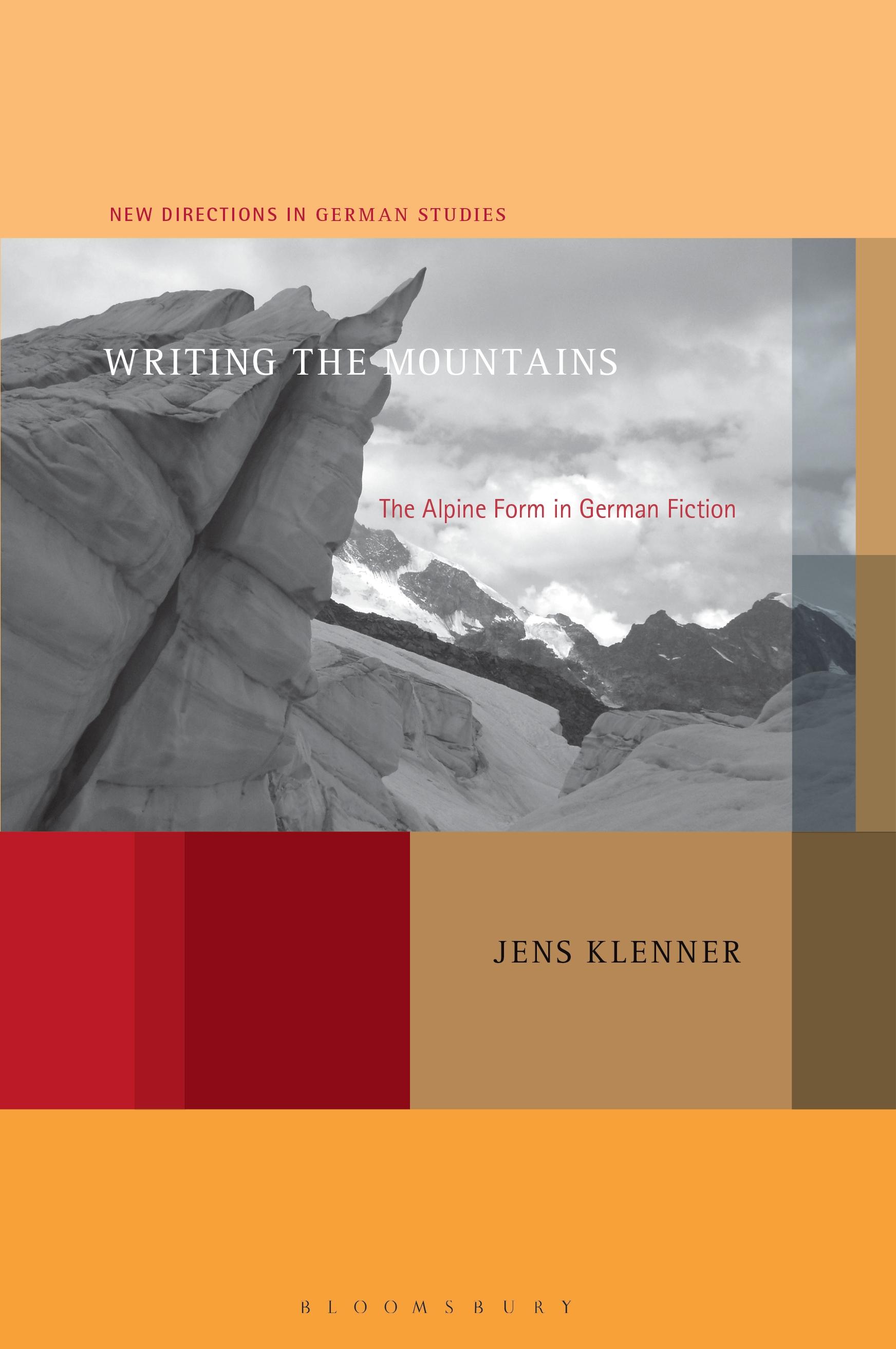
Writing the Mountains reconsiders the role of mountains in German language fiction from 1800 to the present and argues that in a range of texts, from E.T.A. Hoffmann's “Die Bergwerke zu Falun” (1819) to Elfriede Jelinek's Die Kinder der Toten (1995) and beyond, mountains serve as dynamic spaces of material change that generate aesthetic and narrative innovation. In contrast to dominant critical approaches to the Alpine landscape in literature, in which mountain ranges often features as passive settings, or which trace the influence of geographical and geological sciences in literary productions, this study argues for the dynamic role in literature of presumably rigid mineral structures.
In German-language fiction after 1800, the counter-intuitive topology of rocky mountain ranges and unfathomable subterranean depths of the Alpine imaginary functions as a space of exception which appears to reconfirm and radically challenge the foundations of Enlightenment thought. Writing the Mountains reads the mountain range as a rigid yet permeable liminal space. Within this zone, semiotic orders are unsettled, as is the division between organic and inorganic, between the human and the other.
In German-language fiction after 1800, the counter-intuitive topology of rocky mountain ranges and unfathomable subterranean depths of the Alpine imaginary functions as a space of exception which appears to reconfirm and radically challenge the foundations of Enlightenment thought. Writing the Mountains reads the mountain range as a rigid yet permeable liminal space. Within this zone, semiotic orders are unsettled, as is the division between organic and inorganic, between the human and the other.
Betal nemt med kort, Klarna, Apple Pay eller Google Pay. Ikke tilfreds? Du har altid 14 dages fortrydelsesret. Læs mere i vores vilkår. Har du spørgsmål, så send os en mail på hello@memmo.org.
Memmo gør det nemmere at studere – uanset hvor du er i verden. Hos os samler du dine kursusbøger og smarte studieværktøjer ét sted: resuméer, quizzer, podcasts og flashcards. Og så er der Ted, din studieven, der svarer på alt, du undrer dig over. Over 50 000 studerende studerer allerede her – bygget til at hjælpe dig med at lære hurtigere og stresse mindre.