
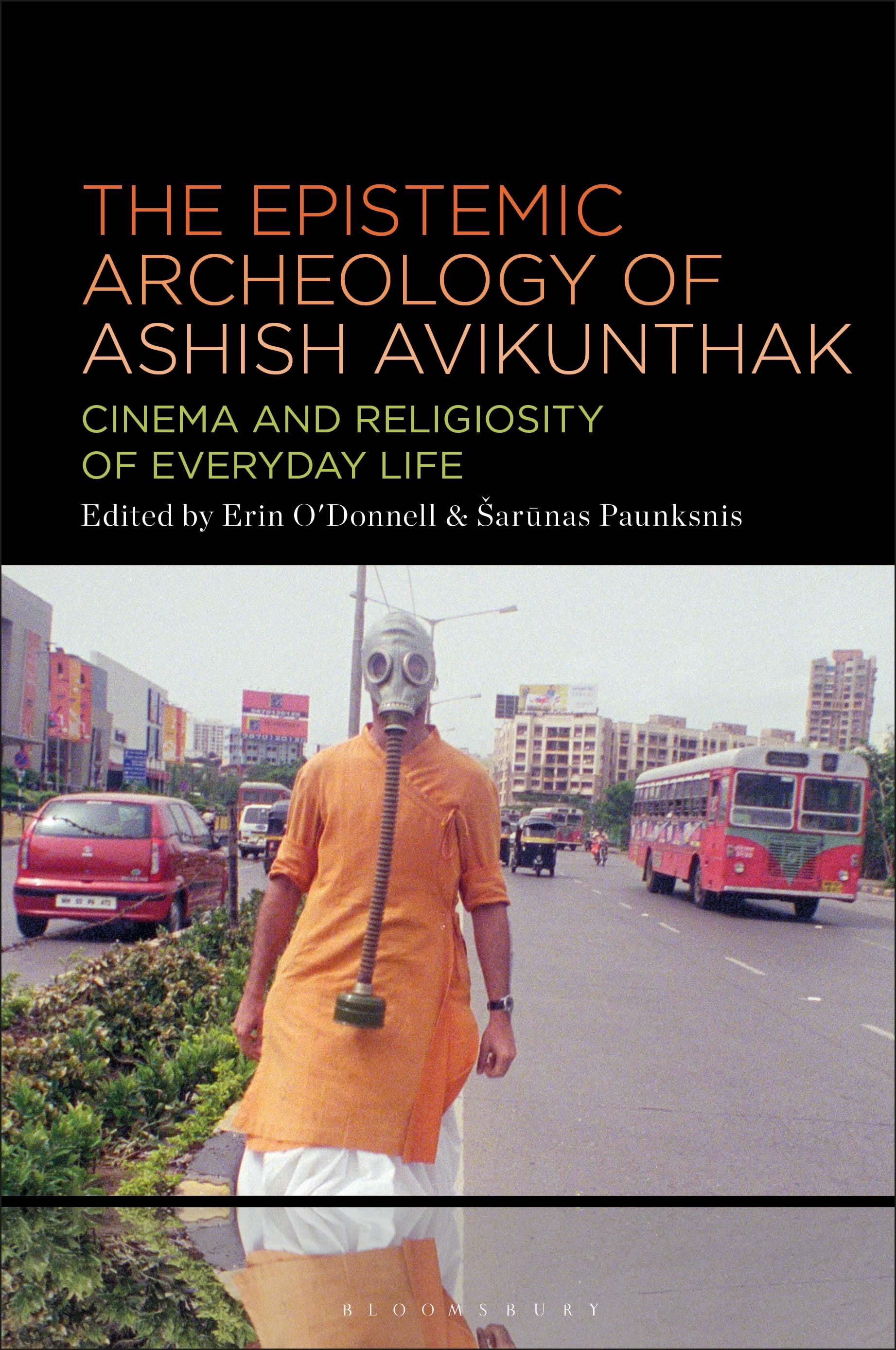
This book explores the diverse aspects of Ashish Avikunthak's cinema, which challenges Western knowledge systems and cinematic practices, as well as ideological hegemonies of present-day India.
For thirty years, Indian filmmaker Ashish Avikunthak has been making self-financed films that have robustly resisted capital and market logic. Starting from his early 16mm short films Etcetera (1997) and Kalighat Fetish (1999) to longer feature length works that he has been making since the past decade–Rati Chakravyuh (2013), Aapothkalin Trikalika (2016), Vrindavani Vairagya (2017), to the most recent Vidhvastha (2022) with several more projects in various stages of production. His body of work now amounts to seven short films and nine feature length works. This collection of essays rigorously interrogates, contextualizes, theorizes, and interprets his work in relation to some of the key preoccupations of this filmmaker, which include Tantric practice, alternative ways of filmmaking, as well as posing a cinematic challenge to oppressive epistemes. Furthermore, the current global assertion of authoritarianism and one-dimensional interpretations of cultural history and practice provide a timely and essential historical moment in which to dialogue with Avikunthak's films. Why? Because Avikunthak's cinema consciously contests totalizing historical and artistic narratives, and constructs frameworks of existential uncertainty and fragmentation that force us to reflect on the increasing political, economic, social, and climate chaos that is infusing and shaping our early 21st century global ontology.
For thirty years, Indian filmmaker Ashish Avikunthak has been making self-financed films that have robustly resisted capital and market logic. Starting from his early 16mm short films Etcetera (1997) and Kalighat Fetish (1999) to longer feature length works that he has been making since the past decade–Rati Chakravyuh (2013), Aapothkalin Trikalika (2016), Vrindavani Vairagya (2017), to the most recent Vidhvastha (2022) with several more projects in various stages of production. His body of work now amounts to seven short films and nine feature length works. This collection of essays rigorously interrogates, contextualizes, theorizes, and interprets his work in relation to some of the key preoccupations of this filmmaker, which include Tantric practice, alternative ways of filmmaking, as well as posing a cinematic challenge to oppressive epistemes. Furthermore, the current global assertion of authoritarianism and one-dimensional interpretations of cultural history and practice provide a timely and essential historical moment in which to dialogue with Avikunthak's films. Why? Because Avikunthak's cinema consciously contests totalizing historical and artistic narratives, and constructs frameworks of existential uncertainty and fragmentation that force us to reflect on the increasing political, economic, social, and climate chaos that is infusing and shaping our early 21st century global ontology.
Betal nemt med kort, Klarna, Apple Pay eller Google Pay. Ikke tilfreds? Du har altid 14 dages fortrydelsesret. Læs mere i vores vilkår. Har du spørgsmål, så send os en mail på hello@memmo.org.
Memmo gør det nemmere at studere – uanset hvor du er i verden. Hos os samler du dine kursusbøger og smarte studieværktøjer ét sted: resuméer, quizzer, podcasts og flashcards. Og så er der Ted, din studieven, der svarer på alt, du undrer dig over. Over 50 000 studerende studerer allerede her – bygget til at hjælpe dig med at lære hurtigere og stresse mindre.