
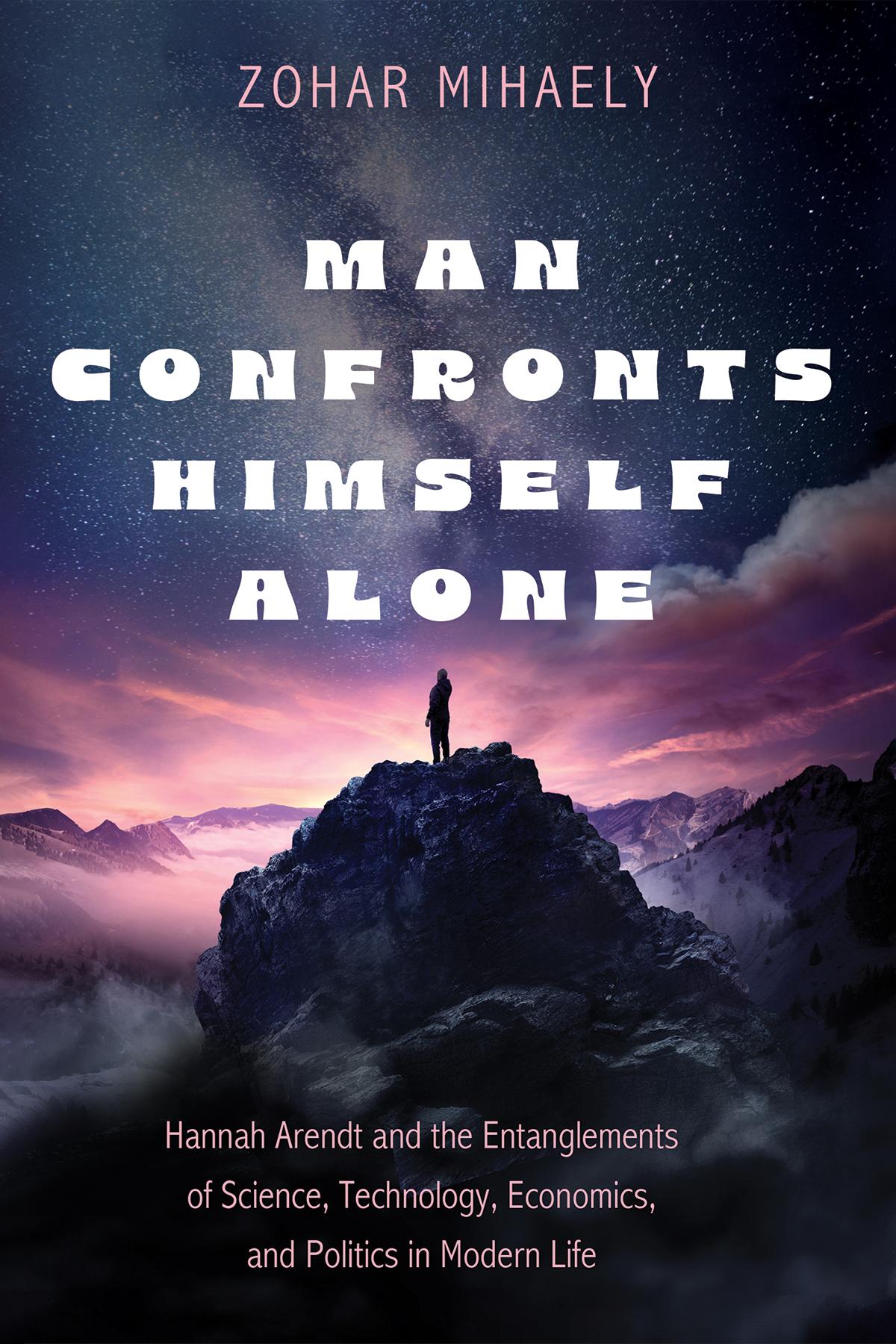
In 1957, the Russians launched the first satellite into space, marking the first time a man-made object broke through nature's limitations. In her iconic book The Human Condition, Hannah Arendt made the attempt to figure out the political implications of that seeming achievement. Her conclusion is that the astonishing scientific achievement of unprecedented control over terrestrial nature through the adoption of an outside-the-world "universal" perspective has shaped a prevailing mentality that sees the world, in which we have felt at home throughout history, as only optional. This has resulted in socioeconomic and political changes throughout modernity, ultimately reducing human ability to act politically. Many people today feel comfortable in a world shaped by science and technology. But Arendt warns us that there is hope for modern society if we can envision ways to make our active life worldly again. Mihaely's examination of Arendt's thoughts on science and politics stimulates the reader to rethink the authenticity of their freedom today.
Betal nemt med kort, Klarna, Apple Pay eller Google Pay. Ikke tilfreds? Du har altid 14 dages fortrydelsesret. Læs mere i vores vilkår. Har du spørgsmål, så send os en mail på hello@memmo.org.
Memmo gør det nemmere at studere – uanset hvor du er i verden. Hos os samler du dine kursusbøger og smarte studieværktøjer ét sted: resuméer, quizzer, podcasts og flashcards. Og så er der Ted, din studieven, der svarer på alt, du undrer dig over. Over 50 000 studerende studerer allerede her – bygget til at hjælpe dig med at lære hurtigere og stresse mindre.
Du kan måske også lide
Køb bogen0