
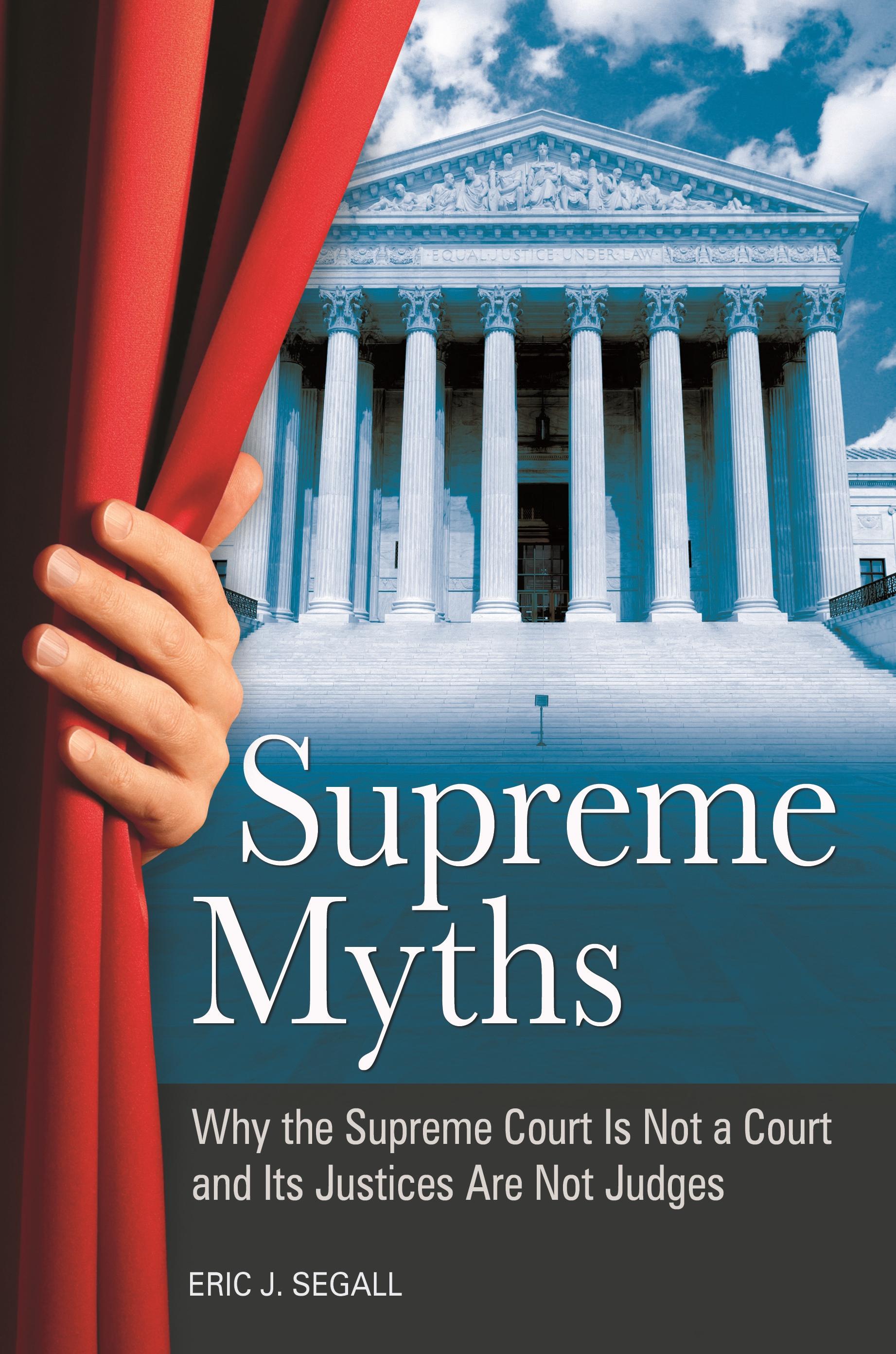
This book explores some of the most glaring misunderstandings about the U.S. Supreme Court—and makes a strong case for why our Supreme Court Justices should not be entrusted with decisions that affect every American citizen.
Supreme Myths: Why the Supreme Court is Not a Court and its Justices are Not Judges presents a detailed discussion of the Court's most important and controversial constitutional cases that demonstrates why it doesn't justify being labeled "a court of law."
Eric Segall, professor of law at Georgia State University College of Law for two decades, explains why this third branch of the national government is an institution that makes important judgments about fundamental questions based on the Justices' ideological preferences, not the law. A complete understanding of the true nature of the Court's decision-making process is necessary, he argues, before an intelligent debate over who should serve on the Court—and how they should resolve cases—can be held. Addressing front-page areas of constitutional law such as health care, abortion, affirmative action, gun control, and freedom of religion, this book offers a frank description of how the Supreme Court truly operates, a critique of life tenure of its Justices, and a set of proposals aimed at making the Court function more transparently to further the goals of our representative democracy.
Supreme Myths: Why the Supreme Court is Not a Court and its Justices are Not Judges presents a detailed discussion of the Court's most important and controversial constitutional cases that demonstrates why it doesn't justify being labeled "a court of law."
Eric Segall, professor of law at Georgia State University College of Law for two decades, explains why this third branch of the national government is an institution that makes important judgments about fundamental questions based on the Justices' ideological preferences, not the law. A complete understanding of the true nature of the Court's decision-making process is necessary, he argues, before an intelligent debate over who should serve on the Court—and how they should resolve cases—can be held. Addressing front-page areas of constitutional law such as health care, abortion, affirmative action, gun control, and freedom of religion, this book offers a frank description of how the Supreme Court truly operates, a critique of life tenure of its Justices, and a set of proposals aimed at making the Court function more transparently to further the goals of our representative democracy.
Betal nemt med kort, Klarna, Apple Pay eller Google Pay. Ikke tilfreds? Du har altid 14 dages fortrydelsesret. Læs mere i vores vilkår. Har du spørgsmål, så send os en mail på hello@memmo.org.
Memmo gør det nemmere at studere – uanset hvor du er i verden. Hos os samler du dine kursusbøger og smarte studieværktøjer ét sted: resuméer, quizzer, podcasts og flashcards. Og så er der Ted, din studieven, der svarer på alt, du undrer dig over. Over 50 000 studerende studerer allerede her – bygget til at hjælpe dig med at lære hurtigere og stresse mindre.