
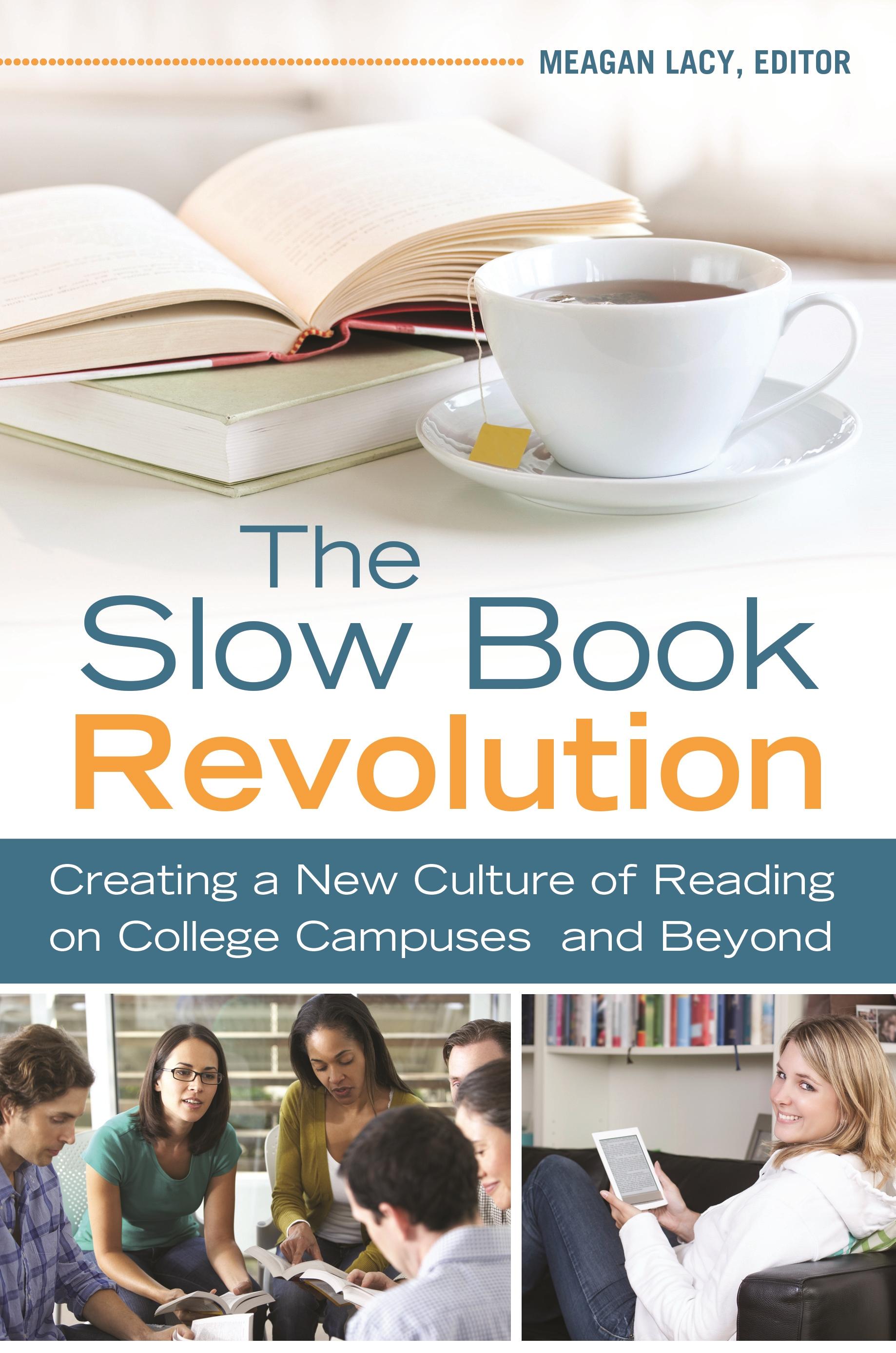
This inspiring guide shows how to implement the principles of the Slow Book movement in college campus libraries as well as public and high school libraries, with the ultimate goals of encouraging pensive reading habits and creating a lifelong enjoyment of books.
In a world of constant Facebook posts and Tweets, digital distractions and online reading habits are wearing at students' ability to focus, reflect, synthesize, and think deeply. This professional text, based on a concept introduced by Maura Kelly in the online edition of The Atlantic, delves into the trend toward contemplative reading—otherwise known as the Slow Book movement—explaining what it is, why it's important, and how you can implement it in various ways and in multiple settings.
Author and librarian Meagan Lacy, along with contributions from others in the field, offers insights, advice, and practical tools to help you foster an appreciation of reading in students both during and after college. The first part of the book establishes the importance of the Slow Book movement, while the second and third sections combine case studies and guidance for employing the principles of this method across multiple genres, including fiction, nonfiction, classics, and contemporary works. Chapters build a rationale for the approach, describe its underlying philosophy, and articulate concrete ways to apply the methodology in different venues.
In a world of constant Facebook posts and Tweets, digital distractions and online reading habits are wearing at students' ability to focus, reflect, synthesize, and think deeply. This professional text, based on a concept introduced by Maura Kelly in the online edition of The Atlantic, delves into the trend toward contemplative reading—otherwise known as the Slow Book movement—explaining what it is, why it's important, and how you can implement it in various ways and in multiple settings.
Author and librarian Meagan Lacy, along with contributions from others in the field, offers insights, advice, and practical tools to help you foster an appreciation of reading in students both during and after college. The first part of the book establishes the importance of the Slow Book movement, while the second and third sections combine case studies and guidance for employing the principles of this method across multiple genres, including fiction, nonfiction, classics, and contemporary works. Chapters build a rationale for the approach, describe its underlying philosophy, and articulate concrete ways to apply the methodology in different venues.
Betal nemt med kort, Klarna, Apple Pay eller Google Pay. Ikke tilfreds? Du har altid 14 dages fortrydelsesret. Læs mere i vores vilkår. Har du spørgsmål, så send os en mail på hello@memmo.org.
Memmo gør det nemmere at studere – uanset hvor du er i verden. Hos os samler du dine kursusbøger og smarte studieværktøjer ét sted: resuméer, quizzer, podcasts og flashcards. Og så er der Ted, din studieven, der svarer på alt, du undrer dig over. Over 50 000 studerende studerer allerede her – bygget til at hjælpe dig med at lære hurtigere og stresse mindre.