
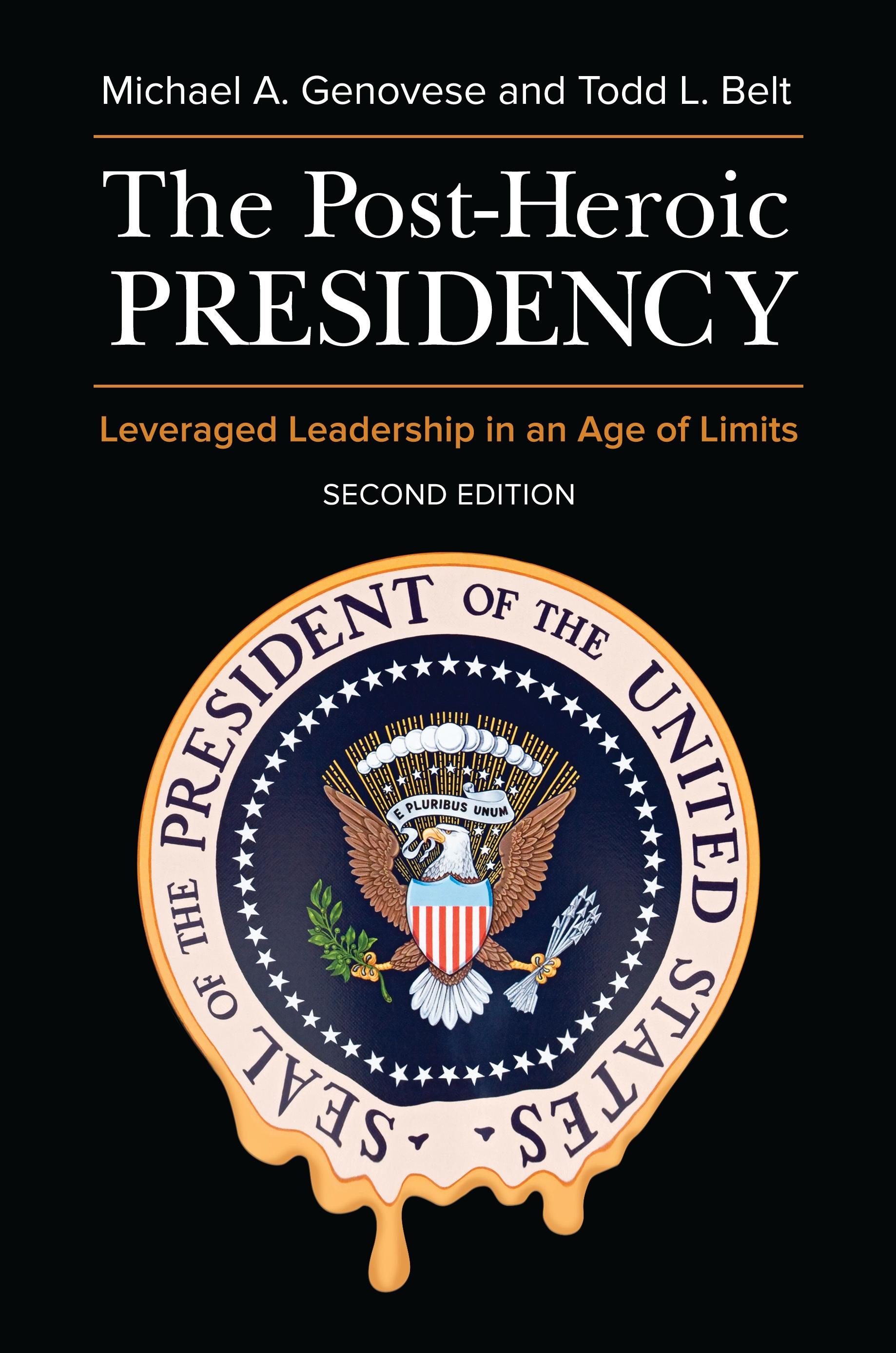
This book examines how presidents from Nixon to Obama have faced the challenges of global leadership in a dramatically changing world—one with more limited resources and an increasing number of threatening challengers.
The immediate post-World War II era was undeniably a period of American power and influence. Even during the Cold War, the United States was the leader of the West, exerting wide-ranging power internationally. But beginning with the Vietnam War, America began experiencing a series of setbacks and challenges to its power. The Post-Heroic Presidency: Leveraged Leadership in an Age of Limits examines how U.S. presidents have attempted to reverse or contend with this new era of limited power in which presidential leadership is hamstrung due to an increasingly globalized and interdependent world—one where power is more diffuse and the system of checks and balances bind a president in an age of hyper-partisanship.
The book examines presidents of the 20th and 21st centuries, explaining how the first U.S. president to confront this new age was Richard Nixon, who—along with Henry Kissinger—developed a sophisticated approach to deal with the recalibration of American power. It documents how other recent presidents have either tried to make peace with limited power (Jimmy Carter), reverse the decline (Ronald Reagan), ignore the implications of limits (George W. Bush), or find ways to lead that were less ambitious, more prudent, and less unilateral (George H.W. Bush, Bill Clinton, and Barack Obama). In the cases of Clinton and Obama, this shift to using "soft power," persuasion, and multilateralism earned them criticism that they are "weak," thereby undermining their efforts to lead—both at home and abroad.
The immediate post-World War II era was undeniably a period of American power and influence. Even during the Cold War, the United States was the leader of the West, exerting wide-ranging power internationally. But beginning with the Vietnam War, America began experiencing a series of setbacks and challenges to its power. The Post-Heroic Presidency: Leveraged Leadership in an Age of Limits examines how U.S. presidents have attempted to reverse or contend with this new era of limited power in which presidential leadership is hamstrung due to an increasingly globalized and interdependent world—one where power is more diffuse and the system of checks and balances bind a president in an age of hyper-partisanship.
The book examines presidents of the 20th and 21st centuries, explaining how the first U.S. president to confront this new age was Richard Nixon, who—along with Henry Kissinger—developed a sophisticated approach to deal with the recalibration of American power. It documents how other recent presidents have either tried to make peace with limited power (Jimmy Carter), reverse the decline (Ronald Reagan), ignore the implications of limits (George W. Bush), or find ways to lead that were less ambitious, more prudent, and less unilateral (George H.W. Bush, Bill Clinton, and Barack Obama). In the cases of Clinton and Obama, this shift to using "soft power," persuasion, and multilateralism earned them criticism that they are "weak," thereby undermining their efforts to lead—both at home and abroad.
Betal nemt med kort, Klarna, Apple Pay eller Google Pay. Ikke tilfreds? Du har altid 14 dages fortrydelsesret. Læs mere i vores vilkår. Har du spørgsmål, så send os en mail på hello@memmo.org.
Memmo gør det nemmere at studere – uanset hvor du er i verden. Hos os samler du dine kursusbøger og smarte studieværktøjer ét sted: resuméer, quizzer, podcasts og flashcards. Og så er der Ted, din studieven, der svarer på alt, du undrer dig over. Over 50 000 studerende studerer allerede her – bygget til at hjælpe dig med at lære hurtigere og stresse mindre.