
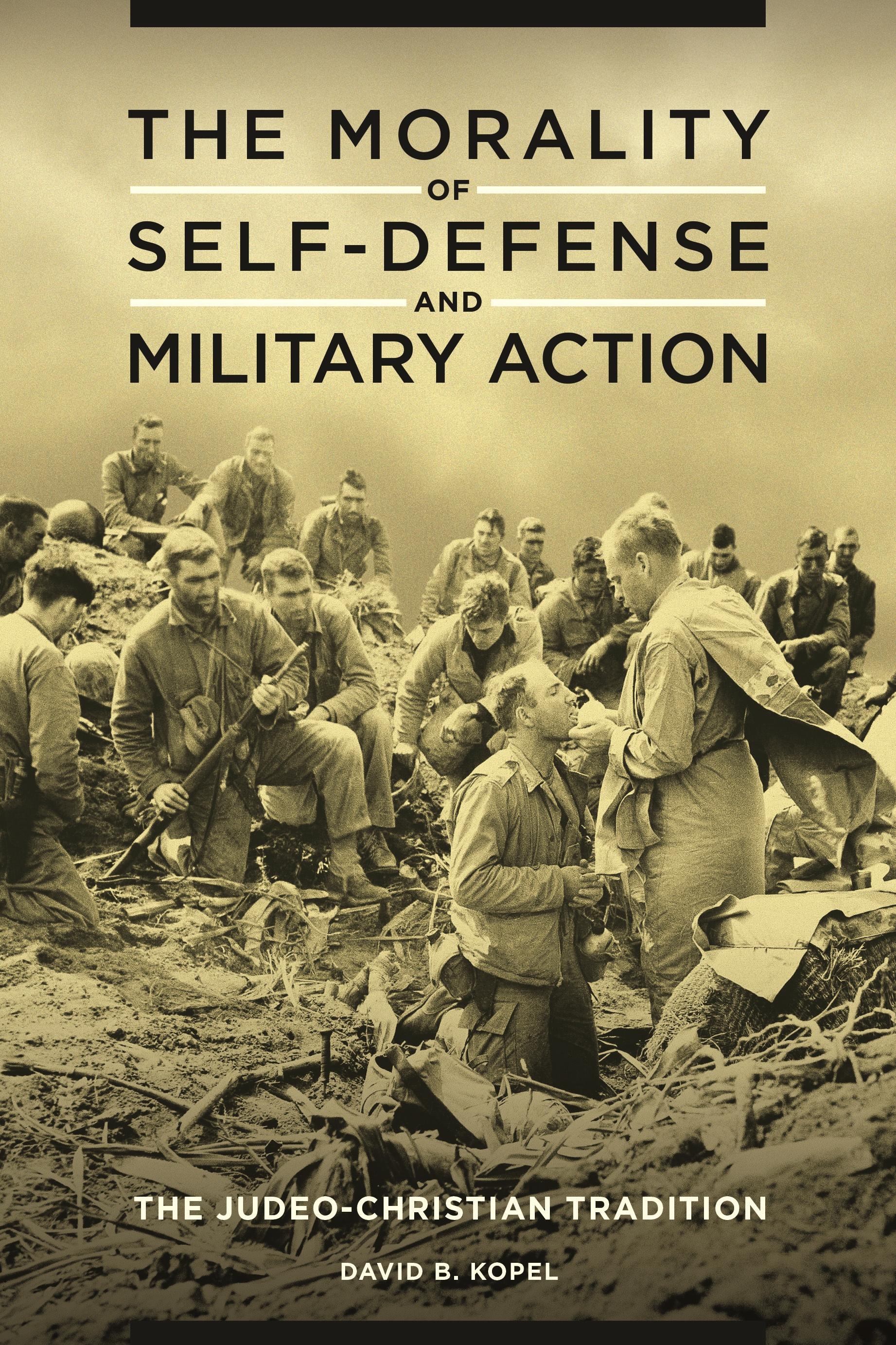
Shedding new light on a controversial and intriguing issue, this book will reshape the debate on how the Judeo-Christian tradition views the morality of personal and national self-defense.
Are self-defense, national warfare, and revolts against tyranny holy duties—or violations of God's will? Pacifists insist these actions are the latter, forbidden by Judeo-Christian morality. This book maintains that the pacifists are wrong. To make his case, the author analyzes the full sweep of Judeo-Christian history from earliest times to the present, combining history, scriptural analysis, and philosophy to describe the changes and continuity of Jewish and Christian doctrine about the use of lethal force. He reveals the shifting patterns of thought in both religions and presents the strongest arguments on both sides of the issue.
The book begins with the ancient Hebrews and Genesis and covers Jewish history through the Holocaust and beyond. The analysis then shifts to the story of Christianity from its origins, through the Middle Ages and the Reformation, up the present day. Based on this scrutiny, the author concludes that—contrary to popular belief—the legitimacy of self-defense is strongly supported by Judeo-Christian scripture and commentary, by philosophical analysis, and by the respect for human dignity and human rights on which both Judaism and Christianity are based.
Are self-defense, national warfare, and revolts against tyranny holy duties—or violations of God's will? Pacifists insist these actions are the latter, forbidden by Judeo-Christian morality. This book maintains that the pacifists are wrong. To make his case, the author analyzes the full sweep of Judeo-Christian history from earliest times to the present, combining history, scriptural analysis, and philosophy to describe the changes and continuity of Jewish and Christian doctrine about the use of lethal force. He reveals the shifting patterns of thought in both religions and presents the strongest arguments on both sides of the issue.
The book begins with the ancient Hebrews and Genesis and covers Jewish history through the Holocaust and beyond. The analysis then shifts to the story of Christianity from its origins, through the Middle Ages and the Reformation, up the present day. Based on this scrutiny, the author concludes that—contrary to popular belief—the legitimacy of self-defense is strongly supported by Judeo-Christian scripture and commentary, by philosophical analysis, and by the respect for human dignity and human rights on which both Judaism and Christianity are based.
Betal nemt med kort, Klarna, Apple Pay eller Google Pay. Ikke tilfreds? Du har altid 14 dages fortrydelsesret. Læs mere i vores vilkår. Har du spørgsmål, så send os en mail på hello@memmo.org.
Memmo gør det nemmere at studere – uanset hvor du er i verden. Hos os samler du dine kursusbøger og smarte studieværktøjer ét sted: resuméer, quizzer, podcasts og flashcards. Og så er der Ted, din studieven, der svarer på alt, du undrer dig over. Over 50 000 studerende studerer allerede her – bygget til at hjælpe dig med at lære hurtigere og stresse mindre.