
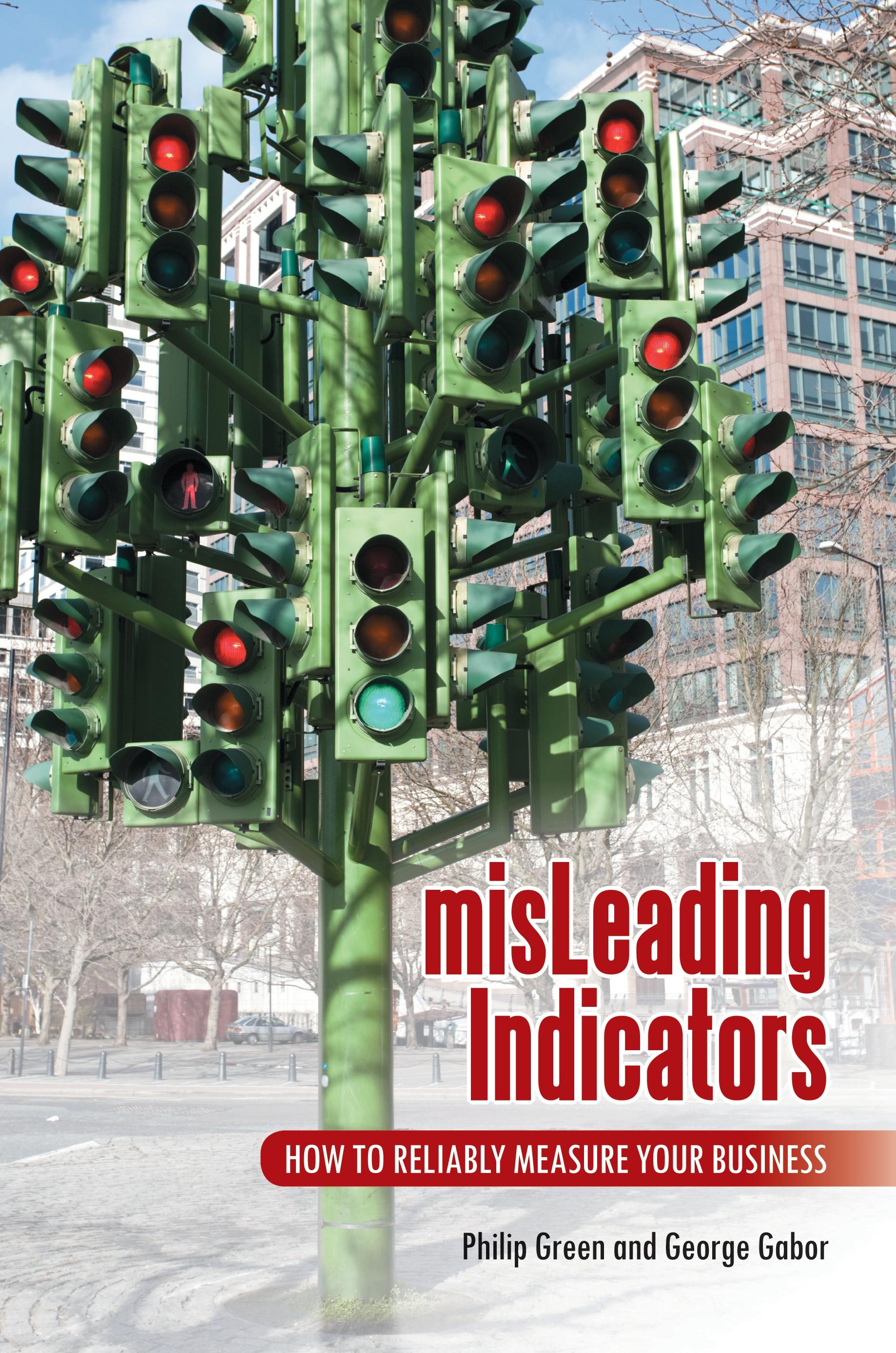
This book reveals the hidden and potentially misleading nature of measurements, empowering readers to avoid making critical business decisions that are harmful, unreasonable, unwarranted, or plain wrong.
Decision makers in business and government are more reliant than ever on measurements, such as business performance indicators, bond ratings, Six-Sigma indicators, stock ratings, opinion polls, and market research. Yet many popular statistical and business books and courses relating to measurement are based on flawed principles, leading managers to the wrong conclusions—and ultimately, the wrong decisions. misLeading Indicators: How to Reliably Measure Your Business provides something unique and invaluable: trustworthy tools for judging measurements.
Each chapter illustrates the four key principles for reliable measurements: sufficient background information, accuracy and precision, reasonable inferences, and reality checks in different situations. After the three fundamental methods of measuring are defined, the authors expand to the application and interpretation of measurements in specific areas, including business performance, risk management, process, control, finance, and economics. This book supplies essential information for managers in business and government who depend on accurate information to run their organizations, as well as the consultants who advise them.
Decision makers in business and government are more reliant than ever on measurements, such as business performance indicators, bond ratings, Six-Sigma indicators, stock ratings, opinion polls, and market research. Yet many popular statistical and business books and courses relating to measurement are based on flawed principles, leading managers to the wrong conclusions—and ultimately, the wrong decisions. misLeading Indicators: How to Reliably Measure Your Business provides something unique and invaluable: trustworthy tools for judging measurements.
Each chapter illustrates the four key principles for reliable measurements: sufficient background information, accuracy and precision, reasonable inferences, and reality checks in different situations. After the three fundamental methods of measuring are defined, the authors expand to the application and interpretation of measurements in specific areas, including business performance, risk management, process, control, finance, and economics. This book supplies essential information for managers in business and government who depend on accurate information to run their organizations, as well as the consultants who advise them.
Betal nemt med kort, Klarna, Apple Pay eller Google Pay. Ikke tilfreds? Du har altid 14 dages fortrydelsesret. Læs mere i vores vilkår. Har du spørgsmål, så send os en mail på hello@memmo.org.
Memmo gør det nemmere at studere – uanset hvor du er i verden. Hos os samler du dine kursusbøger og smarte studieværktøjer ét sted: resuméer, quizzer, podcasts og flashcards. Og så er der Ted, din studieven, der svarer på alt, du undrer dig over. Over 50 000 studerende studerer allerede her – bygget til at hjælpe dig med at lære hurtigere og stresse mindre.