
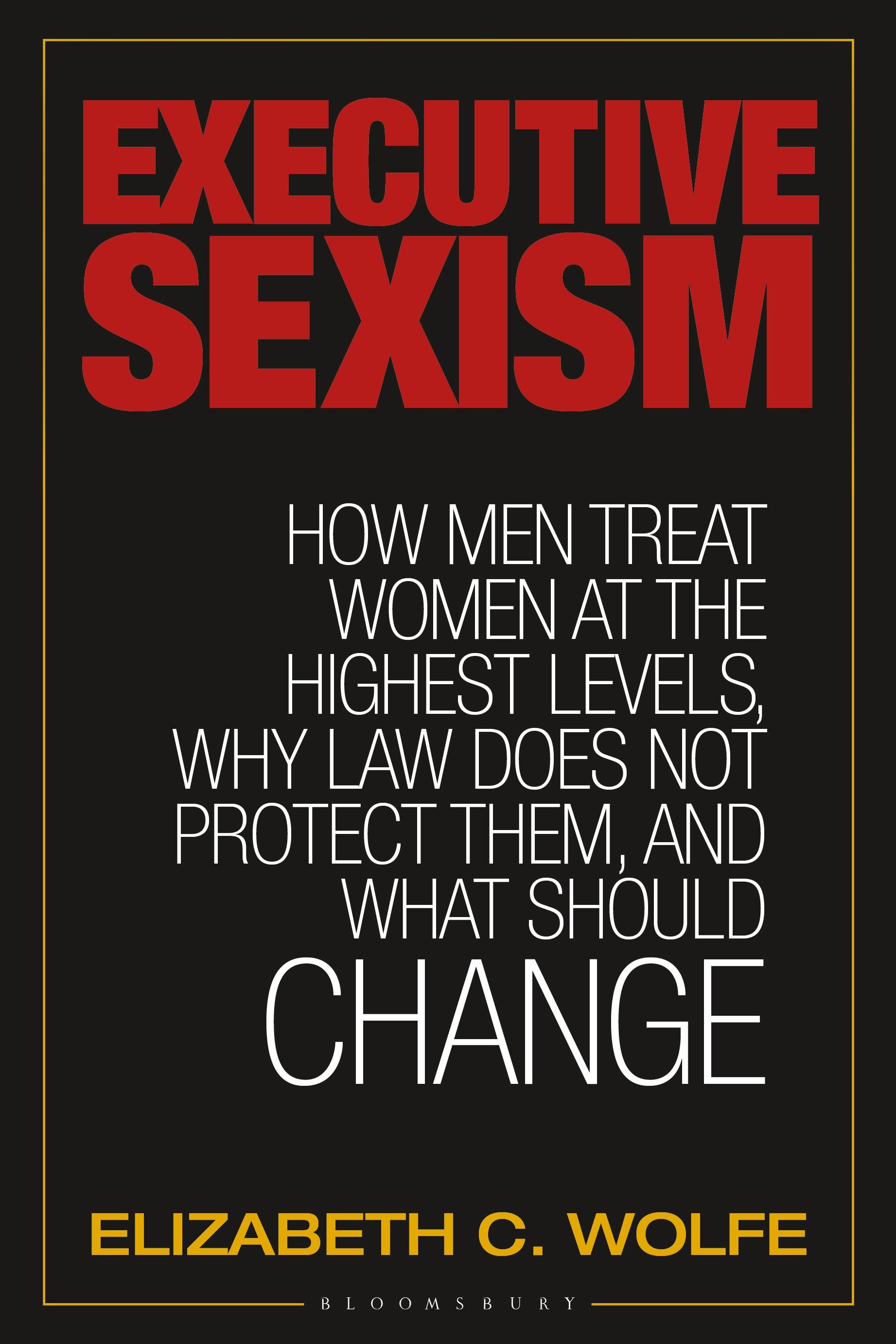
In the context of the 2016 presidential election, which was rife with charges of sexist actions, this book explains how common such behavior is among executives, why law doesn't protect victims, and how female professionals can bring change.
Who do you report sexism to when the offender owns the company?
"Overt and intentional sexism" against women by powerful men in politics, business, academia, and across the white-collar world in public and private institutions is common. Elizabeth C. Wolfe, a conflict analysis and resolution specialist, details how female executives, even at the pinnacle of their careers, remain vulnerable to their male colleagues.
In this book, women executives from nine countries explain how their career advancement and earning potential are continuously harmed though overt sexism, sexist social behavior, and microaggressions-those damaging behaviors that are in a gray area but are not legally actionable. Wolfe further examines why law does not protect these women: sexism, like racism, is a way of thinking and so cannot be legislated. Each "-ism" has legal protections against documentable actions, but ways of thinking, socializing rituals, and microaggressions are not actionable by law. Wolfe details the minds of sexists, describes how sexism is "socialized," and explains how to name each sexist behavior, address it, and take action to stop it.
Who do you report sexism to when the offender owns the company?
"Overt and intentional sexism" against women by powerful men in politics, business, academia, and across the white-collar world in public and private institutions is common. Elizabeth C. Wolfe, a conflict analysis and resolution specialist, details how female executives, even at the pinnacle of their careers, remain vulnerable to their male colleagues.
In this book, women executives from nine countries explain how their career advancement and earning potential are continuously harmed though overt sexism, sexist social behavior, and microaggressions-those damaging behaviors that are in a gray area but are not legally actionable. Wolfe further examines why law does not protect these women: sexism, like racism, is a way of thinking and so cannot be legislated. Each "-ism" has legal protections against documentable actions, but ways of thinking, socializing rituals, and microaggressions are not actionable by law. Wolfe details the minds of sexists, describes how sexism is "socialized," and explains how to name each sexist behavior, address it, and take action to stop it.
Betal nemt med kort, Klarna, Apple Pay eller Google Pay. Ikke tilfreds? Du har altid 14 dages fortrydelsesret. Læs mere i vores vilkår. Har du spørgsmål, så send os en mail på hello@memmo.org.
Memmo gør det nemmere at studere – uanset hvor du er i verden. Hos os samler du dine kursusbøger og smarte studieværktøjer ét sted: resuméer, quizzer, podcasts og flashcards. Og så er der Ted, din studieven, der svarer på alt, du undrer dig over. Over 50 000 studerende studerer allerede her – bygget til at hjælpe dig med at lære hurtigere og stresse mindre.