
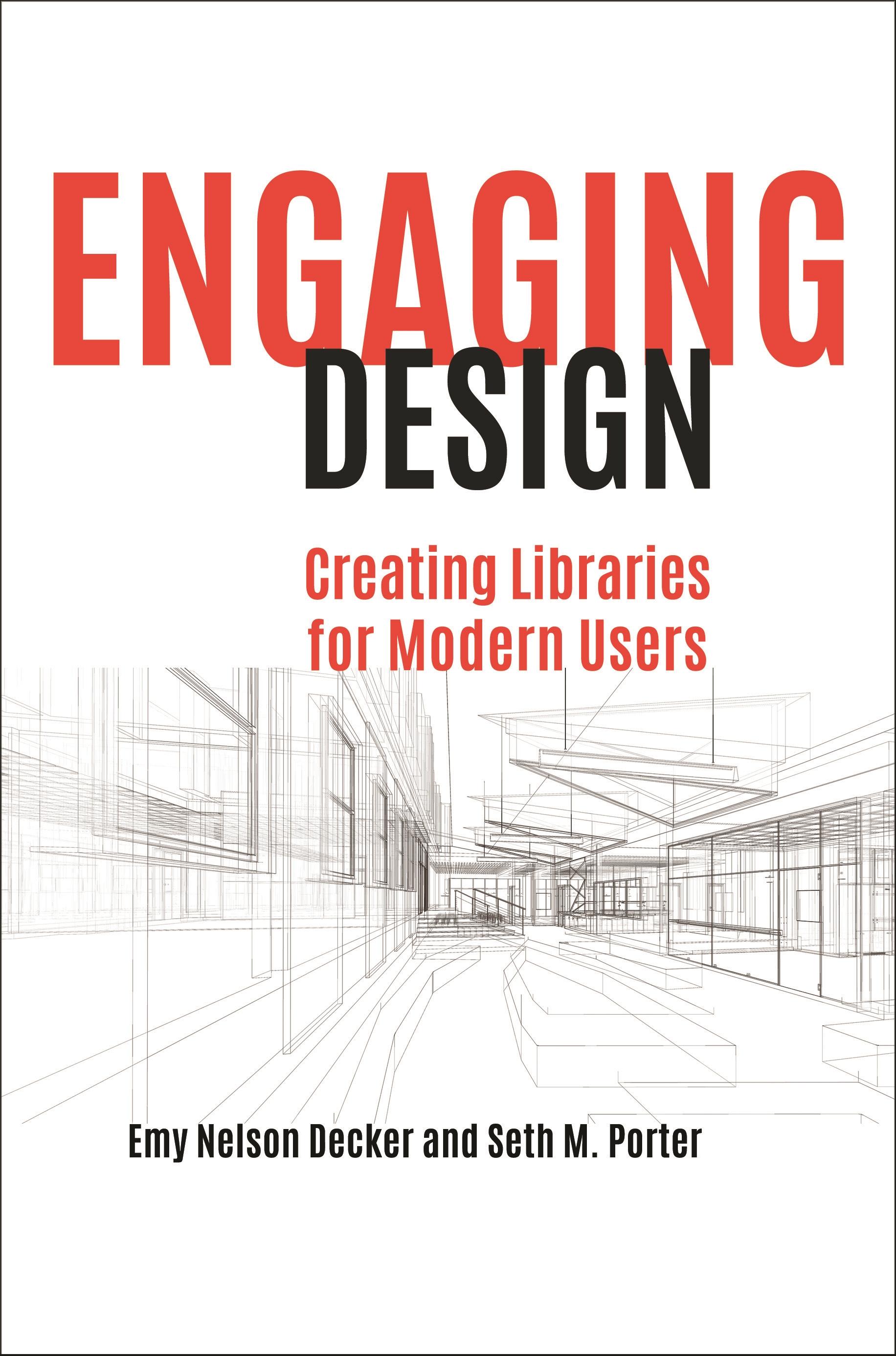
This book demonstrates how aesthetics, design elements, and visual literacy can be implemented in the library to enhance spaces, programs, services, instruction, and outreach so that your library will appeal to all users.
Libraries have come to accept that they must rethink how they appeal to users, and harnessing the power of design can be a powerful means for addressing the changing needs of the community. Decker and Porter introduce "engaging design"—an umbrella term that incorporates multiple design frameworks with a focus on a three-prong approach: aesthetics, design thinking, and service design. These frameworks can be used to guide design choices that will aid in teaching and engaging current and potential library users.
In the course of a lively and interesting narrative, Engaging Design introduces basic concepts of aesthetics and good design and explores examples of its successful uses in the academic, public, and special library. It provides simple steps for implementing subtle, but powerful, techniques to improve instruction, human-computer interaction, e-learning, public services spaces, wayfinding signage, and all manner of library programs, events, and services. In addition, the authors recommend easy-to-implement best practices that will help librarians to enhance library-goers' experience. Library administrators will also look to this book for assistance in best addressing the needs of the modern library user.
Libraries have come to accept that they must rethink how they appeal to users, and harnessing the power of design can be a powerful means for addressing the changing needs of the community. Decker and Porter introduce "engaging design"—an umbrella term that incorporates multiple design frameworks with a focus on a three-prong approach: aesthetics, design thinking, and service design. These frameworks can be used to guide design choices that will aid in teaching and engaging current and potential library users.
In the course of a lively and interesting narrative, Engaging Design introduces basic concepts of aesthetics and good design and explores examples of its successful uses in the academic, public, and special library. It provides simple steps for implementing subtle, but powerful, techniques to improve instruction, human-computer interaction, e-learning, public services spaces, wayfinding signage, and all manner of library programs, events, and services. In addition, the authors recommend easy-to-implement best practices that will help librarians to enhance library-goers' experience. Library administrators will also look to this book for assistance in best addressing the needs of the modern library user.
Betal nemt med kort, Klarna, Apple Pay eller Google Pay. Ikke tilfreds? Du har altid 14 dages fortrydelsesret. Læs mere i vores vilkår. Har du spørgsmål, så send os en mail på hello@memmo.org.
Memmo gør det nemmere at studere – uanset hvor du er i verden. Hos os samler du dine kursusbøger og smarte studieværktøjer ét sted: resuméer, quizzer, podcasts og flashcards. Og så er der Ted, din studieven, der svarer på alt, du undrer dig over. Over 50 000 studerende studerer allerede her – bygget til at hjælpe dig med at lære hurtigere og stresse mindre.