
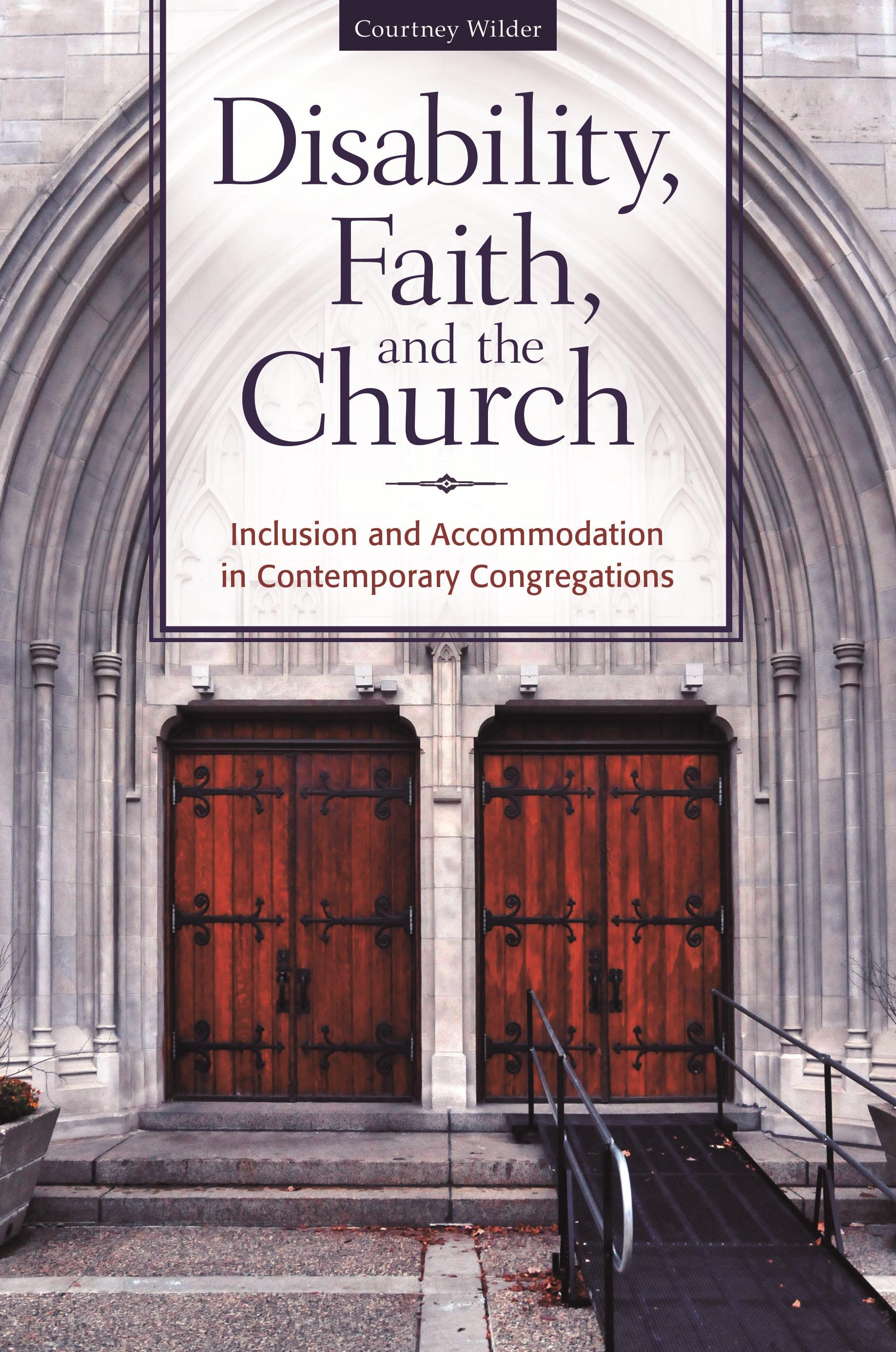
Including both theoretical discussions and practical information for congregational use or pastoral use, this rich, accessible book explores biblical text, historical and theological issues of disability, and examples of successful ministry by people with disabilities.
Disability, Faith, and the Church: Inclusion and Accommodation in Contemporary Congregations draws from a range of Christian theologians, denominational statements, writings of people with disabilities, and experiences of successful ministries for people with disabilities to answer the deep need of many Christian communities: to live out their calling by welcoming all people. By focusing on 20th- and 21st-century thinkers and political and religious practices, the book outlines best practices for congregations and supplies practical information that readers can apply in classroom or church settings.
The author draws on thinkers from a variety of Christian traditions—including Roman Catholicism, Episcopalianism, Lutheranism, and the Reform traditions—to provide a theologically robust discussion that remains accessible to churchgoers without formal theological training. Emphasis is placed on connecting formal theological reflection and the experiences of ordinary people with disabilities to existing congregational practices and denominational statements, thereby enabling readers to decide on the best ways to successfully include people with disabilities into their communities within the rich and diverse Christian theological tradition.
Disability, Faith, and the Church: Inclusion and Accommodation in Contemporary Congregations draws from a range of Christian theologians, denominational statements, writings of people with disabilities, and experiences of successful ministries for people with disabilities to answer the deep need of many Christian communities: to live out their calling by welcoming all people. By focusing on 20th- and 21st-century thinkers and political and religious practices, the book outlines best practices for congregations and supplies practical information that readers can apply in classroom or church settings.
The author draws on thinkers from a variety of Christian traditions—including Roman Catholicism, Episcopalianism, Lutheranism, and the Reform traditions—to provide a theologically robust discussion that remains accessible to churchgoers without formal theological training. Emphasis is placed on connecting formal theological reflection and the experiences of ordinary people with disabilities to existing congregational practices and denominational statements, thereby enabling readers to decide on the best ways to successfully include people with disabilities into their communities within the rich and diverse Christian theological tradition.
Betal nemt med kort, Klarna, Apple Pay eller Google Pay. Ikke tilfreds? Du har altid 14 dages fortrydelsesret. Læs mere i vores vilkår. Har du spørgsmål, så send os en mail på hello@memmo.org.
Memmo gør det nemmere at studere – uanset hvor du er i verden. Hos os samler du dine kursusbøger og smarte studieværktøjer ét sted: resuméer, quizzer, podcasts og flashcards. Og så er der Ted, din studieven, der svarer på alt, du undrer dig over. Over 50 000 studerende studerer allerede her – bygget til at hjælpe dig med at lære hurtigere og stresse mindre.