
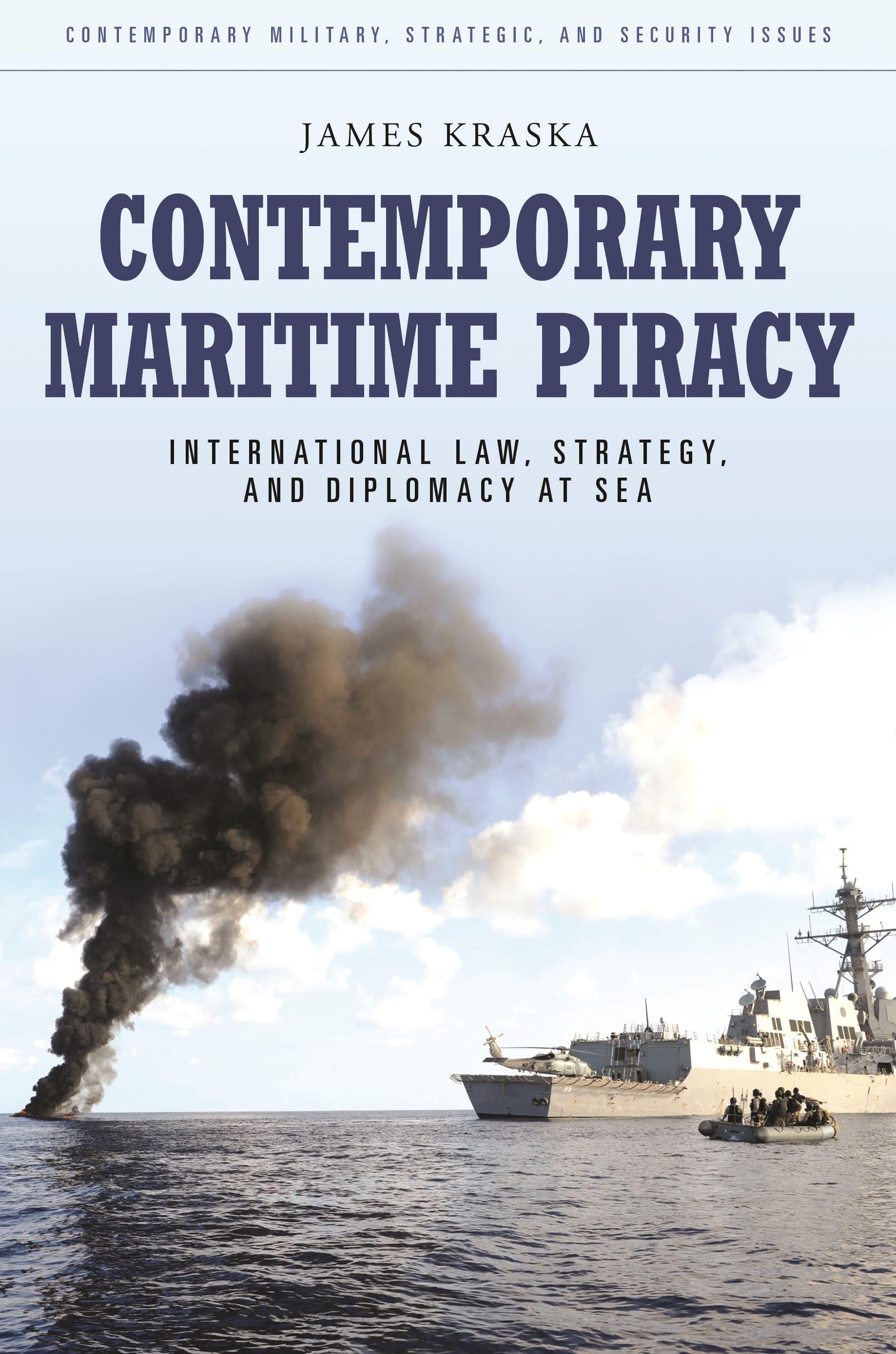
This volume provides a concise introduction to the issues and debates regarding modern piracy, including naval operations, law, and diplomacy, and focuses on the recent surge of attacks off the coasts of Africa and Asia.
In the past decade, the incidence of maritime piracy has exploded. The first three months of 2011 were the worst ever, with 18 ships hijacked, 344 crew taken hostage, and 7 crew members murdered. The four Americans on board the sailing vessel Quest were shot at point-blank range. The economic costs are also staggering, reaching $7 to $12 billion per year, as insurance costs skyrocket, ransoms double and then quadruple, and ships are forced to hire armed security for protection. Pirates operating off the Horn of Africa disrupt shipping traffic through the strategic Suez Canal, siphoning transit fees from an unstable Egypt, while the seizure of supertankers in the Indian Ocean underscores the vulnerability of the world's oil supply.
Governments, private industry, and international organizations have mobilized to address the threat. This is the first volume to examine their work in developing naval strategy, international law and diplomacy, and industry guidelines to suppress contemporary maritime piracy.
Contemporary Maritime Piracy: International Law, Strategy, and Diplomacy at Sea comprises three sections, the first of which contains chapters on historical and contemporary piracy, international law and diplomacy, and coalition strategies for combating future piracy. The second and third parts provide collections of historic profiles and relevant documents.
In the past decade, the incidence of maritime piracy has exploded. The first three months of 2011 were the worst ever, with 18 ships hijacked, 344 crew taken hostage, and 7 crew members murdered. The four Americans on board the sailing vessel Quest were shot at point-blank range. The economic costs are also staggering, reaching $7 to $12 billion per year, as insurance costs skyrocket, ransoms double and then quadruple, and ships are forced to hire armed security for protection. Pirates operating off the Horn of Africa disrupt shipping traffic through the strategic Suez Canal, siphoning transit fees from an unstable Egypt, while the seizure of supertankers in the Indian Ocean underscores the vulnerability of the world's oil supply.
Governments, private industry, and international organizations have mobilized to address the threat. This is the first volume to examine their work in developing naval strategy, international law and diplomacy, and industry guidelines to suppress contemporary maritime piracy.
Contemporary Maritime Piracy: International Law, Strategy, and Diplomacy at Sea comprises three sections, the first of which contains chapters on historical and contemporary piracy, international law and diplomacy, and coalition strategies for combating future piracy. The second and third parts provide collections of historic profiles and relevant documents.
Betal nemt med kort, Klarna, Apple Pay eller Google Pay. Ikke tilfreds? Du har altid 14 dages fortrydelsesret. Læs mere i vores vilkår. Har du spørgsmål, så send os en mail på hello@memmo.org.
Memmo gør det nemmere at studere – uanset hvor du er i verden. Hos os samler du dine kursusbøger og smarte studieværktøjer ét sted: resuméer, quizzer, podcasts og flashcards. Og så er der Ted, din studieven, der svarer på alt, du undrer dig over. Over 50 000 studerende studerer allerede her – bygget til at hjælpe dig med at lære hurtigere og stresse mindre.