
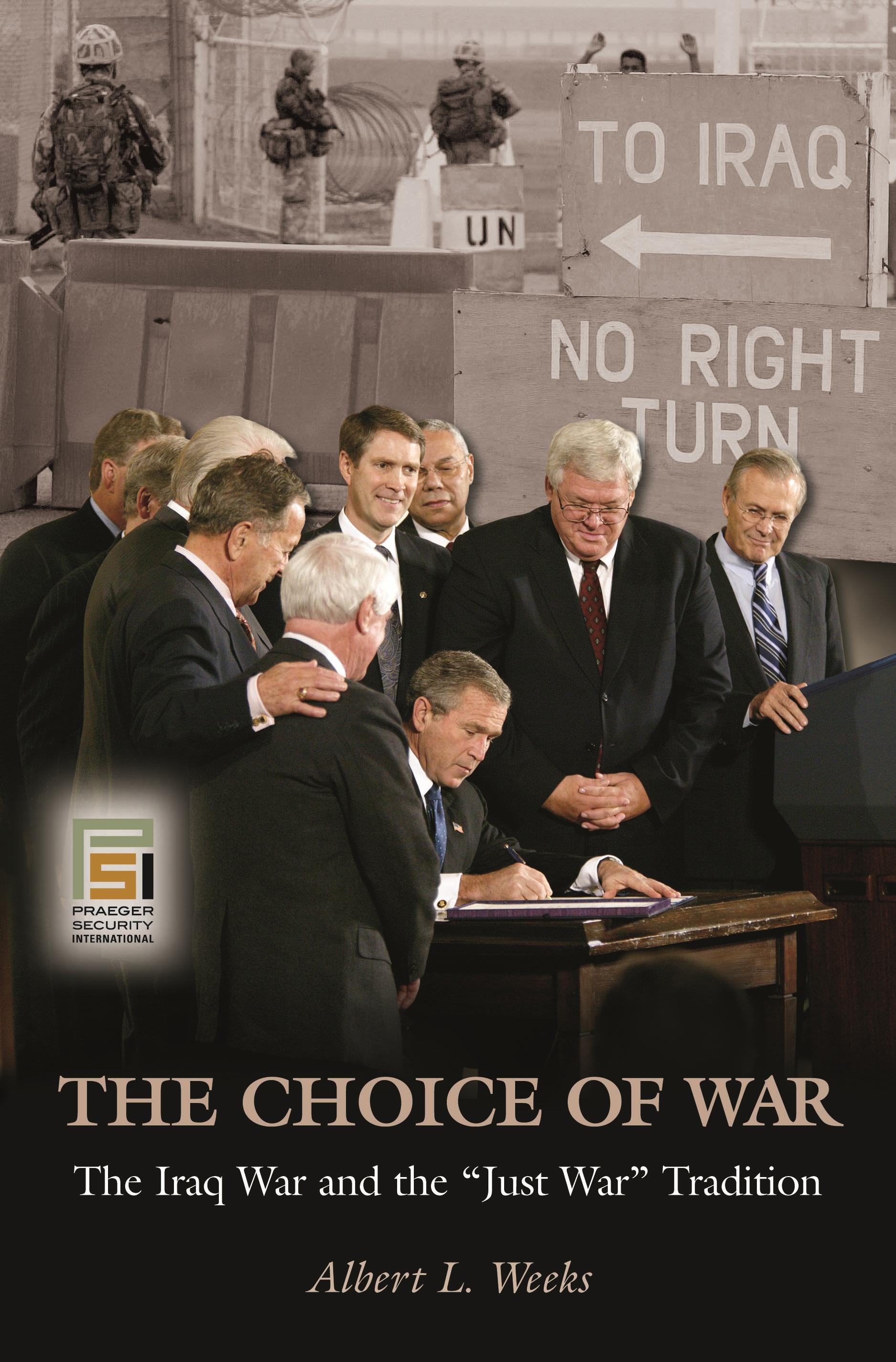
A longtime scholar of the Cold War deftly weaves together the tradition of "just war" and an examination of current events to show how the time-honored concepts of jus ad bellum (justice of war) and jus in bello (justice in war) apply to the U.S. military involvement in Iraq.
This timely analysis of President George W. Bush's foreign policy deals with the cornerstone of his administrations—the "war on terror"—as implemented in Afghanistan, Iraq, Guantanamo Bay, and at Abu Ghraib prison. The Choice of War: The Iraq War and the "Just War" Tradition discusses NSS 2002, the national security statement that became the blueprint for the Bush Doctrine. It explains the differences and similarities between preventive and pre-emptive war and explores the administration's justification of the necessity of the March 2003 invasion. Finally, it analyzes the conduct of the war, the occupation, and the post-occupation phases of the conflict.
In evaluating the Bush Doctrine, both as declared strategy and as implemented, Albert L. Weeks asks whether going it virtually alone in the global struggle against 21st-century terrorism should be incorporated permanently into American political and military policy. Answering no, he suggests an alternative to a doctrine that has isolated the United States and left the world divided.
This timely analysis of President George W. Bush's foreign policy deals with the cornerstone of his administrations—the "war on terror"—as implemented in Afghanistan, Iraq, Guantanamo Bay, and at Abu Ghraib prison. The Choice of War: The Iraq War and the "Just War" Tradition discusses NSS 2002, the national security statement that became the blueprint for the Bush Doctrine. It explains the differences and similarities between preventive and pre-emptive war and explores the administration's justification of the necessity of the March 2003 invasion. Finally, it analyzes the conduct of the war, the occupation, and the post-occupation phases of the conflict.
In evaluating the Bush Doctrine, both as declared strategy and as implemented, Albert L. Weeks asks whether going it virtually alone in the global struggle against 21st-century terrorism should be incorporated permanently into American political and military policy. Answering no, he suggests an alternative to a doctrine that has isolated the United States and left the world divided.
Betal nemt med kort, Klarna, Apple Pay eller Google Pay. Ikke tilfreds? Du har altid 14 dages fortrydelsesret. Læs mere i vores vilkår. Har du spørgsmål, så send os en mail på hello@memmo.org.
Memmo gør det nemmere at studere – uanset hvor du er i verden. Hos os samler du dine kursusbøger og smarte studieværktøjer ét sted: resuméer, quizzer, podcasts og flashcards. Og så er der Ted, din studieven, der svarer på alt, du undrer dig over. Over 50 000 studerende studerer allerede her – bygget til at hjælpe dig med at lære hurtigere og stresse mindre.