
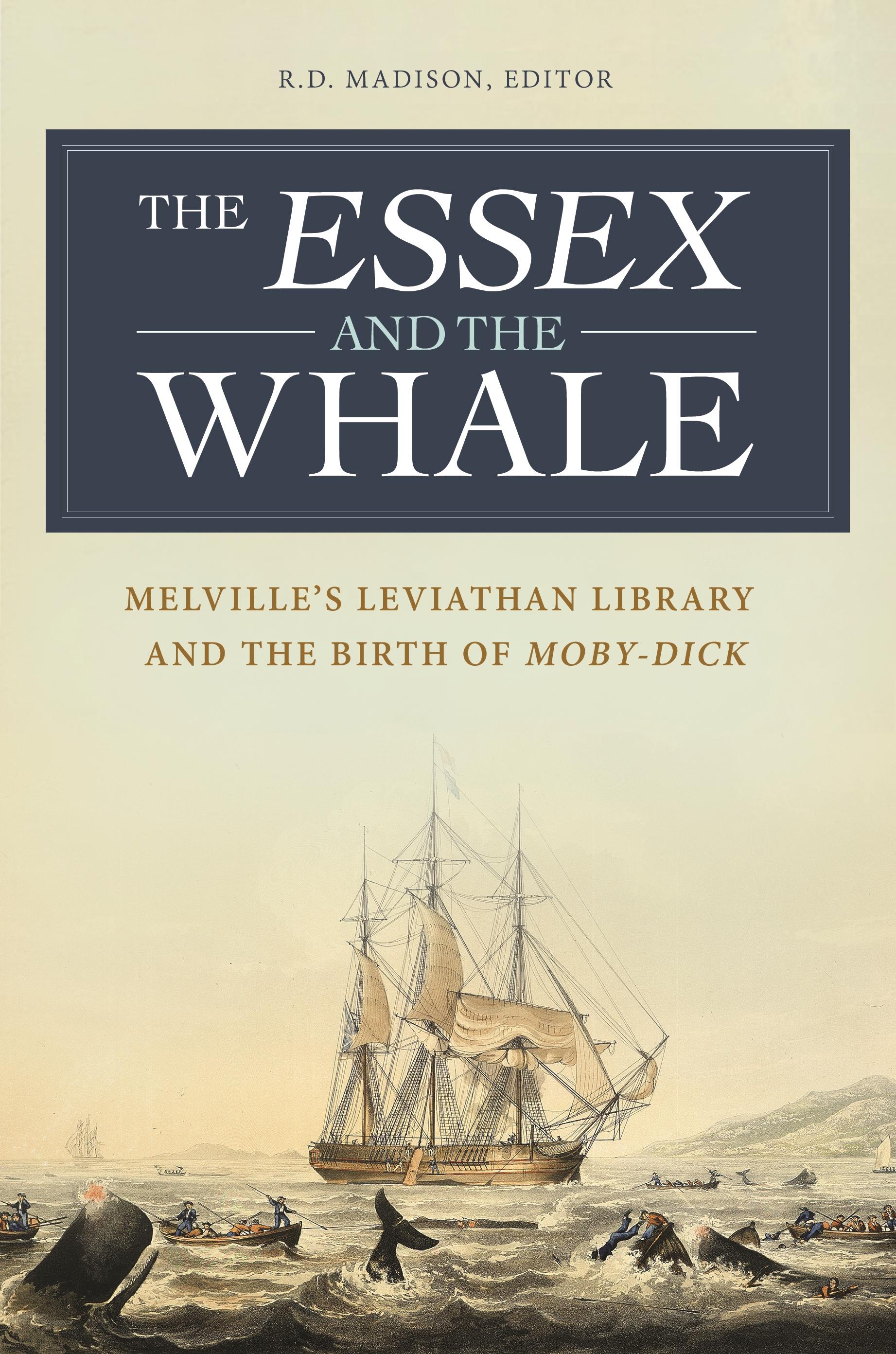
This fascinating anthology introduces readers to the literary side of Herman Melville's whaling world with an unprecedented collection of the original whaling texts from which Melville drew to create his masterpiece, Moby-Dick.
The notorious 1820 sinking of the whaleship Essex inspired Herman Melville's Moby-Dick, as recounted in Nathaniel Philbrick's bestselling book In the Heart of the Sea: The Tragedy of the Whaleship Essex—now a major motion picture. But how exactly did Melville transmute the historic tragedy of the Essex into what is arguably the "Great American Novel"? Here, for the first time, R.D. Madison collects together Melville's personal "library" of whaling and whale-lore into a single volume and presents these primary sources in a way that readers can readily see how a horrific whaling tragedy became a literary masterpiece.
But where did Moby-Dick begin? Prompted by sailor-author Richard Henry Dana, Jr., Melville supplemented his own firsthand experience as a whaleman in the South Pacific with "libraries" of books that he "swum through" to create his whaling masterpiece. Scholars and lay readers alike have long wondered how he did it, and over the past 60 years, a very tight theory of inspiration and creation has emerged. It is very likely wrong.
This volume gathers together for the first time all of the main texts that Melville encountered, including the accounts of the unique sinking of the Essex by a sperm whale that provided the climax for Moby-Dick. Melville scholar R. D. Madison examines what critics have said about Melville's response to the sinking and offers the challenging thesis that Melville did not even begin the book at all until spurred on by Dana in the spring of 1850.
The notorious 1820 sinking of the whaleship Essex inspired Herman Melville's Moby-Dick, as recounted in Nathaniel Philbrick's bestselling book In the Heart of the Sea: The Tragedy of the Whaleship Essex—now a major motion picture. But how exactly did Melville transmute the historic tragedy of the Essex into what is arguably the "Great American Novel"? Here, for the first time, R.D. Madison collects together Melville's personal "library" of whaling and whale-lore into a single volume and presents these primary sources in a way that readers can readily see how a horrific whaling tragedy became a literary masterpiece.
But where did Moby-Dick begin? Prompted by sailor-author Richard Henry Dana, Jr., Melville supplemented his own firsthand experience as a whaleman in the South Pacific with "libraries" of books that he "swum through" to create his whaling masterpiece. Scholars and lay readers alike have long wondered how he did it, and over the past 60 years, a very tight theory of inspiration and creation has emerged. It is very likely wrong.
This volume gathers together for the first time all of the main texts that Melville encountered, including the accounts of the unique sinking of the Essex by a sperm whale that provided the climax for Moby-Dick. Melville scholar R. D. Madison examines what critics have said about Melville's response to the sinking and offers the challenging thesis that Melville did not even begin the book at all until spurred on by Dana in the spring of 1850.
Betal nemt med kort, Klarna, Apple Pay eller Google Pay. Ikke tilfreds? Du har altid 14 dages fortrydelsesret. Læs mere i vores vilkår. Har du spørgsmål, så send os en mail på hello@memmo.org.
Memmo gør det nemmere at studere – uanset hvor du er i verden. Hos os samler du dine kursusbøger og smarte studieværktøjer ét sted: resuméer, quizzer, podcasts og flashcards. Og så er der Ted, din studieven, der svarer på alt, du undrer dig over. Over 50 000 studerende studerer allerede her – bygget til at hjælpe dig med at lære hurtigere og stresse mindre.