
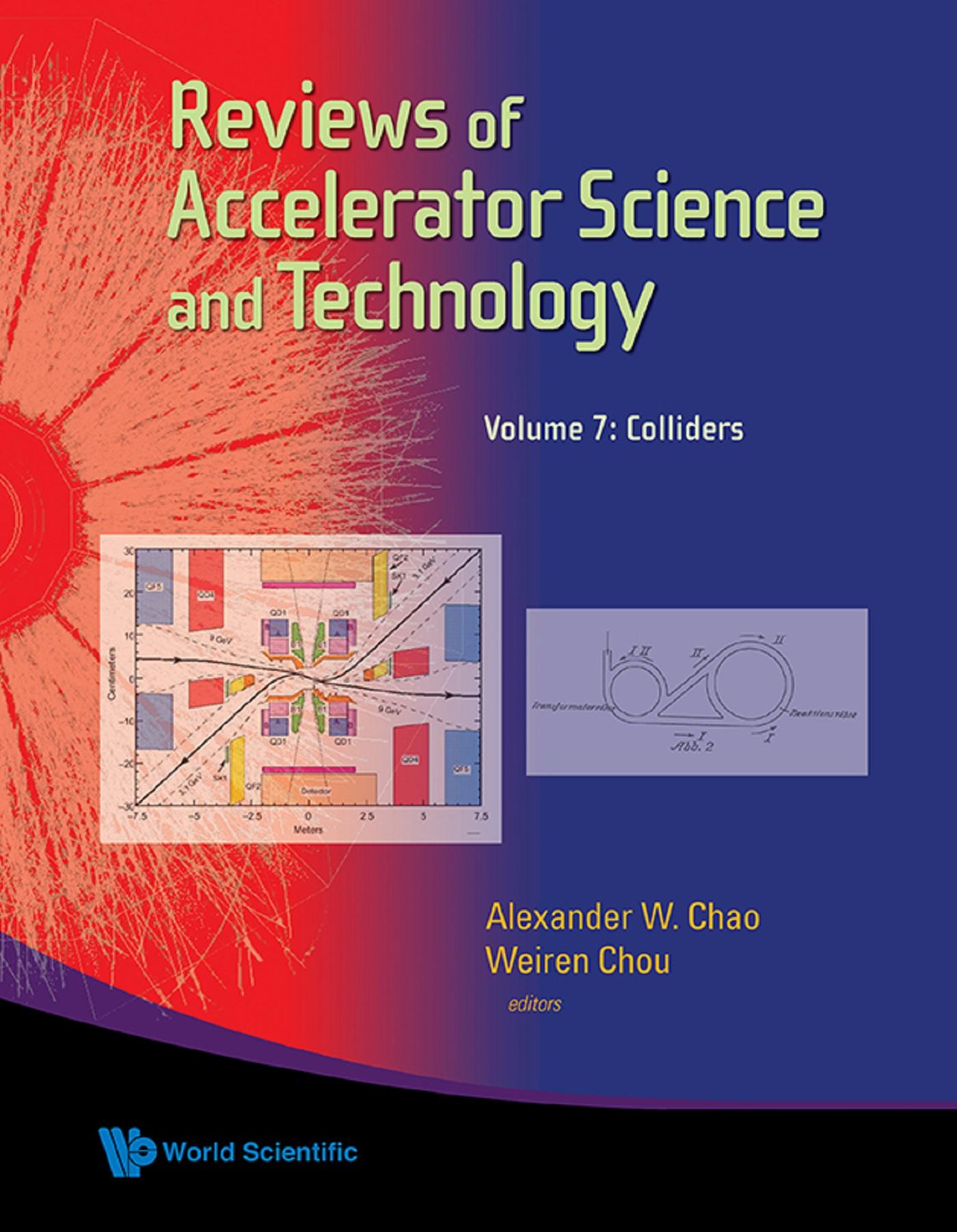
The idea of colliding two particle beams to fully exploit the energy of accelerated particles was first proposed by Rolf Wideröe, who in 1943 applied for a patent on the collider concept and was awarded the patent in 1953. The first three colliders — AdA in Italy, CBX in the US, and VEP-1 in the then Soviet Union — came to operation about 50 years ago in the mid-1960s. A number of other colliders followed.Over the past decades, colliders defined the energy frontier in particle physics. Different types of colliers — proton-proton, proton-antiproton, electron-positron, electron-proton, electron-ion and ion-ion colliders — have played complementary roles in fully mapping out the constituents and forces in the Standard Model (SM). We are now at a point where all predicted SM constituents of matter and forces have been found, and all the latest ones were found at colliders. Colliders also play a critical role in advancing beam physics, accelerator research and technology development. It is timely that RAST Volume 7 is dedicated to Colliders.
Betal nemt med kort, Klarna, Apple Pay eller Google Pay. Ikke tilfreds? Du har altid 14 dages fortrydelsesret. Læs mere i vores vilkår. Har du spørgsmål, så send os en mail på hello@memmo.org.
Memmo gør det nemmere at studere – uanset hvor du er i verden. Hos os samler du dine kursusbøger og smarte studieværktøjer ét sted: resuméer, quizzer, podcasts og flashcards. Og så er der Ted, din studieven, der svarer på alt, du undrer dig over. Over 50 000 studerende studerer allerede her – bygget til at hjælpe dig med at lære hurtigere og stresse mindre.
Du kan måske også lide
Køb bogen0