
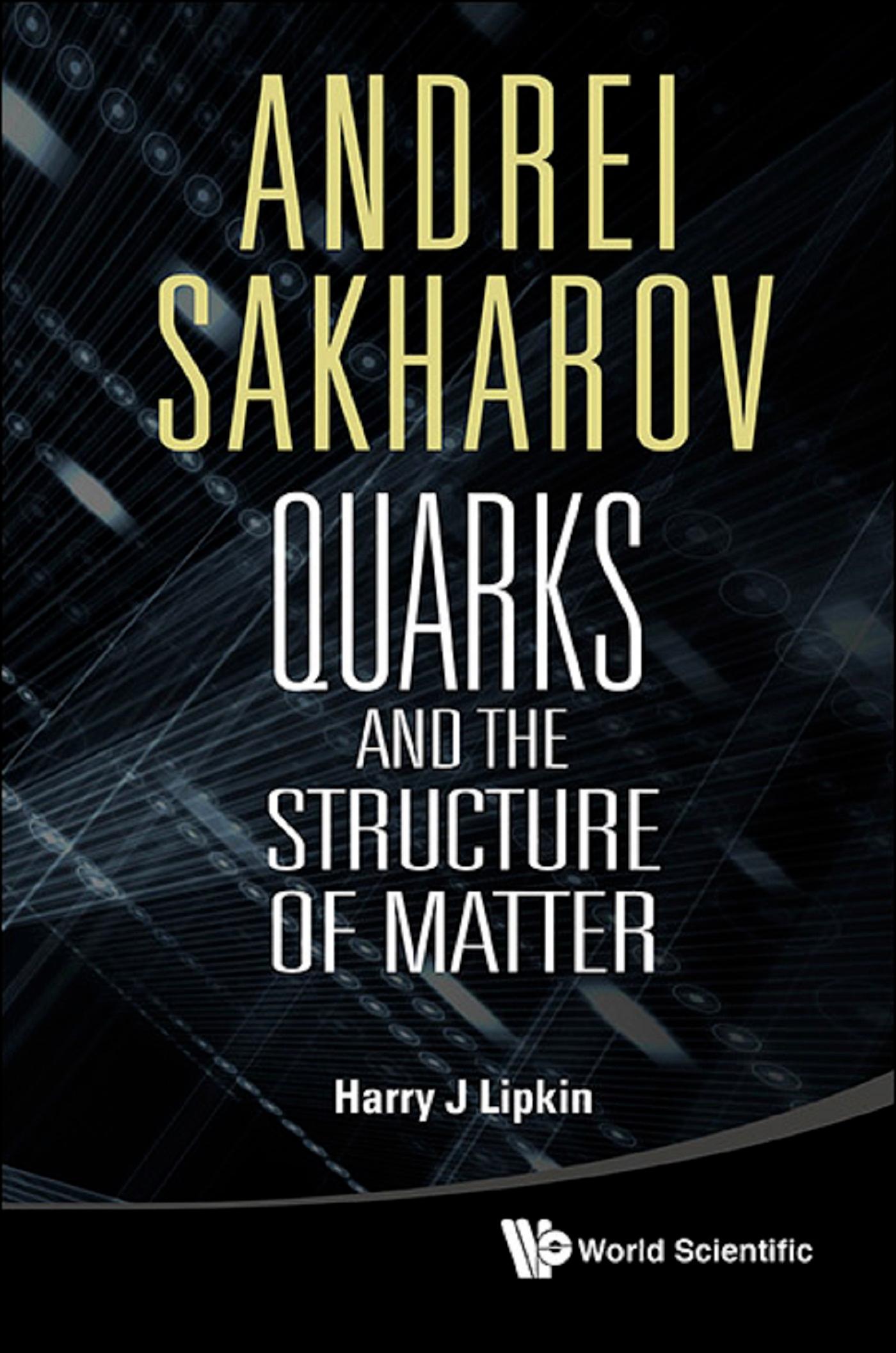
In 1980, the Cold War was in full bloom. The Soviet father of the hydrogen bomb and Nobel Peace Laureate turned dissident physicist, Andrei Sakharov, had been exiled to Gorki by the Soviet authorities. Called “senile” and under heavy Soviet censorship, Sakharov had a hard time communicating his latest scientific results to readers outside of Gorki. Some smuggled results reached the author, Harry Lipkin, who then realized that he and Sakharov were both pioneers in a new revolution on our understanding the structure of matter. The particle physics community had resisted their revelation that the accepted building blocks of matter, neutrons and protons, were composed of tinier building blocks called “quarks”. What followed was a remarkable adventure in which both scientists fought the Soviet censors, smuggling postcards and manuscripts into and out of the Soviet Union while trying to further scientific progress.Against a backdrop of politics, suppression, and genius, Andrei Sakharov, Quarks and the Structure of Matter details the search for the basic building blocks of matter, the path to understanding the forces that bind them together, and how scientific knowledge is learned, communicated and passed from one group of investigators to another.
Betal nemt med kort, Klarna, Apple Pay eller Google Pay. Ikke tilfreds? Du har altid 14 dages fortrydelsesret. Læs mere i vores vilkår. Har du spørgsmål, så send os en mail på hello@memmo.org.
Memmo gør det nemmere at studere – uanset hvor du er i verden. Hos os samler du dine kursusbøger og smarte studieværktøjer ét sted: resuméer, quizzer, podcasts og flashcards. Og så er der Ted, din studieven, der svarer på alt, du undrer dig over. Over 50 000 studerende studerer allerede her – bygget til at hjælpe dig med at lære hurtigere og stresse mindre.
Du kan måske også lide
Køb bogen0